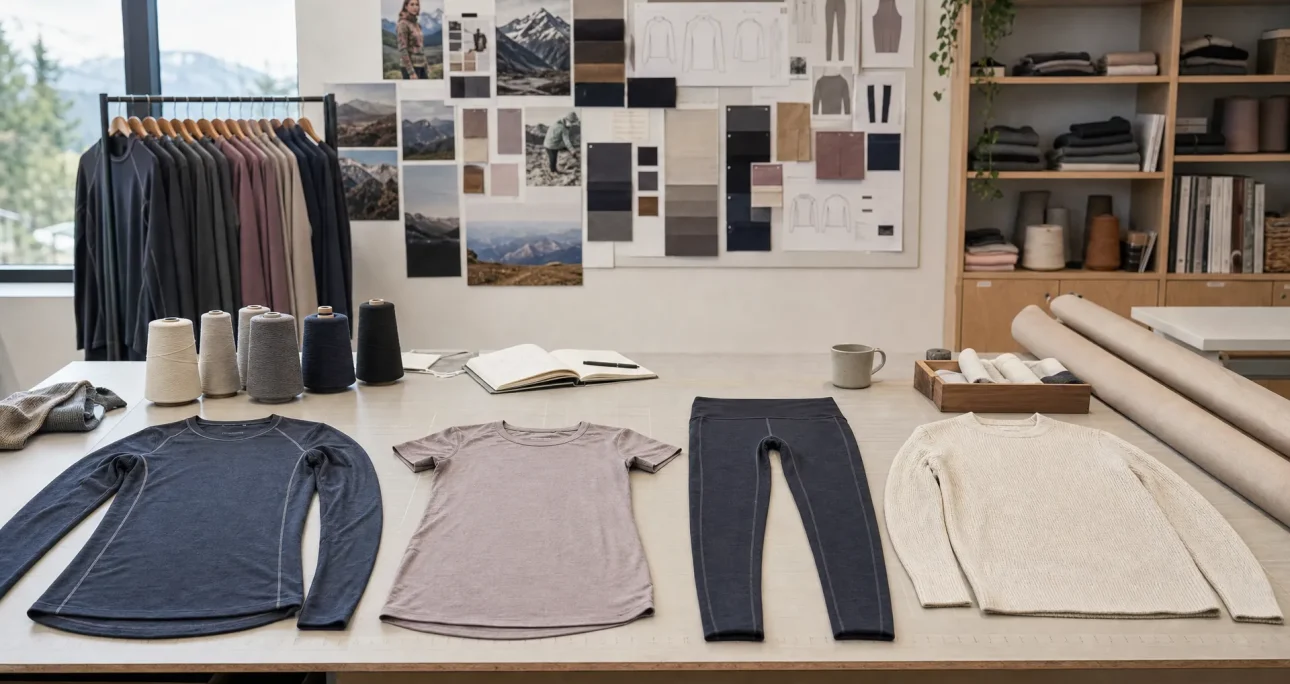
For an apparel brand, a strong women's merino wool line is rarely built by adding merino to every possible silhouette. It starts with a focused core collection: garments customers understand immediately, wear often and repurchase when the fit and hand feel are right. Merino can support that kind of collection because it sits at the intersection of comfort, performance and premium positioning. The challenge is choosing the right garments, then developing them with the correct fabric weight, stretch, construction and care performance so the line feels cohesive instead of like a set of unrelated wool pieces.
Why women's merino wool belongs in a core collection
Merino works especially well in core apparel because it solves everyday problems without needing a complicated product story. It feels soft against the skin when the fiber is fine enough, helps regulate temperature across changing conditions, manages moisture better than many conventional fashion fibers and resists odor between washes.
For brands, those benefits matter because core collections depend on repeat use. A garment that performs only in one narrow scenario becomes seasonal or niche. A merino tee, base layer, sweater or travel pant can be styled in multiple ways and worn across more of the calendar.
The key is restraint. A core collection should give shoppers a clear entry point into the brand, not overwhelm them with ten versions of the same garment. Start with the pieces that best express the brand promise, then expand after fit, fabric and sell-through data show where demand is strongest.
Start with the commercial role of each garment
Before selecting styles, define what each garment must do in the assortment. Women's merino wool can support active, outdoor, travel, lounge and elevated casual categories, but each use case requires different tradeoffs.
A next-to-skin base layer needs low bulk, recovery and seam comfort. A sweater needs drape, shape retention and a knit structure that feels refined. A travel tee needs durability and wash performance, while a lounge pant needs softness, opacity and enough stretch to avoid bagging at the knees.
This table gives a practical way to frame the collection before you begin sampling.
| Garment role | Best core categories | Development priority |
|---|---|---|
| Next-to-skin warmth | Base layer tops, leggings, long underwear | Soft micron count, flat seams, close fit |
| Everyday essentials | T-shirts, long sleeves, tanks | Fabric stability, neckline recovery, easy care |
| Elevated layering | Sweaters, cardigans, polo knits | Yarn quality, gauge, drape, pilling control |
| Active and travel | Hoodies, joggers, quarter-zips | Stretch, abrasion resistance, odor control |
| Intimates and accessories | Briefs, bralettes, socks, neck gaiters | Softness, elastic comfort, moisture management |
Best garments for a core merino line
The best women's merino wool assortments usually begin with a compact set of garments that create outfitting logic. A shopper should be able to buy one piece, understand the value, then return for adjacent styles that share the same comfort and performance standards.
Base layer tops
Base layer tops are the most obvious entry point for performance-focused brands. They make merino's temperature regulation easy to feel, especially in cold-weather, hiking, skiing and travel collections. Crewnecks and half-zips are the safest starting silhouettes because customers already understand how to layer them.
For a deeper technical breakdown, Arcus covers fabric weight, fit zones and construction details in its guide to base layer fit and fabric decisions.
T-shirts and long sleeves
In a women's merino wool line, the T-shirt is often the most commercial year-round garment. It can sit in activewear, travel, casual basics or premium essentials depending on cut and styling. Lightweight jersey is common, but brands need to test for twisting, shrinkage, neckline stretch and transparency before production.
Long sleeves extend the same fabric platform into cooler months without changing the product story too much. If your brand is focused on everyday wear, Arcus has a separate guide on merino shirt fabric weight and fit that is useful during early development.
Leggings and long underwear
Leggings and long underwear are strong core items when the collection has a cold-weather or outdoor angle. The main risk is treating them like synthetic compression leggings. Merino usually performs better with a balanced fit: close enough for warmth and layering, but not so tight that the fabric strains, pills or becomes sheer.
For pure warmth, a long underwear bottom with a comfort waistband may be more commercially reliable than a fashion legging. For active use, consider a merino blend with elastane or nylon for recovery and durability.
Sweaters and cardigans
Sweaters translate merino into a more premium lifestyle product. Crewnecks, fine-gauge cardigans, ribbed turtlenecks and lightweight pullovers can anchor a collection for customers who want natural fiber comfort without a technical look.
This category depends heavily on yarn quality, gauge, stitch structure and finishing. A refined sweater can elevate the whole line, while a poorly controlled sweater can create pilling, twisting or fit complaints. Arcus explains those tradeoffs in its fit and yarn guide for women's merino sweaters.
Hoodies, joggers and travel layers
Hoodies and joggers can work well when the brand positioning is travel, recovery, outdoor lifestyle or elevated lounge. They should not simply copy cotton fleece silhouettes. Merino blends, double knits or ponte-like structures often make more sense because they improve stability and help the garment hold its shape.
These pieces are best added after the brand has validated simpler tops and bottoms. They use more fabric, cost more to produce and require careful trim selection, especially for drawcords, zippers, pocket bags and waistbands.
Fabric choices that keep the collection cohesive
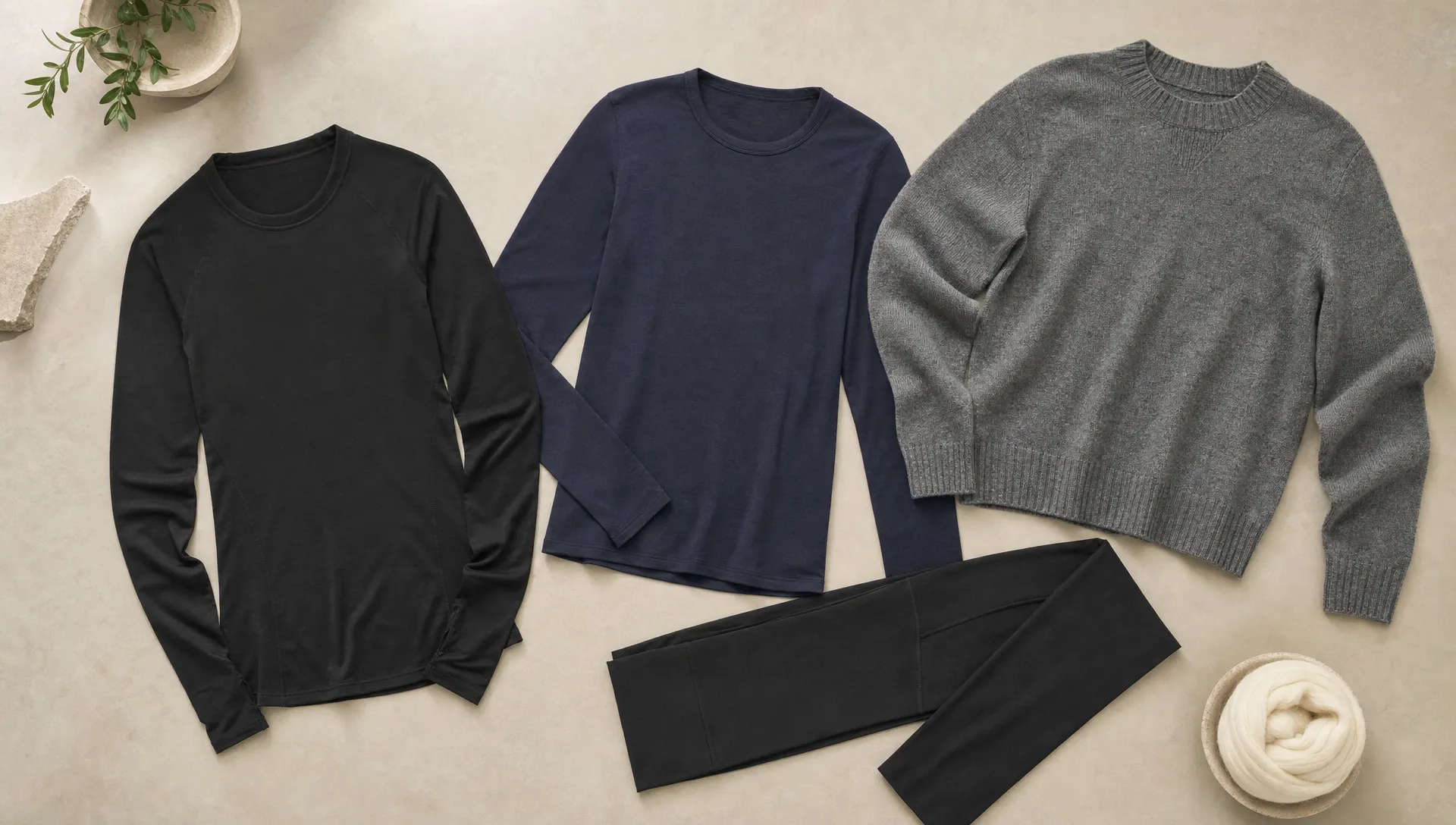
Fabric decisions make or break women's merino wool because the same fiber can feel technical, luxurious, casual or fragile depending on construction. A core collection should not use one fabric everywhere. It should use a controlled fabric system where each weight and knit has a clear reason to exist.
For next-to-skin garments, many brands look for fine merino in the roughly 17.5 to 19.5 micron range because softness is critical. Heavier outer layers may tolerate slightly stronger yarns if the surface feel still matches the brand standard. GSM also matters: a 150 GSM jersey feels like a lightweight tee, while 200 to 250 GSM fabrics are more suitable for warmth or structured layering.
| Fabric choice | Best use | Watchouts |
|---|---|---|
| Lightweight jersey | Tees, tanks, travel tops | Transparency, twisting, neckline recovery |
| Midweight jersey or interlock | Base layers, long sleeves, leggings | Shrinkage, seam bulk, fit tension |
| Rib knit | Turtlenecks, cuffs, fitted tops | Growth after wear, width recovery |
| Fine-gauge knit | Sweaters, cardigans, polos | Pilling, snagging, shape retention |
| Merino blend | Activewear, joggers, underwear | Hand feel, fiber content claims, care testing |
Blends are not a shortcut or a downgrade when they are chosen for a reason. Nylon can improve abrasion resistance, elastane can support stretch recovery and Tencel or other cellulosic fibers can change drape and hand feel. The question is whether the blend supports the garment's end use and the brand's positioning.
Fit, construction and trims that make merino feel premium
Fit is where women's merino wool either becomes a repeat purchase or a return. Merino has natural elasticity, but it is not the same as a high-spandex synthetic fabric. Patterns need enough ease for movement, enough negative ease for warmth where appropriate and enough recovery to maintain shape after wear.
Construction should reduce friction. Flatlock seams are useful for base layers, but they are not always the best choice for refined lifestyle pieces. Fine merino tees may need clean shoulder construction, stable neck binding and hem finishes that do not ripple after washing. Sweaters need careful attention to shoulder slope, armhole depth, sleeve pitch and rib recovery.
Trims also affect quality perception. Scratchy labels can ruin a premium next-to-skin garment. Heavy zippers can distort a lightweight merino hoodie. Waistbands that are too narrow can roll, while elastic that is too firm can make an otherwise soft garment uncomfortable.
A strong development process tests these details before production. Fit samples should be reviewed on the intended body types, not just on a form. Wear testing should include sitting, stretching, layering, laundering and drying in realistic conditions.
Color, SKU count and size strategy
For women's merino wool, a tight launch usually performs better than an oversized assortment. Merino sits at a higher price point than many cotton or synthetic basics, so shoppers need confidence in the garment and color before they buy.
Start with proven core colors: black, charcoal, heather gray, navy, ivory, oatmeal or deep earth tones. Add one or two seasonal colors only if they strengthen the brand point of view. Too many colors can split demand and create inventory risk, especially for small batch manufacturing.
A sample launch matrix might look like this:
| Category | Core colors | Initial size range | Expansion trigger |
|---|---|---|---|
| Base layer crew | Black, charcoal, ivory | XS to XL | Strong cold-weather sell-through |
| Short sleeve tee | Black, heather gray, navy | XS to XL | Repeat purchases and low returns |
| Legging or long underwear | Black, charcoal | XS to XL | Fit validation across sizes |
| Fine-gauge sweater | Oatmeal, navy, black | XS to XL | Low pilling complaints and strong margin |
| Hoodie or jogger | Black, charcoal | XS to XL | Demand for travel or lounge styling |
Size grading deserves more attention than many brands give it. A merino garment that fits beautifully in sample size can fail in larger or smaller sizes if stretch, length, rise and bust shaping are not graded carefully. This is especially true for base layers, leggings and fitted tops.
Testing before launch
Before approving production, test women's merino wool garments for the issues customers will notice first: shrinkage, pilling, odor retention, seam comfort, colorfastness and recovery after wear. The exact tests depend on the garment category, but the goal is always the same: confirm that the product performs the way the brand intends to market it.
Care instructions should be validated, not assumed. If the garment is labeled machine washable, test it through multiple wash cycles using the intended care method. Measure length, width, sleeve, inseam and key fit points before and after laundering. Track twisting, surface fuzz, seam movement and hand feel.
Wear testing adds context that lab results cannot fully capture. A base layer may pass dimensional testing but feel too warm during high-output activity. A sweater may look beautiful on day one but pill under a crossbody bag. A jogger may feel soft but stretch out after a long flight.
Working with a manufacturer on a merino core collection
A focused women's merino wool collection benefits from early manufacturer involvement because fabric, pattern, construction and costing are tightly connected. The same design sketch can become several very different products depending on yarn, GSM, knit structure, seam type and finishing.
A development partner can help narrow the collection, source appropriate materials, create patterns, manage samples and plan production around realistic minimums. That matters for emerging brands that want to test the market without overcommitting, as well as established brands that need consistent quality across repeat orders.
Arcus Apparel Group supports brands with custom apparel development, material sourcing, pattern development, small batch manufacturing, low minimum order quantities, international manufacturing options and quality control across the production process. If you are building a merino line from concept to production, working with a custom clothing manufacturer can help connect the creative vision to manufacturable garments.
Frequently Asked Questions
What is the best first garment for a merino core collection? A short sleeve tee, long sleeve base layer or lightweight sweater is often the best starting point because each category is easy for customers to understand and can be worn often.
Should a merino collection use 100 percent merino or blends? Both can work. Pure merino supports a natural fiber story and soft hand feel, while blends can improve stretch recovery, abrasion resistance, durability or drape depending on the end use.
How many styles should a brand launch with? Most women's merino wool core collections are stronger with 4 to 8 well-developed styles than with a broad assortment. Focus on fit, fabric and color discipline before expanding.
What fabric weight is best for women's merino garments? Lightweight fabrics around 150 GSM are common for tees, midweight fabrics around 180 to 220 GSM suit base layers and heavier weights can support leggings, thermal pieces, hoodies or structured layers.
Build a focused merino collection with Arcus
A core collection should feel intentional from the first sample to the final production run. For merino, that means choosing the right garments, validating the fabric and engineering fit details that match how the customer will actually wear each piece.
If your brand is developing a women's merino wool collection, Arcus Apparel Group can help turn the assortment strategy into manufacturable garments through development, sourcing, sampling and production support. Start with a focused core, test it carefully and scale the styles that prove their value.



