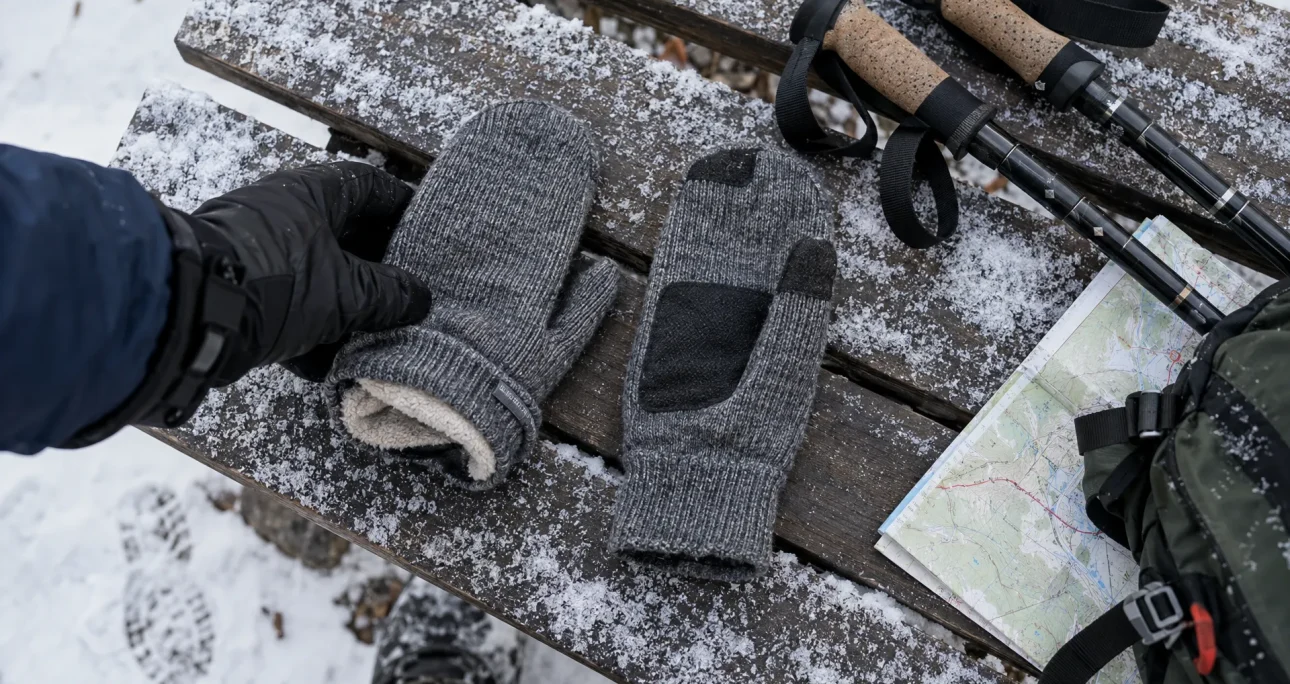
Warmth is only one part of developing merino wool mittens. A successful pair also needs a comfortable thumb pocket, durable fingertips, a cuff that stays in place and enough room for the hand to move without compressing the insulating material. Those requirements depend as much on construction as they do on fiber selection.
For apparel brands, the starting point is a clear use case: lightweight everyday wear, an insulating liner under a shell or a heavier standalone mitten. This guide explains how to translate that choice into material specifications, construction details and practical sample checks.
Define the wearing conditions first
A mitten keeps four fingers together in a shared compartment, which generally helps retain warmth compared with separating each finger. However, an open knit can still admit cold air, and wool alone does not provide a waterproof barrier.
An everyday city mitten may prioritize softness, low bulk and easy pocket storage. A liner needs a smooth exterior and minimal seam bulk so it fits beneath another glove or mitten. A standalone outdoor design may need a denser structure, reinforcement or a separate protective shell.
For merino wool mittens, decide early whether the wool will be the exposed outer layer or the insulation beneath another material. That decision affects abrasion resistance, fit allowance and how you evaluate the finished sample.
Also define the expected activity. Holding a phone briefly creates different demands from repeatedly gripping trekking poles or bicycle handlebars. The latter introduces concentrated wear at the palm, thumb and fingertips, even when the rest of the mitten remains in good condition.
Avoid assigning a temperature rating from fiber content or fabric weight alone. Wind, moisture, activity level and the complete layering system all influence comfort. Any temperature claim needs evidence appropriate to the finished product and its intended use.
Choosing materials for merino wool mittens
Fiber diameter and next-to-skin comfort
Merino describes a wool type, not a single softness grade. Fiber diameter, usually specified in microns, is an important purchasing detail because finer fibers generally feel softer against the skin.
A range around 18 to 21 microns can be a useful starting point for next-to-skin sampling, but it is not a universal comfort specification. Sensitivity varies, and yarn construction, finishing and exposed fiber ends also affect feel.
When developing merino wool mittens, assess softness inside the thumb pocket and across the finger compartment, not just on a flat swatch. Seams and concentrated pressure can reveal discomfort that a quick hand-feel check misses.
Woolmark’s overview of wool fiber explains characteristics such as natural crimp and moisture absorption. These properties help explain wool’s usefulness in insulating apparel, but they do not make every wool construction equally warm or durable.
Pure wool versus reinforced blends
Pure merino can suit products that prioritize fiber composition and softness. A blend can be useful where repeated rubbing or stretching makes durability a larger concern.
| Material approach | Why consider it | What to verify in sampling |
|---|---|---|
| 100% merino wool | Wool-focused composition and next-to-skin comfort | Pilling, abrasion and shape recovery |
| Merino with nylon | Reinforcement for areas exposed to repeated wear | Actual abrasion performance and hand feel |
| Merino with polyester | An alternative blend for balancing performance and cost | Moisture behavior, surface feel and pilling |
| Merino with elastane | Stretch and recovery where close fit is needed | Pressure, recovery and care compatibility |
Fiber percentages alone do not explain performance. A reinforcing filament within a yarn behaves differently from a separate reinforcement panel, and finishing can change the result. Request the yarn or fabric specification rather than relying only on a composition label.
Choose a construction route
Knitted-to-shape construction
A shaped knit can create the hand compartment, thumb and cuff through changes in stitch count and structure. Depending on the equipment and design, some areas may still require linking or sewing.
For merino wool mittens, shaped knitting offers control over hand volume and reinforcement placement, but the thumb junction and fingertip closure still need careful review. “Seamless” should describe the actual construction, not imply that every internal surface will be equally smooth.
Specify yarn count, ply, stitch structure and machine gauge together. Machine gauge describes needle spacing; it does not independently establish finished thickness or warmth. Loop length and finishing also matter. Arcus’s guide to merino yarn, gauge and care basics provides useful background on those relationships.
Cut-and-sew construction
Cut-and-sew mittens use fabric panels, often with a separate thumb piece or gusset. This route allows developers to work with existing knitted fabrics and combine different materials at the palm, cuff or lining.
Check the direction of stretch when laying out each panel. A fabric that stretches comfortably around the hand may behave differently along the fingers. Left and right pieces must also be correctly mirrored.
Select seams for the actual fabric thickness and stretch. A low-profile seam can improve comfort, but no stitch type is automatically best. Inspect whether the seam stretches sufficiently, whether its allowance presses against the hand and whether the fabric distorts during sewing.
Engineer the hand compartment and thumb
Fit without compressing the insulation
Measure hand circumference and hand length, then define the intended ease. A liner typically needs a closer fit than a mitten designed to accommodate another layer.
The finger compartment should allow the fingers to rest naturally and curl around an object. Excess length reduces control, while insufficient length places pressure on the fingertips and can pull the cuff upward.
Assess merino wool mittens with the hand open, partially closed and gripping an object representative of the intended activity. A pair that looks correct on a flat table can still bind across the knuckles during use.
Thumb placement and stress points
The thumb needs its own fit development rather than being treated as a small finger tube. Its position, angle and circumference determine whether the wearer can oppose the thumb comfortably against the fingers.
Pay particular attention to the thumb web, where movement repeatedly loads the construction. Reinforcement should distribute that load without forming a stiff ridge or restricting movement.
At the fingertips, check closure bulk and symmetry. A thick internal seam can create a pressure point, while an unstable knitted closure may open or distort. Evaluate complete left-right pairs so differences in thumb angle, length or finishing are visible before approval.
Build the cuff, lining and reinforcement as one system
A cuff needs enough stretch for entry and enough recovery to remain secure. Rib knitting is a common option, but rib structure alone does not guarantee retention. Yarn choice, cuff dimensions and any elastic component all contribute.
Choose cuff length according to the intended sleeve overlap. A longer cuff can help close the wrist gap, but it must work with the jacket rather than bunch beneath it. Check entry over the widest part of the hand as well as pressure around the wrist.
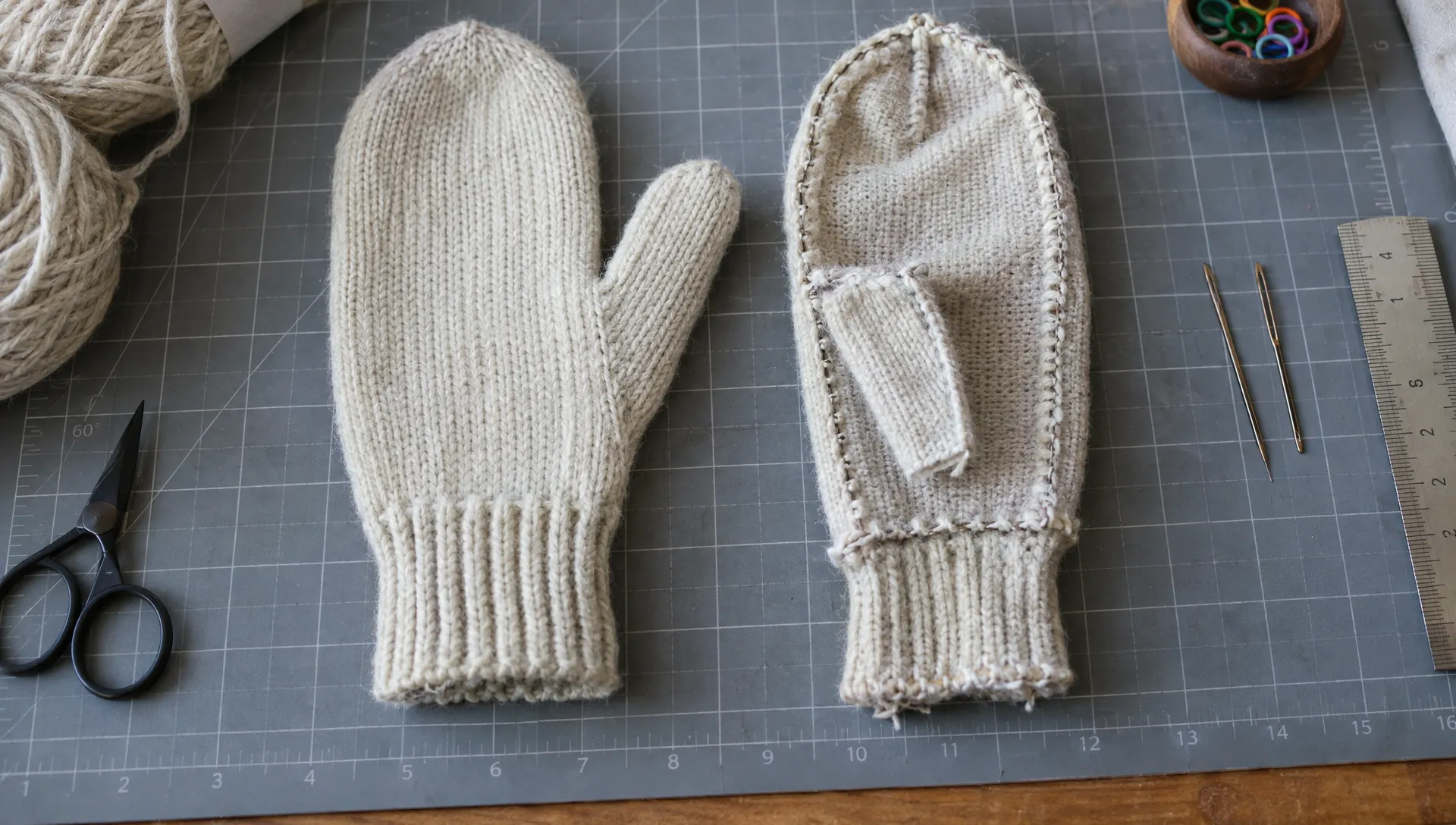
For merino wool mittens with a lining, allow space for both layers without creating loose folds inside the finger compartment. Secure the lining where necessary so it does not pull out or rotate during removal, especially at the thumb and fingertips.
A double-layer wool construction can increase insulation and coverage, but it also adds bulk and may take longer to dry. A separate wind-resistant or waterproof shell changes the system again and requires its own material and construction specifications.
Palm patches or grip applications need testing on the chosen substrate. Check flexibility, attachment strength and performance after washing. Reinforcement that protects the surface but makes the mitten difficult to bend is a poor trade-off for many uses.
Test the finished pair, not just the material
Dimensional stability and care
Wool can shrink or felt under unsuitable washing conditions. If a supplier offers machine-washable wool, confirm the treatment, recommended care process and performance of the complete assembly. The main material, thread, lining and reinforcement must all tolerate the proposed care instructions.
For merino wool mittens, record relaxed dimensions before washing and after the agreed wash-and-dry procedure. Include hand width, finger-compartment length, thumb length and cuff opening rather than checking only overall length.
ISO 6330 provides standardized domestic washing and drying procedures, while ISO 5077 addresses dimensional-change measurement. A testing laboratory can help select an appropriate procedure for the intended care claim.
Set acceptance limits before testing. A small dimensional change may still make the thumb uncomfortable or the cuff difficult to pull on. Woolmark’s care guidance is useful background, but the product’s care label should follow evidence from its actual materials and construction.
Wear, recovery and production consistency
Evaluate abrasion where the product will experience it: the palm, thumb contact area and fingertips. Check pilling separately, since surface fuzzing and structural wear are different problems.
Stretch the cuff and hand opening repeatedly, then assess recovery after a defined rest period. Wear trials should also identify seam pressure, lining movement and difficulty removing the mitten.
For production approval, compare multiple pairs for dimensional consistency, closure quality, dropped stitches or seam defects. Confirm that left and right mittens match in size, color and construction.
Put the decisions into a usable tech pack
A useful tech pack connects material choices to measurable product requirements. It should distinguish design intent from details the manufacturer must reproduce.
For merino wool mittens, include a measurement diagram that identifies the thumb position and finger compartment clearly. Overall length and width alone leave too much room for interpretation.
Core specifications should cover:
- Materials: Fiber composition, micron specification where relevant, yarn or fabric reference, color and approved finish.
- Construction: Knit structure or panel layout, seam and closure details, cuff design and reinforcement placement.
- Fit: Size chart, measurement method, intended ease, tolerances and left-right requirements.
- Performance: Agreed checks for washing, abrasion, pilling, stretch recovery and attachment strength.
- Approval: Reference samples, care-label requirements and a record of accepted changes.
Ask the manufacturer to flag equipment limitations and material substitutions before sampling. A proposed change in yarn, seam or reinforcement should be evaluated against the same requirements as the original design, not accepted solely because it looks similar.
Frequently asked questions
Are merino wool mittens waterproof? No. Wool can absorb moisture, but a wool knit is not a waterproof barrier. Products intended for wet conditions need a suitable protective shell or other verified waterproof construction.
Is 100% merino better than a blend? It depends on the priorities. Pure merino may suit a wool-focused product, while a blend can help address durability or stretch. Compare finished samples rather than assuming composition alone determines quality.
Does a thicker mitten always feel warmer? Not necessarily. Thickness can help retain insulating air, but fit, knit openness, wind exposure and moisture also matter. A tight mitten that compresses its materials may perform differently from a correctly fitted one.
Can the same pattern work for a liner and a standalone mitten? It may provide a starting point, but each needs separate fit validation. Layering allowance, seam bulk and intended grip can require changes to the hand compartment, thumb and cuff.
Plan development around the finished product
Start with the wearing conditions, select a material and construction route, then approve fit and care performance on complete pairs. This sequence makes problems easier to identify before committing to production.
Arcus Apparel Group offers custom apparel development, material sourcing, pattern development and small-batch manufacturing. Share your intended use, construction concept and testing requirements to discuss suitable production options and the capabilities needed for your mitten project.