
For apparel brands, developing a merino wool shirt womens shoppers will actually keep in rotation comes down to two decisions: fabric weight and fit. Merino can feel polished enough for travel, soft enough for daily wear and technical enough for light outdoor use, but only when the fabric specification supports the intended silhouette.
Women's merino shirts sit in a practical middle ground. They are not always compression base layers, relaxed lifestyle tees or sweaters, yet they borrow requirements from all three categories. A 145 gsm jersey can make sense for a warm weather travel top, while a 210 gsm interlock may be better for opacity, structure and year-round layering. The right choice depends less on a generic premium feel and more on how the garment will be worn, washed, packed and styled.
Merino Wool Shirt Womens: Start With the Wearing Occasion
Before choosing a yarn, GSM or neckline, define the job of the shirt. A fitted next-to-skin layer needs stretch recovery, low-bulk seams and a stable body length. A refined everyday shirt needs enough drape to avoid looking athletic, yet enough recovery to avoid bagging at the elbows or hem. A travel shirt needs odor resistance, crease recovery and reliable coverage in motion.
The Woolmark Company describes merino wool as naturally breathable, moisture managing and odor resistant, which is why brands often use it for products that cross over between lifestyle and performance. Those properties matter, but they do not remove the need for disciplined garment engineering. If the fabric is too sheer, too clingy or poorly graded, the fiber story will not save the product.
| Intended use | Common fabric weight | Fit direction | Main development risk |
|---|---|---|---|
| Warm weather lifestyle shirt | 130 to 160 gsm | Relaxed or gently shaped | Sheerness, twisting, weak recovery |
| Everyday tee or knit shirt | 160 to 190 gsm | Semi-fitted or regular | Poor drape, neckline stretch |
| Travel shirt | 170 to 210 gsm | Regular with easy movement | Pilling, sleeve bagging, slow drying |
| Performance layer | 140 to 180 gsm | Close to body | Chafing, ride-up, over-compression |
| Cold weather layering shirt | 200 to 260 gsm | Regular or body-skimming | Bulk, reduced breathability, shrinkage |
When a merino wool shirt womens line is positioned for travel or everyday wear, the 160 to 210 gsm range often gives a better balance of opacity, hand feel and recovery than very lightweight jersey.
How Fabric Weight Changes Comfort and Appearance
Fabric weight is usually expressed in GSM, meaning grams per square meter. It does not tell the full story, since yarn count, knit construction and finishing also affect the result, but GSM gives the design and production team a useful starting point.
130 to 160 gsm: light, breathable and packable
Lightweight merino works well for warm conditions, active travel and close-to-body layering. It usually dries faster and packs smaller than heavier weights. For women's shirts, the tradeoff is coverage. Pale colors, slim fits and single jersey structures can become too transparent, especially across the bust or back.
A lightweight shirt should be tested on the body, not only on a hanger. Check whether the garment clings after movement, whether the hem flips and whether the shoulder seams stabilize the upper body without pulling.
160 to 200 gsm: the most versatile range
This is often the safest commercial zone for a women's merino shirt intended for daily wear. The fabric has enough substance for opacity and a cleaner silhouette, but it can still feel soft, breathable and suitable for layering under jackets or sweaters.
For a merino wool shirt womens program with multiple colors, midweight fabric also gives the development team more flexibility. Dark shades may work at lighter weights, while white, cream, pale blue or blush often need added structure, a denser knit or a blend to preserve coverage.
200 to 260 gsm: structure, warmth and premium hand
Heavier merino shirts can feel more substantial and polished, especially in interlock, ponte-like knits or dense rib structures. They are useful for fall collections, overshirt-inspired knit tops and cold weather layering.
The risk is bulk. If the shirt is meant to tuck in, sit under a blazer or work as an active base layer, too much weight can make it feel restrictive. Brands should also check drying time, dimensional stability and seam bulk before committing to a heavier fabric.
Fiber Micron, Knit Construction and Blends
Merino comfort depends heavily on fiber fineness. Many next-to-skin merino garments use fibers around 17.5 to 19.5 microns, although final softness also depends on spinning, knitting, washing and finishing. A finer fiber can improve skin feel, but it can also increase cost and may require more careful testing for durability.
Knit construction is just as influential. Single jersey gives softness and drape, but it may twist or show transparency at lighter weights. Interlock feels smoother and more stable, but it can run warmer. Rib adds stretch and shape retention, yet it can cling if the pattern is not balanced.
For a merino wool shirt womens assortment, the knit often matters as much as fiber fineness because it controls stretch direction, surface texture and garment recovery.
| Knit construction | Best use | Fit impact |
|---|---|---|
| Single jersey | Everyday tees, travel tops, light layers | Soft drape, may need stabilization |
| Interlock | polished shirts, colder weather tops | Smoother surface, more structure |
| Rib knit | fitted layers, cuffs, neck trims | High stretch, closer body feel |
| Jersey blend with nylon or elastane | active and travel shirts | Better recovery and abrasion resistance |
Blends can be useful when the shirt needs extra resilience. Nylon can improve strength, while elastane can help stretch recovery in close fits. A 100 percent merino shirt may suit a natural fiber positioning, but blends often perform better for high-movement or high-wash products.
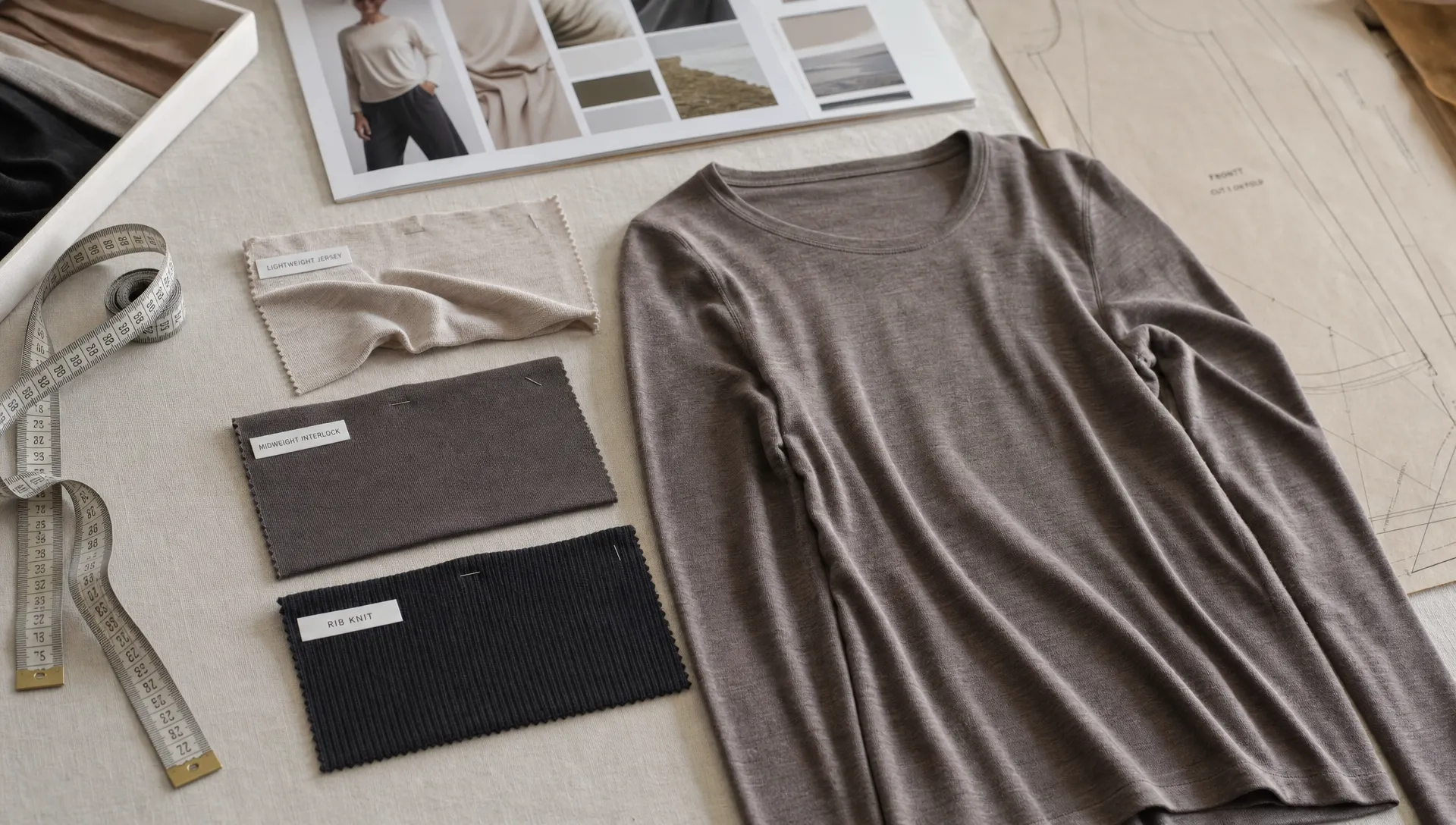
Fit Strategy: Build Around the Female Body, Not a Unisex Block
Women's merino shirts should not be developed by shrinking a men's or unisex block. Bust shaping, shoulder slope, torso length, hip width and sleeve proportion all influence whether the shirt feels intentional or awkward. The more fitted the garment, the more important these zones become.
If the product is intended to sit directly under outdoor layers, the fit logic is closer to women's merino wool base layers. If it is meant to function as a daily tee or polished knit shirt, comfort ease and visual balance become more important than compression.
Key fit zones to evaluate
The shoulder seam should sit cleanly without pulling toward the neck or dropping so far that the sleeve twists. The bust needs enough room for movement without horizontal strain lines. The waist can be shaped, but excessive tapering causes ride-up when the wearer sits or reaches. The hip opening should match the intended styling, especially if the shirt is worn untucked.
A merino wool shirt womens customer may reject an otherwise premium garment if the bust pulls, the hem rides up or the sleeve twists after laundering.
Fit direction by product type
| Product type | Recommended fit approach | Fit check priority |
|---|---|---|
| Everyday short sleeve shirt | Regular or gently shaped | Bust ease, neckline recovery, hem level |
| Long sleeve layering shirt | Body-skimming, not restrictive | Sleeve rotation, underarm comfort, body length |
| Travel shirt | Regular with movement ease | Shoulder mobility, wrinkle recovery, hip opening |
| Performance shirt | Close fit with stretch recovery | Chafe points, hem ride-up, moisture comfort |
For long sleeve concepts, designers should also consider cuff stretch, elbow recovery and sleeve length after washing. Arcus has a separate guide to merino wool long-sleeve shirts if your product brief is more layering or performance focused.
Pattern Development and Grading Decisions
Pattern development should happen alongside fabric testing. Merino knits can grow during wear, shrink after laundering or change behavior after finishing. A pattern approved in one fabric may not transfer cleanly to another, even if the GSM looks similar on paper.
Start with a clear sample size and define the intended ease at bust, waist and hip. Then test that size across real movement, including reaching forward, sitting, layering under a jacket and raising the arms. If the shirt is marketed for travel or outdoor use, fit testing should include a backpack strap or outer layer because friction can expose seam and neckline issues.
In production, a merino wool shirt womens block should be graded with attention to bust depth, shoulder width and body length, not simply expanded evenly across all points of measure.
Grading mistakes often show up at the edges of the size range. Smaller sizes can become too short or narrow at the hip, while larger sizes may gain width without enough length or armhole refinement. Review the grade rule before bulk production, especially if the brand plans to extend sizing.
Construction Details That Protect Fit
Good fabric can still fail if the construction does not support it. Merino shirts benefit from clean seams, stable necklines and trims that recover after repeated wear. Lightweight fabrics may need shoulder reinforcement or carefully selected binding to prevent stretching.
For a merino wool shirt womens style with a close fit, seam placement can make the difference between technical comfort and daily irritation. Flat seams or low-profile overlock seams can reduce bulk, particularly at the underarm and side body. For more polished lifestyle shirts, seam appearance may matter as much as feel.
Neckline construction deserves special attention. Crew necks should recover after dressing, V-necks need balanced tension to avoid rippling and wider necklines should be tested for slippage. Hems should be stable without feeling rigid, especially on curved or shaped bottoms.
Brands planning a broader merino knit collection can use the development principles in Arcus Apparel Group's guide to merino wool T-shirts as a reference point, then refine the fit for women's body measurements and styling needs.
Testing Before Moving Into Production
Testing is where fabric weight and fit assumptions become measurable. Before a merino wool shirt womens program moves into production, confirm how the fabric behaves after laundering, drying, abrasion and repeated fitting.
Common evaluations include dimensional change, spirality, pilling, colorfastness, seam strength and stretch recovery. For customer experience, wash the approved sample several times and fit it again. A shirt that looks excellent before laundering but shortens, twists or loses neckline recovery will create returns and damage trust.
| Test area | Why it matters | What to review |
|---|---|---|
| Dimensional stability | Merino can shrink if not controlled | Body length, sleeve length, width change |
| Spirality | Knit distortion affects appearance | Side seam rotation after wash |
| Pilling | Surface wear influences perceived quality | Underarm, hip, backpack contact zones |
| Stretch recovery | Fit depends on return after movement | Neckline, elbow, bust and hem recovery |
| Colorfastness | Travel and active shirts face sweat and washing | Shade change, crocking, bleeding |
Production planning should also account for material sourcing, trim compatibility, shrinkage allowances and quality control checkpoints. If a brand is using small batch manufacturing to validate demand, the sample process still needs to be rigorous enough to scale later.
Working With the Right Manufacturing Partner
A women's merino shirt involves more than buying a soft fabric and approving a sketch. The strongest products come from a connected process: material sourcing, pattern development, sampling, fit correction, testing and production management.
Arcus Apparel Group supports custom apparel development and manufacturing for brands that want help moving from concept to production. That can include sourcing, pattern development, small batch manufacturing, low minimum order quantity planning, in-house production management, international manufacturing options and quality control at each stage.
For brands developing merino, this kind of end-to-end coordination is useful because fabric behavior, fit and construction decisions are linked. A change in GSM can affect drape. A change in knit can affect sizing. A change in finishing can affect shrinkage. Managing those decisions together helps protect the final garment.
Frequently Asked Questions
What is the best GSM for a women's merino wool shirt? For most everyday products, 160 to 200 gsm is a practical starting point. It offers a good balance of softness, opacity, breathability and durability. A merino wool shirt womens product designed for hot weather may go lighter, while cold weather or structured styles may need 200 gsm or more.
Is 100 percent merino better than a merino blend? Not always. 100 percent merino supports a natural fiber story and can feel very soft, but blends with nylon or elastane may improve recovery, strength and abrasion resistance. The better option depends on the intended use, price point and durability target.
Should a women's merino shirt fit tightly? Only if it is designed as a base layer or performance top. Everyday and travel shirts usually perform better with a regular or gently shaped fit that allows movement, reduces cling and improves drape.
Does merino wool shrink after washing? It can if the fabric and finishing are not properly controlled. Brands should test dimensional stability before production and give customers clear care instructions based on the approved material.
Which areas matter most during fit testing? Focus on the bust, shoulder, armhole, sleeve rotation, body length and hip opening. These zones determine whether the shirt feels comfortable during daily movement and whether the silhouette stays balanced after washing.
Build a Better Women's Merino Shirt
If you are planning a women's merino collection, the right fabric weight and fit strategy should be built into development from the first sample. Arcus Apparel Group can help connect material sourcing, pattern development, small batch manufacturing and production management so your garment is designed to perform before it reaches the customer.
To discuss a custom apparel project, visit Arcus Apparel Group and explore how an end-to-end manufacturing partner can support your next merino program.



