A merino sun hoody needs to do more than feel light on a warm day. It must maintain useful coverage as the wearer moves, manage heat without exposing vulnerable areas and support any ultraviolet protection claims with appropriate testing. Soft wool and long sleeves alone do not establish sun protection.
For apparel brands, the development challenge is balancing those requirements without creating a garment that feels restrictive or traps too much heat. The most consequential decisions involve fabric construction, hood geometry, sleeve reach and ventilation placement. Build those details into the initial brief, then evaluate the finished garment rather than relying only on a supplier’s fabric description.
Define the Merino Sun Hoody Protection Target
Start with the intended activity. A hiking garment worn beneath backpack straps faces different demands from a fishing top exposed to reflected sunlight or a casual travel layer. Identify likely temperatures, activity intensity, exposure duration and whether the garment will regularly become wet.
Next, separate fabric protection from garment coverage. Ultraviolet protection factor, or UPF, describes how much UV radiation passes through tested material. It does not tell you whether a hood stays over the ears or whether sleeves retract when the wearer reaches overhead.
A merino sun hoody development brief should therefore include both a substantiated fabric-performance target and measurable coverage requirements. If the commercial goal is a UPF 50 claim, treat that as a testing objective, not a presumed property of wool.
| Development requirement | What to specify | How to check it |
|---|---|---|
| UV protection | Intended UPF claim and relevant test conditions | Laboratory testing using appropriate methods |
| Head and neck coverage | Hood opening, depth and neckline overlap | Movement checks with the hood raised |
| Arm and hand coverage | Sleeve reach and optional thumbhole position | Reaching, gripping and overhead movement |
| Summer comfort | Fit ease and ventilation locations | Wear trials in representative conditions |
| Care durability | Care instructions and acceptable dimensional change | Laundering followed by fit and performance checks |
Keep facial protection outside the garment’s promise unless a specific design and evidence support it. An ordinary hood leaves much of the face exposed, so the wearer still needs other sun-protection measures.
Choose Fabric by Construction, Not Fiber Name Alone
Lightweight does not automatically mean protective
Merino wool can absorb moisture vapor and offers useful odor-management characteristics, but neither benefit establishes a UPF rating. UV transmission also depends on yarn, knit density, fabric thickness, color and finishing.
A lightweight, open jersey may feel comfortable while allowing too much radiation through for the intended claim. Conversely, increasing density can improve coverage but change airflow, drape and drying behavior. Compare actual swatches rather than selecting from weight alone.
For a merino sun hoody, an exploratory fabric brief might compare several constructions around 140 to 180 grams per square meter. That range is a sampling starting point, not a guarantee of summer comfort or UV protection. Include alternatives outside it if the first candidates fail testing or feel too warm.
Record fabric weight, construction, composition and finish alongside laboratory results. Keeping those details together makes it easier to identify which material actually meets the brief.
Evaluate blends and colors separately
Blending wool with nylon or polyester can change abrasion resistance, drying behavior and dimensional stability. Elastane can improve recovery, but a fabric that stretches substantially during wear may also open its structure. Specify the blend to solve a defined problem, then test the resulting material.
Color deserves the same attention. Dye can influence UV transmission, but a dark color is not proof of adequate protection. Do not assume that testing one colorway substantiates every color in the collection.
For broader material and fit considerations, Arcus’s guide to developing merino wool long-sleeve shirts provides useful context. The additional requirement here is to connect those decisions to verified UV performance and continuous coverage.
Shape the Hood to Stay Useful in Motion
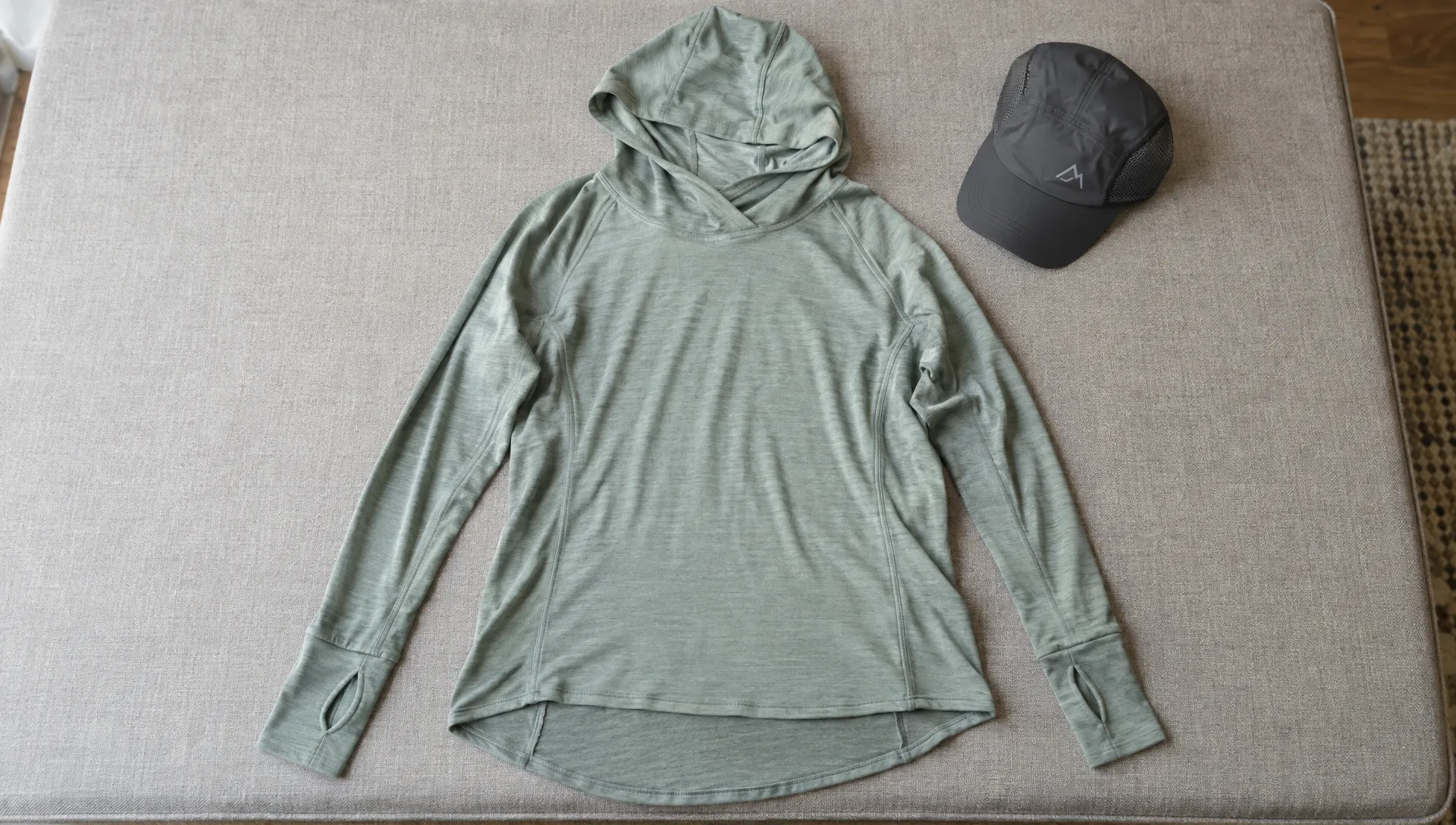
A merino sun hoody should cover the intended areas when the wearer turns, looks down or raises an arm, not just when standing still. Hood depth, crown volume and the relationship between the neckline and front opening all affect that result.
An opening that is too generous can expose the ears and sides of the neck. One that is too tight may pull against the throat or discourage use in hot weather. Start with coverage landmarks, such as the ears and back of the neck, then check whether the hood remains comfortable across the intended size range.
Test with the accessories customers actually use
Fit the hood over a cap if that combination is part of the use case. For helmet-compatible designs, develop around the relevant helmet category rather than adding unspecified extra volume. Both configurations change opening tension and how the hood moves with the head.
Use adjustment only where it solves an observed problem. Elastic binding or an adjustable opening may improve retention, but either can create pressure, friction or unnecessary complexity. A cap brim may provide additional shade, yet it should not be presented as complete facial protection.
The principles in designing a merino hoodie without unnecessary bulk remain useful for managing seams and drape. For this style, prioritize coverage retention over a relaxed hood silhouette.
Maintain Sleeve and Hem Coverage During Movement
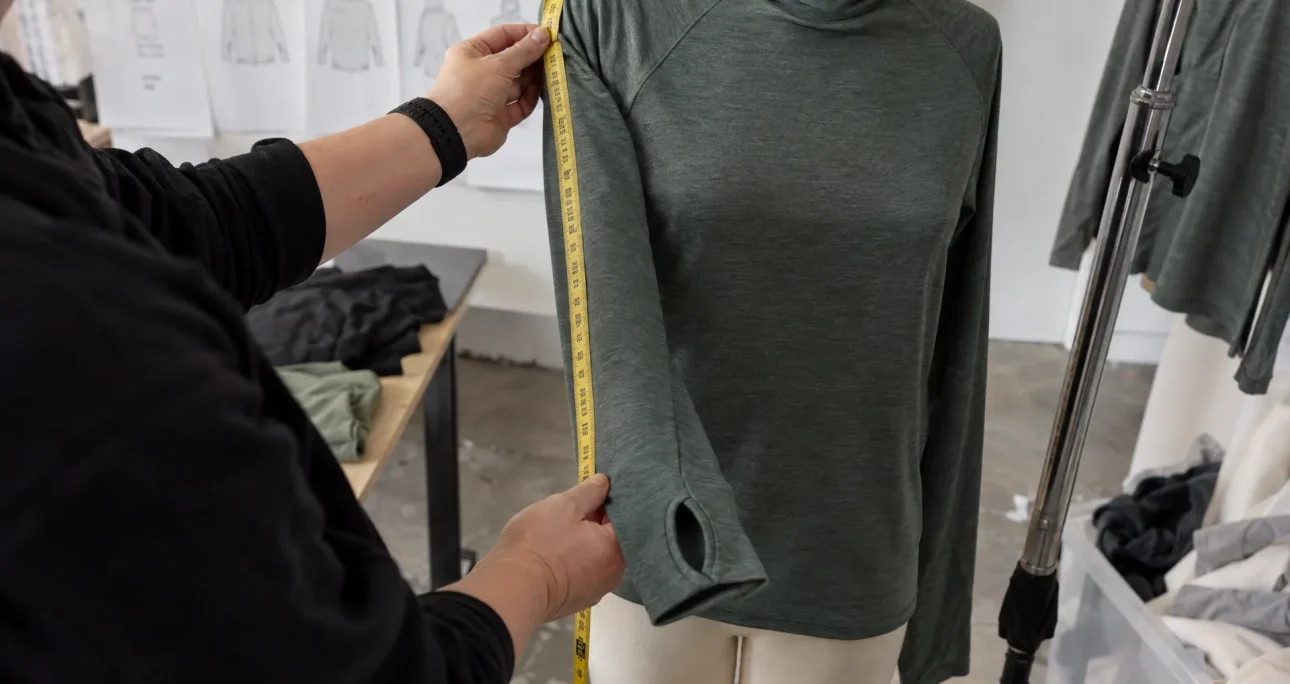
The sleeve pattern of a merino sun hoody should be evaluated in the positions customers will use most. A sleeve that reaches the wrist while standing can expose several inches of forearm during climbing, casting or reaching for trekking poles.
Assess sleeve length together with shoulder shape, armhole geometry and fabric stretch. Adding length alone can leave excess material bunching at the wrist without correcting restricted movement. A gusset, revised sleeve pitch or better shoulder balance may address the underlying issue more effectively.
Treat thumbholes as a functional option
Thumbholes can help retain sleeve position and extend coverage over part of the hand. They also create localized tension and an opening that can become uncomfortable during gripping. Check their placement with bare hands and any gloves expected in the use case.
Inspect the cuff both with and without the thumb engaged. The fabric should not pull tightly across the back of the hand, and unused openings should not distort the sleeve. Avoid claiming full hand protection when fingers and other areas remain exposed.
Hem coverage needs a similar movement check. Test overhead reach, forward bending and seated positions. A slightly longer back hem may help preserve lower-back coverage, but too much length can interfere with harnesses or bunch beneath a pack belt.
Add Ventilation Without Weakening the Protection Claim
Ventilation can improve comfort, but placing open mesh in a sun-exposed panel creates a potential weak point. A merino sun hoody should not carry an overall protection claim based only on its main body fabric if other exposed materials have not been appropriately evaluated.
Underarm panels may be less exposed in some positions, yet they become visible when arms lift. Side vents can open during movement, and perforations or loose-knit panels can change UV transmission substantially. Map those areas before approving the design.
First investigate ventilation through fit: enough ease for air movement, an opening that does not press against the neck and sleeves that avoid unnecessary compression. If mesh is still needed, assess its protection performance and determine how it affects the garment’s labeling.
A short front opening can provide adjustable ventilation, but opening it exposes skin. That trade-off belongs in product-use guidance rather than being hidden behind a UPF claim. Keep hardware light and protect the chin from zipper contact if a zip is used.
Validate UV Performance and Wearability Separately
Establish the laboratory testing plan
Ask a qualified textile laboratory which methods and preparation conditions apply to the intended market and claim. Relevant US references include AATCC TM183 for measuring UV transmission through fabric, ASTM D6544 for preparing textiles before UV testing and ASTM D6603 for labeling UV-protective textiles.
For a merino sun hoody, the test plan should address the actual materials and relevant use conditions, including whether wetness, stretch, laundering or other exposures need evaluation. Use the applicable current standards and have the laboratory explain what the results substantiate.
Nominally, UPF 50 corresponds to transmission of about one-fiftieth of the measured, weighted UV radiation. It does not mean unlimited safe exposure or protection for uncovered skin. The Skin Cancer Foundation’s guidance on sun-protective clothing explains why fabric, fit and coverage all matter.
Run a separate garment wear trial
Laboratory results cannot establish whether customers will keep the hood raised or tolerate the garment during sustained activity. Use wear trials to observe heat discomfort, neck friction, sleeve migration and coverage loss.
Select testers who represent the intended size range and activity. Record conditions and tasks so feedback is comparable. “Too hot” is more useful when accompanied by air temperature, exertion level, pack use and the location of discomfort.
After laundering, repeat key measurements and movement checks. Shrinkage can shorten sleeves or change hood fit, while distortion may alter how panels sit on the body. If construction or material changes affect the protection claim, agree on retesting requirements before approving production.
Translate the Results Into Production Specifications
A production-ready merino sun hoody tech pack should make the accepted sample reproducible. Record the fabric supplier reference, composition, weight, construction and approved colorways alongside the relevant test reports. Specify substitutions as approval-required rather than allowing an apparently similar material by default.
Include measurements that control coverage: hood depth, face opening, neckline height, sleeve length, cuff extension and hem length. State how those measurements are taken and establish tolerances based on the construction and approved sample.
Keep movement criteria alongside the measurement chart. A garment can meet flat measurements yet still pull away from the wrist because of sleeve pitch or shoulder fit. Photographs of agreed fit positions help communicate the intended outcome.
Finally, define production checks for material identity, panel placement, seam quality and dimensional consistency. Where feasible, use a pilot run to confirm that bulk fabric and repeat production preserve the fit and coverage established during development. Any material substitution should trigger a review of the supporting protection evidence.
Frequently Asked Questions
Is merino wool naturally UPF 50? No. Fiber identity alone does not establish a UPF rating. The finished fabric’s construction, color, finishing and condition influence UV transmission, so the intended claim needs appropriate testing.
Is 100% wool better than a blend for this garment? Neither is automatically better. A merino sun hoody made from a blend may address durability or recovery needs, while an all-wool option may suit other priorities. Compare comfort, coverage and tested performance rather than composition alone.
Should every colorway be tested? Do not assume one result covers the whole range. Agree on a colorway testing strategy with the laboratory, including whether any grouping is technically justified and acceptable for the intended claim.
Does a protective hood replace sunscreen or a hat? No. An ordinary hood leaves parts of the face and other skin exposed. Combine clothing with suitable protection for uncovered areas and avoid presenting a UPF rating as whole-body protection.
Develop the Garment Around a Clear Brief
Bring your activity profile, coverage requirements, fabric candidates and intended protection claim to the development conversation. Those inputs make sourcing and sampling more focused.
Arcus Apparel Group supports custom apparel development, material sourcing, pattern development and manufacturing with quality control throughout the process. Discuss how to incorporate your testing requirements and approved coverage details into a small-batch launch or a larger production program before finalizing the garment.