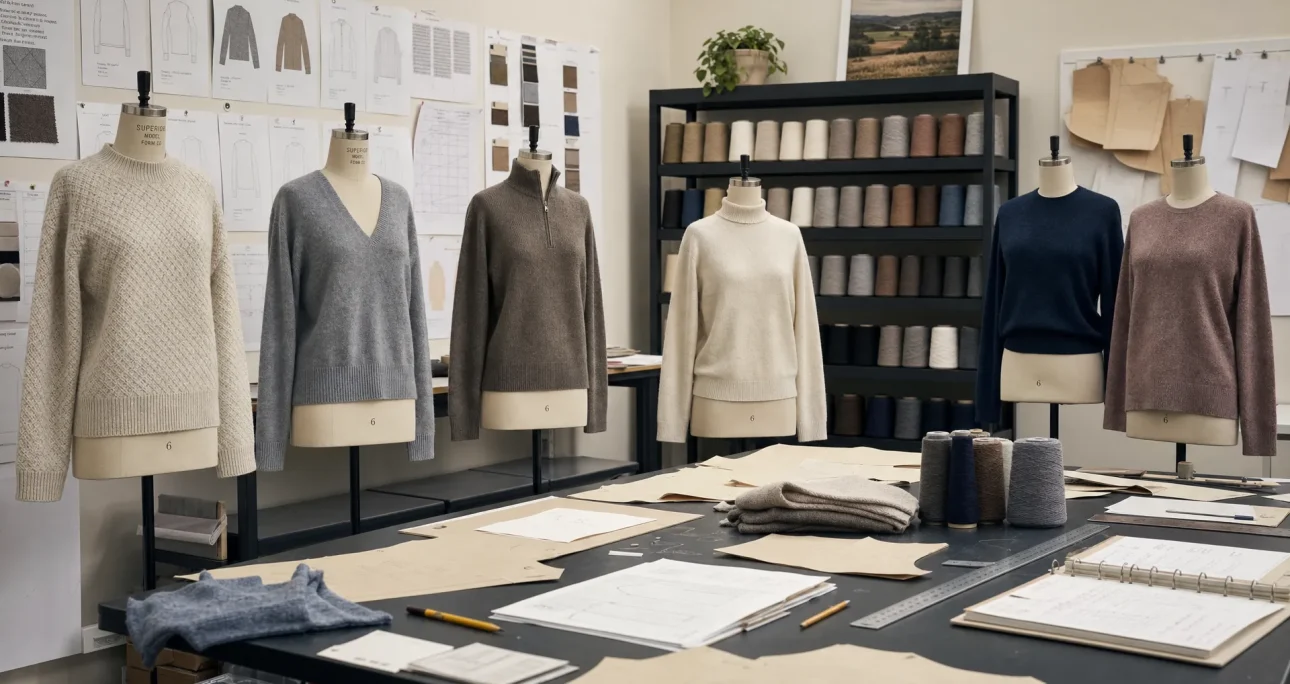
A merino wool sweater women reach for season after season is rarely the result of yarn alone. It comes from the relationship between fiber quality, garment shape, body proportions, stitch structure and finishing. For apparel brands, the challenge is not simply choosing “soft merino.” It is developing a sweater that feels premium on the hanger, fits real customers well and keeps its shape after repeated wear.
Women’s merino sweater development sits between fashion design and technical product engineering. A slim crewneck, cropped cardigan, relaxed half-zip and refined V-neck can all use merino wool, but each one needs different yarn behavior, pattern balance, ease and testing standards. The earlier these choices are aligned, the easier it is to avoid costly sampling loops.
Merino Wool Sweater Women: Start With the Intended Fit
Fit should be defined before yarn is selected because the same merino yarn can behave very differently in a close-fitting rib sweater than in a relaxed jersey pullover. A brand developing women’s knitwear needs to decide whether the garment should skim the body, drape away from it or create a structured silhouette.
The most important fit zones are the shoulder line, bust, armhole, sleeve width, hem sweep and body length. Women’s sweaters often fail when one of these areas is treated generically. A body that looks balanced in a flat technical sketch may pull across the bust, collapse at the shoulder or ride up at the hem once knitted in the chosen gauge.
For a merino wool sweater women buy for everyday wear, comfort ease usually matters as much as visual shape. A fitted sweater still needs enough stretch recovery through the bust and upper arm, while a relaxed style needs enough stability at the neck, cuff and hem to avoid looking stretched out after a few wears.
| Fit direction | Best for | Key development risk |
|---|---|---|
| Slim or body-skimming | Layering, office wear, fine-gauge basics | Pulling at bust or sleeve cap |
| Classic regular fit | Core seasonal sweaters, retail essentials | Looking too plain without refined proportions |
| Relaxed fit | Casual, premium comfort styles | Dropped shoulders and hems losing shape |
| Cropped fit | Fashion-led collections, high-waist styling | Hem flare, balance issues across sizes |
| Longline fit | Travel, layering, tunic-inspired silhouettes | Excess weight dragging the garment downward |
How Yarn Choice Shapes Comfort, Drape and Durability
Merino is prized because its fibers are finer than many traditional wools, which helps reduce the scratchy feel associated with coarser wool. The International Wool Textile Organisation explains that wool also has natural moisture management and odor resistance properties, which is one reason merino is used across performance and premium lifestyle categories.
For brands, the first yarn question is micron count. Lower micron wool generally feels softer against the skin, but softness is only one part of the decision. Very fine fibers can be more delicate, so the yarn construction, twist, ply and finishing must support the intended use. A sweater sold as a durable daily layer needs a different balance than a luxury piece worn occasionally.
In a merino wool sweater women are expected to wear directly over a camisole or base layer, comfort should be validated in fit testing rather than assumed from a yarn card. Hand feel on a cone does not always predict how the finished garment feels at the neckline, cuff or underarm, where friction is more noticeable.
Brands should also decide between pure merino and merino blends. A 100 percent merino sweater can support a premium natural fiber story, but blends with nylon, recycled synthetic fibers, silk, cotton or elastane may improve strength, surface character, recovery or price positioning. The decision should match the brand promise, not just the sourcing target.
If you need a broader technical foundation before narrowing the women’s fit strategy, Arcus Apparel Group’s guide to merino sweater yarn, gauge and care basics covers the core variables that influence performance.
Gauge and Stitch Structure Change the Same Yarn
Gauge determines how fine or chunky the sweater feels, but it also affects stretch, opacity, warmth, weight and recovery. A fine-gauge merino crewneck may feel polished and lightweight, while a heavier-gauge ribbed pullover can feel warmer and more casual even if both use similar fiber quality.
Stitch structure is just as important. Jersey can show clean color and a smooth surface, but it may roll at edges if not engineered correctly. Rib improves stretch and recovery, making it useful for fitted silhouettes. Milano, links, tuck stitches and textured structures can add stability or visual dimension, though they may increase yarn consumption and garment weight.
A premium merino wool sweater women compare against cashmere blends or other luxury knits needs more than softness. It should have controlled necklines, balanced panels and trims that support the body shape instead of fighting it. The stitch map should be reviewed as part of the fit process, not treated as surface decoration.
Designing for Shape Retention Across Sizes
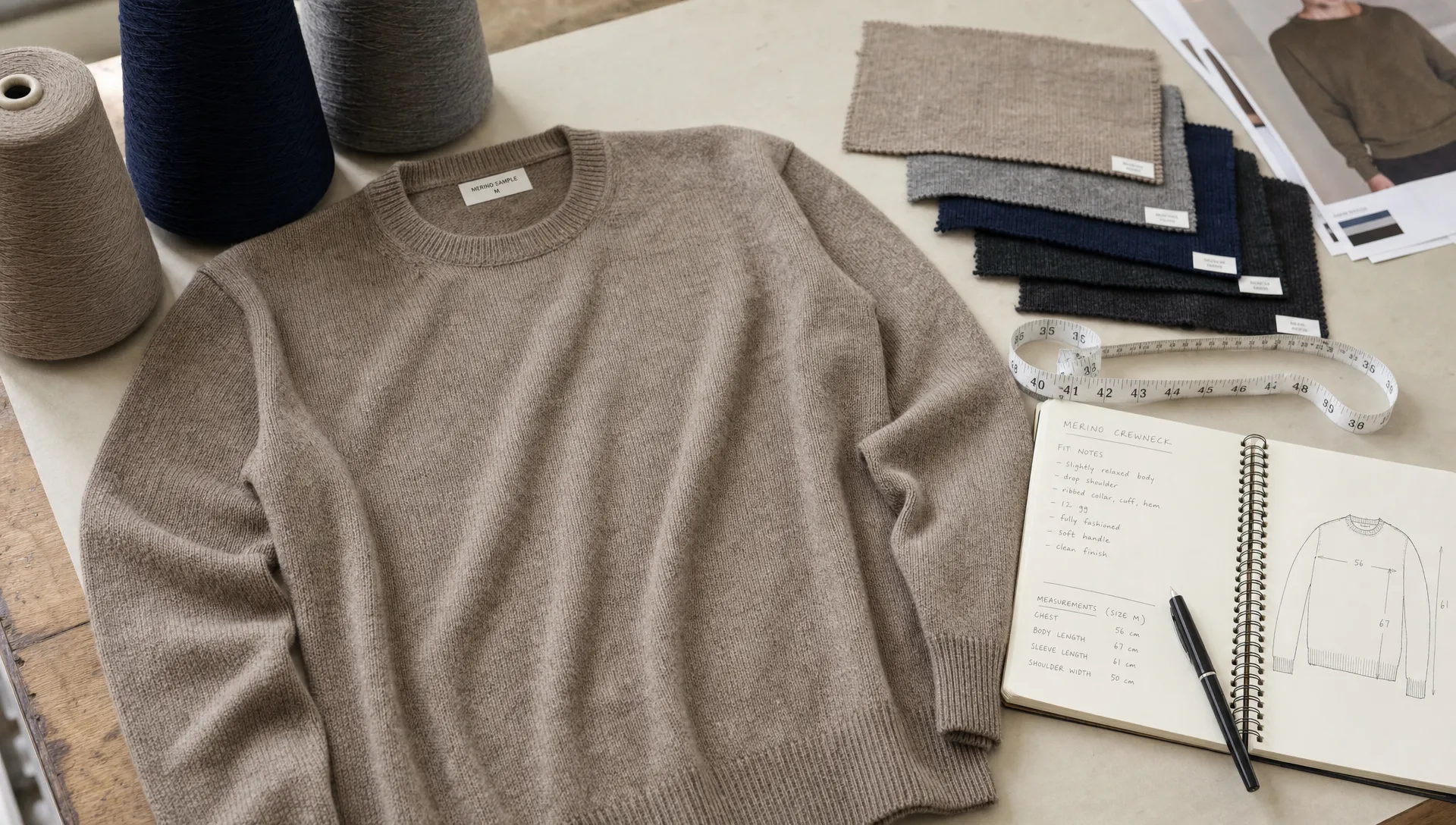
Women’s merino sweaters often need careful grading because changes in bust, hip, arm circumference and shoulder width are not linear across all sizes. If the base size is graded mechanically without testing, the smallest sizes may look too boxy while larger sizes may pull at the upper arm or lose the intended drape.
This is where pattern engineering and knit behavior need to be developed together. The sweater’s finished measurements should account for relaxed dimensions, stretch during wear and shrinkage after care. If the yarn has strong recovery, the fit can sit closer to the body. If the structure is heavier or more open, the pattern may need extra control at stress points.
For any merino wool sweater women will wear frequently, the hem and cuffs deserve particular attention. Rib trims that are too tight can distort the silhouette, while trims that are too loose can make the garment look tired quickly. Necklines also need reinforcement through stitch choice, linking quality, tension control or finishing so they do not widen after wear.
Brands developing extended size ranges should run fit reviews on more than one body type whenever possible. A single sample size can approve design intent, but it cannot confirm whether the product works across the full customer base.
Yarn Testing and Wear Trials Before Production
A sweater can pass an initial showroom review and still perform poorly in the customer’s wardrobe. Before production, brands should test for shrinkage, torque, pilling, colorfastness, seam strength and recovery. These results help refine care labels, construction details and quality standards before bulk yarn or production capacity is committed.
Pilling is a common concern in soft merino knitwear. It cannot always be eliminated, especially in fine natural fibers, but yarn choice, twist level, knit density and finishing can reduce the risk. Wear trials are useful because laboratory tests do not always capture friction points such as crossbody bag straps, desk edges, coat interiors and underarms.
When developing a merino wool sweater women may pack for travel or wear several times between washes, odor resistance and shape recovery become part of the value proposition. Those claims should be supported by material selection and realistic care instructions rather than marketing language alone.
Care testing also protects the brand. If a sweater is labeled hand wash only, the customer experience should still be considered. If the product is intended for machine wash, shrinkage and surface change must be validated under the exact wash method described on the care label. The Woolmark Company offers practical consumer-facing guidance on how to care for wool garments, which can help brands think through the gap between laboratory conditions and real customer behavior.
Building a Clear Tech Pack for Women’s Merino Sweaters
A strong tech pack reduces ambiguity between design, development and manufacturing. For women’s merino knitwear, it should do more than list measurements. It should define yarn composition, count, ply, gauge, stitch structures, trim dimensions, linking method, target hand feel, finishing process and acceptable tolerances.
The spec should also clarify how the garment should sit on the body. Shoulder placement, sleeve opening, bust ease, sweep and body length need visual references or fit comments so the development team understands the intended silhouette. This is especially useful for relaxed and cropped shapes, where small measurement changes can significantly alter the final look.
A tech pack for a merino wool sweater women will recognize as premium should include quality checkpoints at swatch, proto, fit sample, size set and pre-production stages. Each checkpoint should confirm both aesthetics and performance, including garment measurements after steaming or washing where relevant.
Brands that want end-to-end support can work with a manufacturing partner that connects design, sourcing, pattern development, sampling and production management. Arcus Apparel Group supports custom apparel development and manufacturing for brands that need coordinated execution from concept through production.
Common Development Mistakes to Avoid
One common mistake is selecting yarn before confirming silhouette. A lofty yarn may look appealing in a swatch but add too much bulk to a fitted turtleneck. A very fine yarn may feel luxurious but lack the structure needed for a boxy cropped sweater. Fit direction should guide yarn choice, not the other way around.
Another mistake is approving a sample based only on how it looks after steaming. Steam can temporarily improve shape, smoothness and drape. The better question is how the sweater behaves after wear, rest and care. If the garment loses its shoulder line or expands at the hem after a short trial, the issue should be addressed before production.
A final mistake is underestimating trims. Neck ribs, cuffs, plackets, button bands and hems influence the customer’s perception of quality. On a merino wool sweater women evaluate by touch and repeated wear, these details often determine whether the product feels premium or merely expensive.
If your brand is exploring more specialized silhouettes, the Arcus guide to developing a durable merino wool sweater is a useful companion for thinking through longevity from fiber to finishing.
Frequently Asked Questions
What micron count is best for a women’s merino wool sweater? Many premium women’s sweaters use fine merino for a soft hand feel, but the best micron count depends on the garment’s use, structure and durability target. A very soft yarn still needs the right ply, twist and gauge to perform well.
Should women’s merino sweaters be 100 percent merino or blended? Both can work. Pure merino supports a natural luxury positioning, while blends may improve durability, recovery, texture or cost control. The right choice depends on the customer, price point and expected wear pattern.
How much ease should a women’s merino sweater have? Ease depends on the silhouette. Slim styles need enough room for movement across the bust, shoulder and upper arm. Relaxed styles need controlled proportions so the sweater drapes intentionally rather than looking oversized by accident.
Why does pilling happen on merino sweaters? Pilling can occur when loose fibers migrate to the surface and form small balls through friction. Fiber fineness, yarn twist, knit density, finishing and customer wear habits all influence how much pilling appears.
What makes a merino wool sweater women consider high quality? The best merino wool sweater women customers describe as high quality usually combines softness, balanced fit, stable trims, clean linking, good recovery and care performance that matches the label instructions.
Develop Women’s Merino Sweaters With Fewer Guesswork Loops
A successful women’s merino sweater starts with aligned decisions: fit intent, yarn construction, gauge, stitch structure, grading, testing and quality control. When those choices are developed together, the final product is more likely to feel premium and perform well after purchase.
Arcus Apparel Group helps brands build and scale custom apparel through material sourcing, pattern development, small batch manufacturing, international production options and quality control at every stage. If you are developing a women’s merino sweater line, partnering early can help turn a strong concept into a production-ready garment.



