A merino wool cardigan ladies can wear season after season depends on more than soft yarn. For apparel brands, the difference between a cardigan that feels premium at first try-on and one that performs after months of wear is usually found in the technical details: yarn selection, placket stability, fit balance, seam choice, button placement and finishing control.
Cardigans carry more structural stress than many pullover sweaters. The open front creates vertical drag, buttons add localized weight and the wearer often pulls the garment on and off throughout the day. If the development process treats a cardigan like a basic knit top with buttons, the final product may twist, stretch at the front edge or lose shape around the cuffs and hem.
Why a merino wool cardigan ladies wear often needs dedicated engineering
A cardigan has to move between roles. It may be worn over a T-shirt, layered under a coat, draped open indoors or buttoned for warmth. That versatility is exactly why the garment needs more thoughtful engineering than a simple sweater block.
When developing a merino wool cardigan ladies will use for office, travel or everyday layering, the first product question should be wear behavior. Will it be a lightweight year-round layer, a structured jacket-like knit or a cozy cold-weather piece? Each answer changes the ideal gauge, yarn count, body length, sleeve shape and finishing method.
The front opening is the biggest technical difference. Without a continuous body panel across the chest, the garment has less natural tension holding its shape. A poorly balanced cardigan can sag at the placket, flare at the hem or pull backward at the neck. Good development anticipates those stresses before sampling begins.
Start with yarn, fiber quality and hand feel
Merino wool is valued for softness, temperature regulation and odor resistance. The Woolmark Company explains that wool fibers can absorb and release moisture vapor, which helps comfort across changing conditions. In cardigan development, that performance has to be balanced with durability and recovery.
For a premium women’s cardigan, brands often evaluate micron count, staple length, yarn twist and whether the yarn is 100 percent merino or blended. Finer fibers feel softer against skin, but very soft yarns can be more vulnerable to abrasion if construction and finishing are not matched correctly.
A merino wool cardigan ladies might wear over bare arms should prioritize a smooth hand feel, but a cardigan designed as an outer layer may need more body and abrasion resistance. Blends with nylon, recycled synthetics or other natural fibers can improve strength or reduce cost, but they also change drape, dye behavior and care instructions.
If your team is still comparing yarn types, gauge options and sweater fit foundations, Arcus Apparel Group’s guide to women’s merino wool sweater fit and yarn is a useful companion to this more cardigan-specific breakdown.
Choose gauge and stitch structure around the intended use
Gauge influences the look, warmth, weight and stability of the garment. A fine-gauge cardigan can feel polished and packable, making it suitable for workwear or travel collections. A mid-gauge style offers more texture and warmth without becoming bulky. Chunkier gauges can create strong visual identity, but they add weight and may need more reinforcement at the placket and shoulders.
Stitch structure also affects wear. Jersey can look clean and commercial, but it may curl at unfinished edges. Rib adds stretch and recovery, which is useful at cuffs, hems and sometimes the placket. Milano, half-cardigan and other structured knits can add body, but they may change cost, yarn consumption and production time.
| Development choice | What it affects | Common cardigan consideration |
|---|---|---|
| Fine gauge | Lightness, polish, drape | Works well for refined layering styles |
| Mid gauge | Warmth, texture, structure | Good balance for everyday wear |
| Rib trims | Recovery, stretch, edge stability | Useful for cuffs, hem and neckline |
| Structured stitch | Body, shape retention, weight | Helpful for jacket-like cardigan designs |
A merino wool cardigan ladies can wear frequently should not rely on yarn softness alone. The stitch has to support the silhouette, especially where the garment is repeatedly stretched, buttoned or pulled into place.
Fit details that improve comfort and shape
Women’s cardigan fit needs enough ease for layering without looking oversized by accident. The most common development mistake is adding general width without adjusting shoulder slope, armhole depth or sleeve pitch. That creates a garment that technically fits the body but feels bulky in motion.
Shoulder placement is one of the first fit decisions. A set-in shoulder gives a cleaner, more tailored appearance. A dropped shoulder can feel relaxed and contemporary, but it increases fabric mass through the upper body. Raglan or modified shoulder shapes can improve mobility, especially for casual or active-inspired styles.
For a merino wool cardigan ladies will wear over several base layers, armhole shape deserves close attention. If the armhole is too high, the cardigan may pull when layered. If it is too low, the wearer may feel excess fabric under the arm and reduced mobility under outerwear.
Length also changes the product’s purpose. Cropped cardigans work well with high-rise bottoms but need careful hem recovery. Hip-length styles are versatile and easy to merchandise. Longline cardigans need more attention to vertical stretch, pocket placement and side seam balance.
Fit checkpoints for sampling
| Fit area | What to check on body | Why it matters |
|---|---|---|
| Shoulder | Seam position or drop amount | Controls polish, comfort and garment balance |
| Armhole | Mobility with a layer underneath | Prevents pulling or excess bulk |
| Sleeve | Bend at elbow and cuff recovery | Improves daily comfort |
| Body width | Ease when worn open and closed | Avoids gaping, sagging or boxiness |
| Length | Hem behavior after movement | Protects silhouette and proportion |
Placket, buttons and closures are performance details
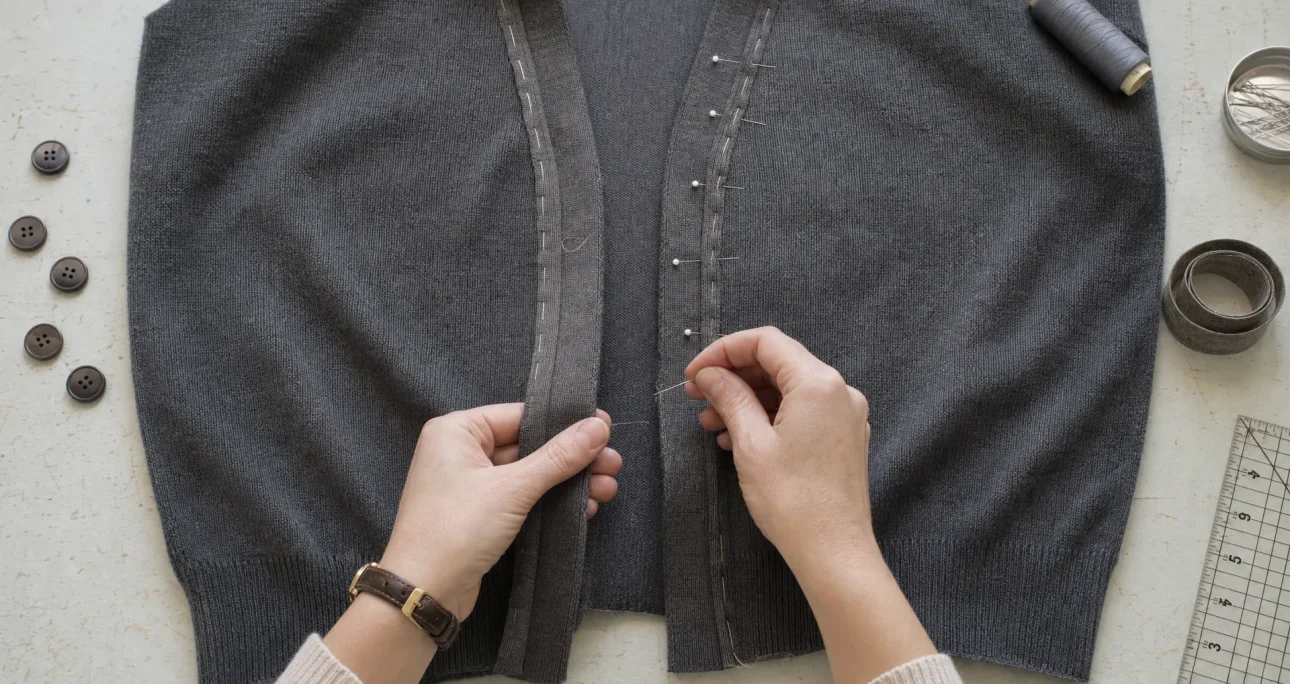
The placket is often the make-or-break feature of a cardigan. It carries buttons, buttonholes and repeated hand pressure. It also sits at the most visible part of the garment, so even small waviness can make a premium yarn look poorly made.
A stable placket may be knitted with a denser structure, reinforced with tape or engineered with rib that has enough recovery. Button spacing should prevent gaping across the bust without overcrowding the front. Larger buttons can look elevated, but they add weight and may pull on lighter-gauge merino.
A merino wool cardigan ladies will button and unbutton all day should be tested for front-edge distortion. The sample should be reviewed both flat and on body because a placket that looks straight on a table may still ripple when worn.
Neckline finishing matters too. V-neck cardigans need a smooth transition from the back neck into the front opening. Crewneck cardigans require clean curvature and controlled tension so the neckline does not stand away from the body. If the neckline is too loose, the garment can slide backward during wear.
Seams, hems, pockets and edge recovery
Cardigan edges are under constant pressure. Cuffs stretch when pushed up the arm, hems are tugged when the wearer adjusts the garment and front edges move every time the cardigan is opened. Strong edge recovery helps the garment keep its intended silhouette.
Fully fashioned construction can create clean shaping and reduce bulky seams, while cut-and-sew methods may be appropriate for certain fabrications or price points. Linking, seam tension and thread choice all influence comfort and durability. For premium merino, rough or bulky internal seams can undermine the softness customers expect.
Pockets require extra care. Patch pockets are visually appealing, but they can distort lightweight fronts if their weight is not supported. Welt or inseam pockets can look refined, yet they add construction complexity. For a merino wool cardigan ladies may use daily, pocket placement should be tested with realistic items, not just reviewed as a flat design feature.
Hem construction should match the overall silhouette. A ribbed hem can improve recovery, but too much tension may cause the lower body to blouse. A straight hem can feel modern and clean, but it must resist curling and stretching.
Finishing and care testing protect the customer experience
Merino cardigans should be finished to control hand feel, dimensions and surface appearance. Washing, steaming, pressing and drying methods can all change the final size and drape. If those steps vary between sample and production, the approved fit may not match bulk goods.
Pilling is another key concern. Merino’s soft hand is part of its appeal, but friction zones such as underarms, side seams, cuffs and bag contact areas can show wear. Brands should define acceptable pilling performance during development rather than waiting for customer feedback.
A merino wool cardigan ladies can trust for repeated wear should go through care testing that reflects the label claim. If the garment is marketed as machine washable, wash testing becomes central to quality control. If it is dry clean only, the brand should still consider how that affects customer expectations and return risk.
Colorfastness also matters, especially for dark shades, heathers and bright seasonal colors. Dye behavior can change depending on fiber blend, yarn structure and finishing chemistry. Lab dips, shade bands and bulk approvals help reduce surprises when the production run begins.
Production consistency from sample to bulk
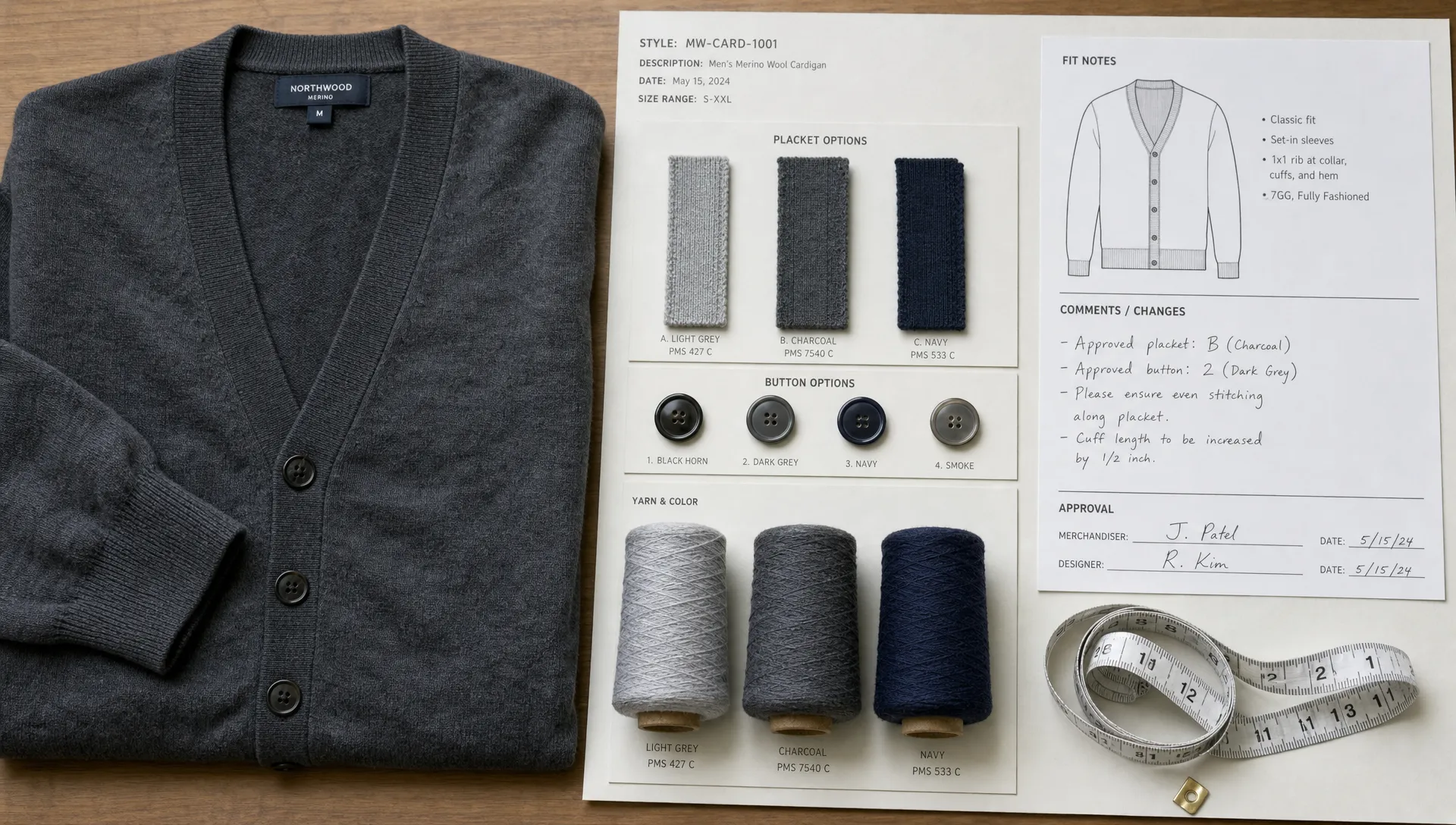
A strong cardigan sample is only valuable if the factory can reproduce it consistently. That requires clear technical packs, approved yarn standards, measurement tolerances, trim specifications and production checkpoints.
For apparel brands, the best time to solve quality issues is before bulk production. Pre-production samples should be checked for measurements, button alignment, placket stability, seam quality, shrinkage behavior and final hand feel. Inline inspections can then confirm that the approved standard is being followed.
Developing a merino wool cardigan ladies will reorder, recommend and keep wearing requires coordination between design intent and production reality. A beautiful sketch is not enough. The yarn, trim, construction and finishing process need to work as one system.
This is where a full-service development and manufacturing partner can help. Arcus Apparel Group supports brands with custom apparel development, material sourcing, pattern development, small batch manufacturing and production management. For brands comparing cardigan construction across categories, the related guide to men’s merino wool cardigans offers another view of yarn, fit and finishing decisions.
Practical development checklist
Before approving a women’s merino cardigan for production, review the garment through both technical and customer-facing lenses. A cardigan is handled often, seen up close and judged by how well it keeps its shape after wear.
Use this checklist during sample review:
- Confirm yarn count, fiber content, micron expectations and approved hand feel.
- Review gauge, stitch structure and garment weight against the intended season.
- Test placket stability when the cardigan is worn open and closed.
- Check button size, buttonhole tension and spacing across the bust.
- Measure recovery at cuffs, hem, neckline and front edge after stretching.
- Evaluate pocket placement with realistic use and garment weight.
- Run care, shrinkage, pilling and colorfastness tests before bulk approval.
- Compare production samples against the approved fit sample and spec sheet.
A merino wool cardigan ladies value over time usually comes from this level of discipline. Customers may describe the result as comfort, quality or a better fit, but those perceptions are built through very specific development choices.
Frequently Asked Questions
What makes a women’s merino wool cardigan feel high quality? A high-quality cardigan usually combines soft merino fiber, stable yarn, balanced gauge, clean seam construction, a controlled placket, good edge recovery and finishing that preserves shape after wear.
Is 100 percent merino always better for cardigans? Not always. 100 percent merino offers natural softness and performance, but blends can improve strength, recovery or cost depending on the target product. The best choice depends on the intended use, price point and care expectations.
Why does the placket matter so much in cardigan development? The placket carries buttons and sits at the front opening, which means it handles repeated stress. If it is not stable, the cardigan can ripple, stretch, gape or look uneven when worn.
How should brands test a merino cardigan before production? Brands should test measurements, shrinkage, pilling, colorfastness, seam strength, button performance, placket stability and fit after wear simulation. Care testing should match the instructions planned for the final label.
Can merino wool cardigans be made in small batches? Yes, depending on yarn availability, construction method and factory setup. Arcus Apparel Group offers small batch manufacturing and low minimum order quantity options for brands developing custom apparel.
Build better merino cardigans with the right development partner
A women’s merino cardigan succeeds when design, yarn, fit and production are developed together. If your brand is preparing a new knitwear style, Arcus Apparel Group can help manage the process from material sourcing and pattern development through production and quality control.
Explore Arcus Apparel Group’s custom clothing manufacturing and apparel development support to turn your cardigan concept into a production-ready garment with details built for real wear.



