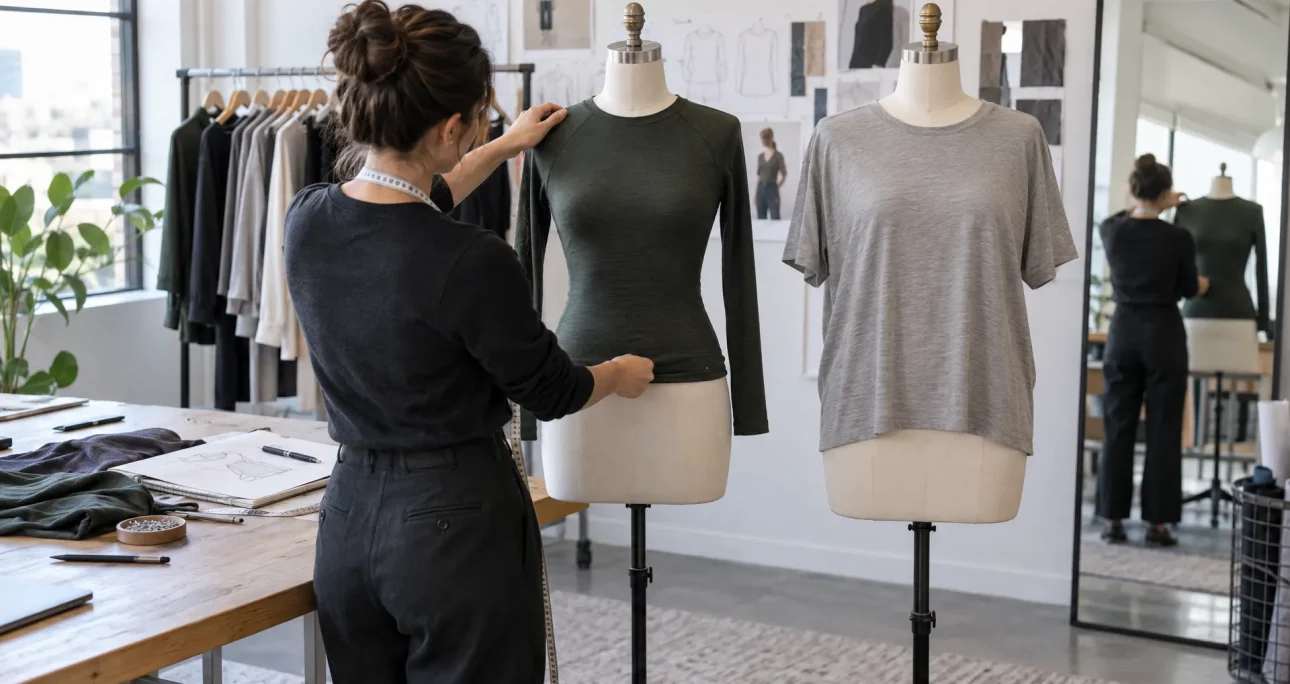
Building a range for shoppers searching “merino tops womens” takes more than offering the same shirt with different sleeves. For apparel brands, the challenge is to create tops that serve distinct needs while keeping development costs, material commitments and inventory manageable. A useful range gives customers clear reasons to choose each garment, then uses shared fabrics and production processes wherever those choices genuinely work.
The starting point is assortment planning, not a long list of silhouettes. Decide what each top contributes, how it fits alongside the others and which differences customers will value enough to pay for.
Start with one customer and a few buying occasions
A collection aimed at frequent travelers needs a different balance from one built for trail running or everyday office wear. Merino can appear in all three, but that does not mean a new brand should address them equally.
Choose a primary customer and identify the situations your range must cover. For example, a travel-focused customer might need a lightweight top for warm destinations, a long-sleeve layer for transit and a more polished option for dinner. Those occasions create a coherent assortment without requiring three unrelated product concepts.
Describe the expected wear conditions as well as the styling needs. Will customers wear the garment against their skin, beneath another layer or on its own? Will they carry a backpack, wash it frequently or expect it to look presentable after packing?
Every proposed style should solve a recognizable customer problem. If two tops have the same fit, function and price position, a neckline change alone may not justify stocking both. Keep the second design as a later option unless customer feedback supports it.
Merino tops womens: assign every style a clear role
Build a line plan that explains why each product exists. The following is an illustrative starting assortment, not a required launch formula.
| Product role | Possible silhouette | Customer reason to buy | Range-planning implication |
|---|---|---|---|
| Everyday foundation | Short-sleeve crewneck | An easy top for frequent wear | Prioritize repeatable fit and replenishment potential |
| Layering option | Close-fitting long sleeve | Coverage beneath outer layers | Validate sleeve mobility and compatibility with jackets |
| Polished alternative | Mock neck or refined scoop neck | A less athletic look for daily outfits | Differentiate through neckline, drape and finishing |
| Relaxed option | Easy-fit short sleeve or sleeveless top | More room and a different styling proportion | Check opacity, armhole coverage and bra compatibility |
Not every brand needs all four roles. A focused launch might combine the everyday and relaxed roles into one product, particularly when the customer prefers a single silhouette.
Give each style a short internal positioning statement, such as “the fitted layer for cool travel days.” This helps designers, merchandisers and production partners evaluate changes against the same purpose.
For a travel-led assortment, the principles behind a merino travel capsule collection can help clarify how the tops work with the rest of the wardrobe rather than competing for the same purchase.
Build around fabric platforms, not isolated designs
For a “merino tops womens” collection, a practical starting point is a small number of validated fabrics rather than a different material for every silhouette. A fabric platform is a shared material specification that can support several compatible products.
For example, a lightweight jersey might suit both an everyday tee and a layering top. A more substantial knit might support a polished standalone style. These are development possibilities, not guarantees: drape, stretch, opacity and recovery must work in each finished garment.
Sharing fabric can simplify sourcing and color coordination. It does not automatically reduce minimums, however. Ask the supplier whether commitments apply to the fabric article, dye color, finished style or some combination of these.
Keep the material specification consistent across the styles that share it. Record fiber composition, finished weight, knit construction, usable width, finishing treatment and approved care instructions. If one style requires a different finish, treat that as a separate sourcing decision rather than assuming it remains the same platform.
The women’s merino shirt fabric and fit guide provides a useful next step when translating these platform decisions into garment specifications.
Share a fabric only when it improves the product as well as the production plan. A material that looks good in a fitted layer may cling or become too transparent in a loosely draped top.
Make the fit differences meaningful
A versatile range of women’s merino tops needs deliberate fit relationships. Customers should be able to understand which styles sit close to the body, which offer everyday ease and which create a relaxed silhouette.
Develop a common measurement language across the range, but do not force every garment onto one pattern block. A fitted base layer and a relaxed tee may need different armholes, shoulder positions and bust shaping even when they share fabric.
Specify the intended difference through measurable choices: chest ease, body length, sleeve circumference, neckline depth and hem shape. Avoid relying on vague labels such as “regular” or “comfortable” without defining what they mean in the technical package.
Fit the styles together during development. A customer may buy more than one top, so unexpected differences in size selection can undermine confidence in the brand. Consistency means a predictable sizing experience, not identical measurements across different silhouettes.
For the close-fitting part of the assortment, the women’s merino base layer fit guide offers more detailed considerations. Keep that technical work separate from deciding how many fitted products the range actually needs.
Control SKU growth before choosing colors
A “merino tops womens” assortment can look small on a line sheet while creating a large inventory commitment. Styles, colors and sizes multiply quickly.
Consider this hypothetical comparison:
| Launch structure | Calculation | Total SKUs |
|---|---|---|
| Four styles, three colors and six sizes | 4 × 3 × 6 | 72 |
| Three styles, two colors and six sizes | 3 × 2 × 6 | 36 |
If the second assortment carried an illustrative average of ten units per SKU, it would require 360 garments. That is a planning example, not a recommended size allocation or a manufacturer’s minimum order quantity.
Actual buying should reflect expected demand by style, color and size. Equal quantities across every SKU are easy to calculate but may not suit the customer population.
Use a small core palette across compatible styles, then introduce selective accent colors where demand supports them. Confirm whether the same named color can be matched acceptably across different knit structures or fiber blends. An approved shade in one fabric is not automatic approval in another.
Protect size coverage before adding decorative choice. Cutting useful sizes to fund another color can weaken the range’s ability to serve its intended customer. The size assortment should follow the target market, supported by fit development and available demand evidence.
Validate the range as a group before production
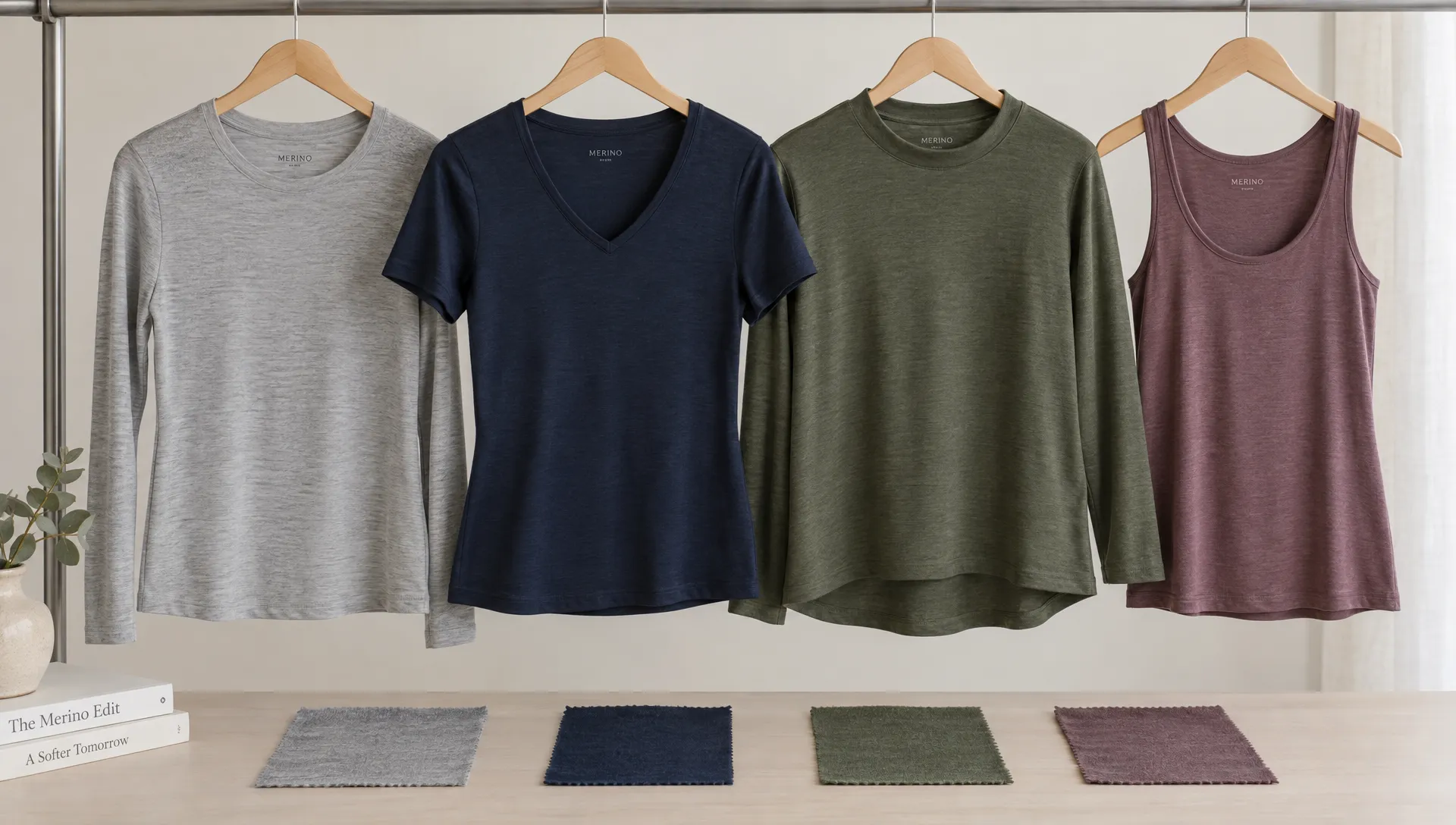
Testing women’s merino tops individually is necessary, but a versatile range also needs cross-style review. Customers experience the collection as one brand, not as disconnected sample approvals.
Create a test plan based on each garment’s use case. Useful checks include dimensional change after laundering, appearance after washing, pilling, colorfastness, seam performance and stretch recovery. Agree on methods and acceptance limits with the testing provider or production partner before approving bulk production.
Compare garments made from the same fabric after the same care cycle. Different necklines, seam constructions and garment shapes can produce different outcomes even when the material is identical.
Wear trials should reproduce likely use. A backpack can reveal friction points at the shoulders. Repeated reaching can expose sleeve restrictions. Trying a lightweight top over different undergarments can reveal coverage issues that a flat fabric inspection misses.
Separate general fiber characteristics from specific product promises. Merino’s moisture absorption does not make a garment waterproof or guarantee that its wearer stays dry. Claims about odor performance, durability or a stated number of wears between washes need support appropriate to the claim.
For U.S. sales, use the FTC’s textile and wool labeling guidance when reviewing fiber content, country of origin and responsible company identification. If a top contains a blend, describe the composition accurately rather than allowing “merino” to imply 100% wool.
Cost both the garment and the assortment
Cost a “merino tops womens” range at two levels: the individual product and the collection as a whole. A reasonable unit quote can still create a difficult launch if too many styles require separate materials, trims or production setups.
At the garment level, examine fabric consumption, cutting waste, sewing operations, trims, finishing and packaging. A wider or longer silhouette can use more material even when it shares fabric with a simpler tee. Additional panels or binding operations can also change labor requirements.
At the assortment level, account for development samples, testing, freight, applicable duties and unused material commitments. Agree on what the quote includes so that apparently comparable offers are actually being evaluated on the same basis.
Set retail positioning alongside these costs. If a polished top is intended to sit above the everyday tee, the difference should be visible in its design and customer value, not just explained by a higher production cost.
Ask for separate confirmation of fabric minimums, dye-lot minimums and finished-garment minimums. Small-batch manufacturing can reduce some commitments, but it does not necessarily remove upstream mill requirements.
Before committing, model what happens if one style sells slowly or one size sells out early. This reveals whether the proposed assortment is workable beyond the initial order.
Launch in stages and expand from evidence
A women’s merino tops launch should establish a reliable foundation before adding breadth. Start with the clearest product roles, approve the shared materials and resolve fit issues before moving every concept into production.
Use the initial range to learn which differences customers actually value. Review sales alongside returns and feedback: a style that sells quickly but receives repeated complaints about neckline depth may need revision rather than immediate expansion.
Track fit-related return reasons, color demand, wash-performance feedback and repeat purchases by style. A sellout alone does not prove that a product deserves more colors, especially if the original buy was very small.
Define the response to each pattern. Strong demand with few fit complaints may support replenishment. Repeated requests for more coverage may justify a new silhouette. Poor sales across otherwise similar tops may indicate unnecessary overlap rather than a need for additional choices.
Maintain an approved specification for each style and document changes between production runs. Adjustments to fabric finishing, measurements or construction should be reviewed for their effect on the rest of the range.
Expand because a customer need is unmet, not because the assortment looks small. That keeps new development tied to evidence instead of increasing inventory without a clear purpose.
Frequently asked questions
How many styles should a women’s merino tops range launch with? There is no universal number. Start with enough styles to cover distinct buying occasions, then check whether the resulting color and size combinations fit the budget. Two or three well-differentiated styles may be more workable than a broader overlapping range.
Can multiple tops use the same merino fabric? Yes, when the material performs appropriately in each silhouette. Validate drape, opacity, recovery and wash behavior separately, and confirm how the supplier applies material and color minimums.
Should every top be made from 100% merino? Not necessarily. Composition should follow the product brief, desired performance and price position. Evaluate blends on their actual results and disclose fiber content accurately.
When should a brand add more colors or silhouettes? Expand after reviewing demand, returns and product feedback. Add colors to proven styles when the buying case is clear, and add silhouettes when they address a need the existing range does not cover.
Turn the range plan into a production brief
Bring your proposed style roles, customer profile, fabric requirements, size coverage and target quantities into the first development discussion. This gives a manufacturing partner a concrete basis for evaluating the assortment.
Arcus Apparel Group offers custom apparel development, material sourcing, pattern development and small-batch manufacturing. Discuss your merino range requirements with the team to confirm suitable sourcing options, production minimums and the steps needed to move from a line plan to approved garments.



