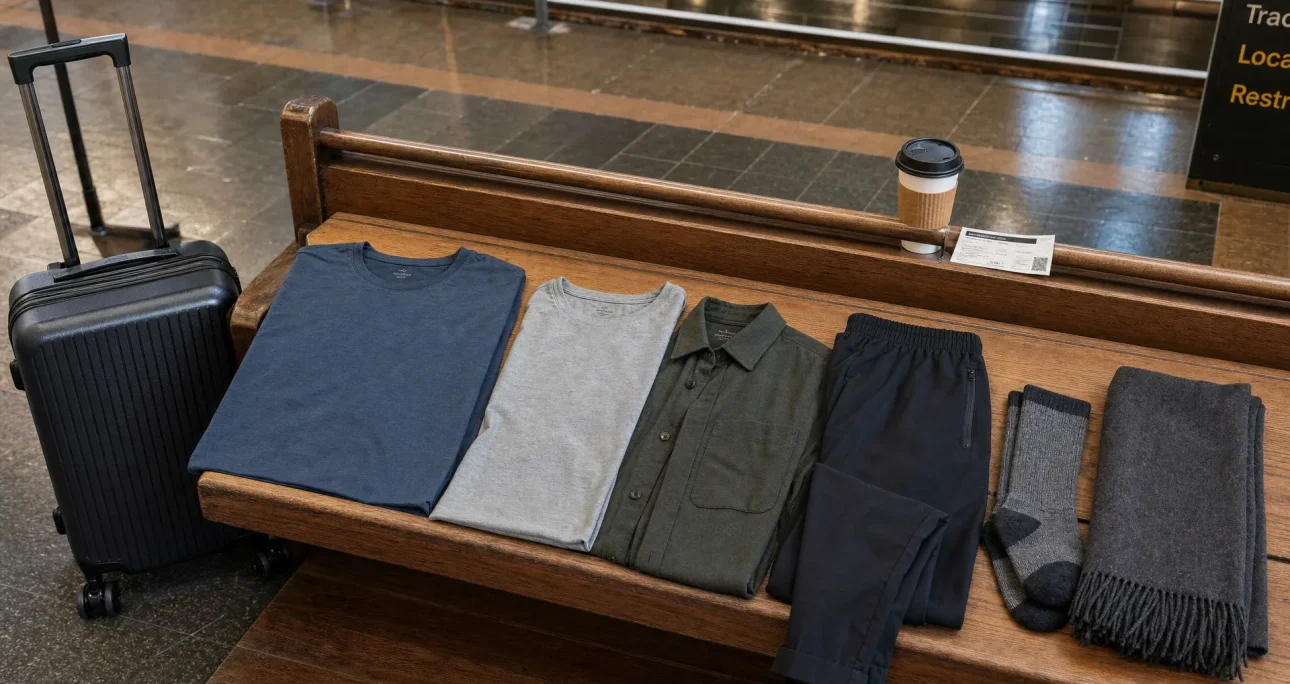
If you are building a travel apparel line, merino travel clothes can do more than reduce what customers pack. They can help you design a tighter, more useful capsule collection where every piece has a job, layers cleanly with the next and supports repeated wear across changing climates, itineraries and dress codes.
For apparel brands, the opportunity is not simply to add a merino T-shirt and call it a travel collection. A smarter capsule starts with product architecture: the roles each garment plays, the fabric weights that support those roles, the color system that makes mixing easy and the production choices that keep quality consistent as the line scales.
Why merino travel clothes belong in a capsule strategy
A travel capsule collection works when customers can pack fewer pieces without feeling underdressed, uncomfortable or limited. Merino supports that promise because it is soft enough for next-to-skin use, naturally breathable and useful across a wider temperature range than many single-purpose fabrics.
The Woolmark Company explains that wool fibers can absorb moisture vapor before it turns into liquid sweat, which helps with comfort during temperature changes. That matters for travel because a customer may move from an airport to a train platform, hotel lobby, outdoor walk and dinner setting within the same day.
A brand that treats merino travel clothes as a system can reduce SKU clutter while increasing perceived value. Instead of offering too many disconnected tops, bottoms and layers, the capsule can be built around a few high-utility garments that solve repeated travel problems: odor buildup, overpacking, wrinkled outfits, uncomfortable temperature swings and pieces that only work for one setting.
This is the difference between a fabric-led collection and a customer-led one. Merino is the performance foundation, but the capsule succeeds when each design decision supports real travel behavior.
Build around travel use cases, not garment categories
Many collections begin with categories: T-shirts, long sleeves, hoodies, pants and jackets. For a travel capsule, it is more useful to start with use cases. What does the customer need on the plane? What can they wear for a full walking day? What layer makes a casual outfit look more polished? What can be reworn without looking repetitive?
For a capsule customer, merino travel clothes need to move between situations without demanding a full outfit change. That usually means balancing performance details with restrained styling. A shirt can have flat seams and natural stretch, but it should still look clean under an overshirt or blazer. A base layer can manage moisture, but it should not look like technical underwear when worn alone.
A practical capsule can be planned around these roles:
| Capsule role | Example garment | Typical fabric direction | Design priority |
|---|---|---|---|
| Daily base | Short-sleeve tee | Lightweight jersey | Soft hand feel and odor resistance |
| Flexible layer | Long-sleeve crew or henley | Lightweight to midweight jersey | Layering fit and shape retention |
| Polished mid layer | Merino overshirt or cardigan | Interlock, ponte or knit blend | Structure without bulk |
| Cold-weather support | Thermal base layer | Midweight merino or merino blend | Warmth and close fit |
| Repeat-wear bottom | Travel pant or jogger | Merino blend knit or woven | Abrasion resistance and recovery |
This kind of role-based planning helps brands avoid duplicate products. If two garments solve the same problem for the same customer, one of them may not belong in the launch assortment.
Fabric weight, micron count and blends shape the experience
Merino is not one fabric. It is a fiber that can be spun, knitted, woven and blended in many ways, so development teams need to define the intended use before selecting materials. A featherweight tee for summer travel and a dense mid layer for winter city trips should not be sourced with the same expectations.
When sourcing merino travel clothes, three variables deserve early attention: fiber fineness, fabric weight and blend composition. Finer merino, often discussed in terms of lower micron count, is usually preferred for next-to-skin comfort. Heavier or blended constructions can provide more structure, better abrasion resistance and improved dimensional stability.
For brands that want a deeper sourcing foundation, Arcus has a dedicated guide to Merino wool properties brands should know before sourcing, including fineness, elasticity, moisture management and care performance.
Common development directions include:
- 100 percent merino jersey for premium softness, breathability and natural fiber positioning.
- Merino nylon blends for travel pieces that need better abrasion resistance, especially bottoms, overshirts and high-wear zones.
- Merino elastane blends where stretch recovery and close fit matter, such as base layers and active travel pieces.
- Merino synthetic blends for faster drying, improved durability or sharper cost positioning, depending on the brand strategy.
The right choice depends on the capsule promise. A luxury travel brand may prioritize hand feel and natural composition, while an outdoor travel brand may accept a blend for durability and easier care.
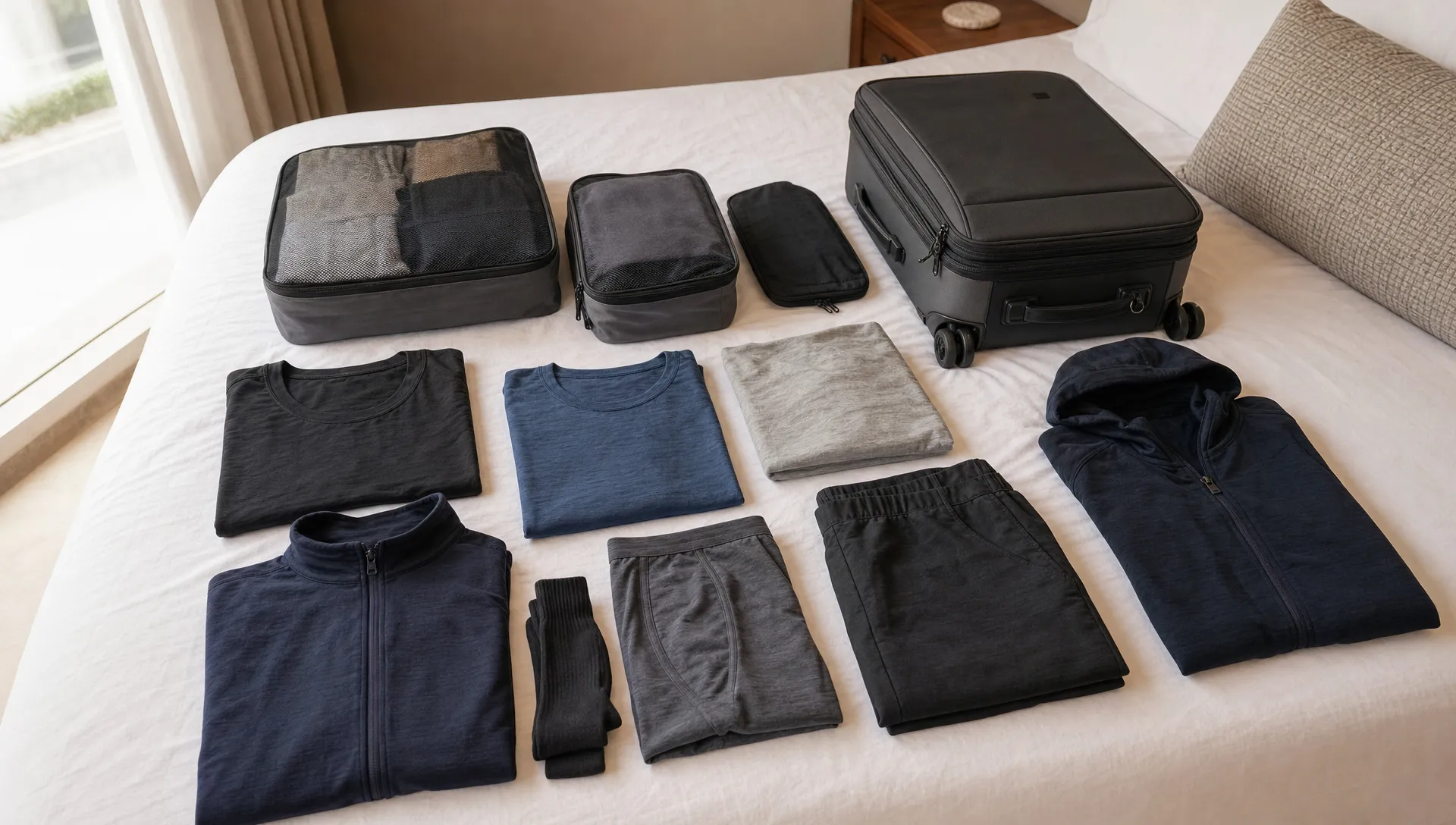
Design rules for a smarter merino capsule
A strong capsule collection feels intentional before the customer reads a product description. Colors work together, silhouettes repeat in a useful way and details are consistent across the line. That matters because travel customers often buy with packing logic in mind: they want to know what works together before they leave home.
The most commercially useful merino travel clothes are often simple on the surface and carefully engineered underneath. A clean crewneck may need shoulder seams placed to reduce backpack irritation. A long sleeve may need a hem length that works tucked or untucked. A pant may need enough recovery for long sitting periods without looking like loungewear.
A travel capsule should also use a disciplined color palette. Neutrals such as black, navy, charcoal, olive, oatmeal and warm gray tend to mix easily, but the exact palette should match the brand’s audience. One or two seasonal colors can create freshness without forcing customers to rethink the entire capsule.
Construction details matter as much as color. Flatlock or low-profile seams can improve comfort in next-to-skin garments. Reinforced stress points help pieces survive repeated packing and unpacking. Rib trims need recovery testing because loose cuffs and stretched necklines quickly make premium garments feel tired.
Care instructions should be designed into the product, not added at the end. If a travel customer expects easy laundering, the fabric, trims, labels and finishing process must support that expectation.
Quality testing before production
Merino can perform beautifully, but travel use is demanding. Customers may wash garments in hotel sinks, air dry them overnight, pack them tightly and wear them multiple times between washes. Product testing should reflect those conditions instead of only checking a sample fresh from the factory.
Before approving merino travel clothes for production, brands should evaluate shrinkage, spirality, pilling, seam strength, colorfastness, hand feel after washing and measurement stability. If the garment includes elastane, recovery should be checked after wear simulation and laundering. If the garment uses dark colors, crocking and dye transfer should be reviewed early.
A basic approval table can help keep development decisions consistent:
| Test area | Why it matters for travel | What to review |
|---|---|---|
| Shrinkage | Customers need reliable fit after washing | Measurements before and after laundering |
| Pilling | Repeated wear can age the garment quickly | Surface change after abrasion testing |
| Seam comfort | Backpacks and long flights increase friction | Seam type, placement and thread choice |
| Colorfastness | Capsules rely on mix-and-match wear | Wash, rub and perspiration performance |
| Recovery | Garments are packed and worn repeatedly | Necklines, cuffs, knees and seat areas |
Brands with sustainability commitments may also need fiber traceability documentation. The Responsible Wool Standard from Textile Exchange is one recognized framework for animal welfare and chain of custody, though certification requirements should be confirmed with the supplier and target market.
Launch with a focused assortment, then scale
A capsule collection does not need to launch with every possible garment. In fact, a smaller first drop can make it easier to test fit, pricing, color demand and repeat purchase behavior. The goal is to build a complete outfit system, not a large catalog.
For a first release, merino travel clothes might include a short-sleeve tee, long-sleeve shirt, mid layer, travel pant and one climate-specific add-on such as a thermal base layer or lightweight overshirt. This gives customers enough pieces to understand the capsule while giving the brand room to improve based on feedback.
Arcus Apparel Group supports apparel brands with custom development, material sourcing, pattern development, small batch manufacturing and production management. For founders building a new travel line, working with a full-service custom clothing manufacturer can help connect early design decisions with real production constraints, including minimums, quality control and scaling plans.
If your capsule includes layering pieces, it is worth studying how fit changes across the system. A base tee, long sleeve and overshirt should not fight each other at the armhole, shoulder or hem. Arcus also covers this topic in its guide to Merino wool long-sleeve shirts for layering and performance.
Common mistakes that weaken a travel capsule
The biggest mistake is designing too many pieces that look different but solve the same problem. Capsule customers value versatility, so repetition without clear purpose can make the assortment feel confusing.
Another common issue is overbuilding the product. Heavy trims, bulky pockets and highly technical styling may seem premium, but they can reduce packability and limit where the customer feels comfortable wearing the garment. Travel apparel usually benefits from restraint.
Brands should also avoid choosing merino only for marketing appeal. If the fabric weight, fit and construction do not match the use case, customers will not care that the fiber has premium credentials. The product has to earn its place in the carry-on.
Finally, do not treat care performance as an afterthought. A capsule collection asks customers to rely on fewer garments, which raises expectations for durability and wash performance. If a favorite tee shrinks, pills quickly or dries poorly, the whole capsule promise becomes weaker.
Frequently Asked Questions
Are merino travel clothes only for cold weather? No. Lightweight merino can work well in warm or variable conditions because it manages moisture and helps regulate comfort. Heavier merino or merino blends are better suited for cold-weather layers.
How many pieces should a merino travel capsule include? A focused launch can start with four to six pieces if each garment has a clear role. Brands can expand later with seasonal colors, climate-specific layers or adjacent categories based on customer demand.
Is 100 percent merino better than a merino blend? Not always. Pure merino can offer excellent softness and natural fiber appeal, but blends may improve durability, stretch recovery, drying time or cost efficiency. The better option depends on the garment’s intended use.
What should brands test before producing merino garments? Key tests include shrinkage, pilling, colorfastness, seam strength, stretch recovery and hand feel after laundering. Travel garments should also be reviewed for packability and repeated-wear comfort.
Build a travel capsule with production in mind
A smarter capsule starts long before the first production run. It begins with a clear customer, a tight assortment plan, disciplined fabric choices and quality checks that reflect real travel use.
If your brand is developing merino pieces for travel, Arcus Apparel Group can help connect design, sourcing, pattern development, small batch production and quality control into one managed process. A focused capsule is easier to launch, easier to explain and easier for customers to pack again and again.



