
A merino long sleeve can anchor a performance collection because it solves problems that synthetic tops and cotton basics handle only in pieces: thermal comfort, moisture buffering, next-to-skin softness and everyday wearability. For apparel brands, the opportunity is not just to make one premium shirt. It is to build a family of styles that supports training, travel, outdoor layering and cold-weather merchandising while keeping development focused.
Why the merino long sleeve earns a place in performance collections
Merino wool sits in a useful space between technical activewear and elevated everyday apparel. It can be warm without feeling bulky, breathable during changes in activity level and comfortable enough for all-day wear. That makes it especially valuable for brands trying to build fewer, better styles rather than a wide range of single-use products.
The strongest merino long sleeve concepts are designed around a specific performance promise. A runner may care about odor control and quick dry perception between sessions. A hiker may care about temperature regulation across changing elevation. A traveler may want one shirt that looks clean after repeated wears. The product brief should name that promise before fabric, trims or colorways are selected.
For a deeper breakdown of performance principles, Arcus Apparel Group has covered broader merino wool activewear design tips that can help teams align fiber choice, fit and testing with the intended activity.
Start with collection roles before style details
A common mistake is treating every long sleeve top as the same item with a different zipper or neckline. Performance collections work better when each garment has a clear role in the assortment. That role guides weight, fit, sleeve shape, seam placement, trim choices and even the way the product is named.
When the merino long sleeve is assigned a clear role, it becomes easier to avoid overlap. A slim crew can serve as a base layer. A relaxed jersey knit can sit in travel or lifestyle. A half-zip can own cool-weather training. A heavier mock neck can become the thermal anchor of the line. This kind of structure also helps sales teams explain why a customer might buy more than one style.
| Collection role | Best use case | Typical design direction |
|---|---|---|
| Base layer | Skiing, hiking, cold-weather training | Close fit, low-bulk seams, lightweight to midweight jersey |
| Training top | Running, gym, studio, hybrid fitness | Athletic fit, stretch recovery, breathable panels or lighter zones |
| Trail layer | Hiking, climbing, travel days | Regular fit, half-zip or zip pocket, durable blend options |
| Lifestyle performance | Commuting, travel, casual outdoor wear | Cleaner neckline, versatile colors, softer drape |
| Thermal anchor | Winter collections, cold-weather layering | Heavier fabric, mock neck or crew, warmth-focused fit |
Core merino long sleeve styles for performance collections
The best style mix depends on brand positioning, climate, target price and manufacturing plan. A premium outdoor label may need technical details, while a wellness or travel brand may need clean silhouettes that still perform. The following styles give product teams a practical starting point.
Lightweight base layer crew
A lightweight crew is often the safest entry point because customers already understand its purpose. It should sit close to the body without restricting shoulder movement, since it may be worn under fleece, shell jackets or insulated pieces.
For this style, prioritize a smooth next-to-skin feel, controlled sleeve length and a neckline that will not gape under layers. The shoulder seam should avoid high-friction backpack zones when possible. Brands developing this category can also compare fit and warmth decisions against a dedicated merino base layer guide.
Training and gym top
A training version needs more movement tolerance than a classic base layer. The fit can still be athletic, but it should allow overhead movement, torso rotation and repeated washing. If the garment targets higher-output workouts, a merino blend may make more sense than 100 percent wool.
In this context, a merino long sleeve style should feel technical without becoming overbuilt. Flat seams, underarm gussets and moderate stretch can add comfort, but too many panels may increase sampling complexity and cost.
Half-zip trail layer
The half-zip is a strong crossover piece for outdoor, run and travel collections. The zipper offers venting, the collar adds warmth and the silhouette communicates performance even when the fabric is soft and natural.
For brands, the decision is usually how technical to make it. A minimal version might use a clean coil zipper and simple cuffs. A trail-specific version may add a secure pocket, reinforced shoulder areas or a slightly longer back hem for pack coverage.
Hooded mountain or travel top
A hooded long sleeve can be valuable when the collection leans toward hiking, travel or sun-to-summit layering. The hood should be close enough to layer under outerwear but not so tight that it pulls across the neckline.
This merino long sleeve style works best when the design team is disciplined. A hood, thumbholes, pockets and contrast panels can all be useful, but adding every feature at once can make the garment heavy and visually crowded.
Thermal crew or mock neck
A heavier thermal top gives a performance line a clear cold-weather anchor. It can be positioned for winter running, ski lodging, work-from-anywhere travel or outdoor layering, depending on fit and styling.
The key is to keep warmth and comfort in balance. Dense fabric, a higher collar and longer body length may improve cold-weather utility, but the garment still needs enough breathability to avoid feeling clammy during movement.
Fabric, fit and construction choices that shape performance
A merino long sleeve only performs as well as its fabric and construction allow. Fine wool can feel luxurious, but the wrong weight or recovery can make a garment bag out. A durable blend can improve abrasion resistance, but too much synthetic content may weaken the natural positioning that made merino appealing in the first place.
Fabric weight is the first decision most teams discuss. Lighter fabrics suit base layers and high-output activity. Midweight fabrics work for everyday performance and cool-weather training. Heavier fabrics support thermal programs but need careful fit control, since extra bulk can reduce layering comfort.
| Approximate fabric weight | Best collection use | Development note |
|---|---|---|
| 140-170 gsm | Lightweight base layers, travel tops, warm-weather training | Test opacity, recovery and seam stability early |
| 170-200 gsm | Core performance crews, gym tops, versatile layering | Often a strong balance of comfort and durability |
| 200-250 gsm | Trail tops, half-zips, cool-weather outdoor wear | Watch bulk at cuffs, collar and hem |
| 250+ gsm | Thermal crews, winter mock necks, cold-weather capsules | Validate breathability and fit under outer layers |
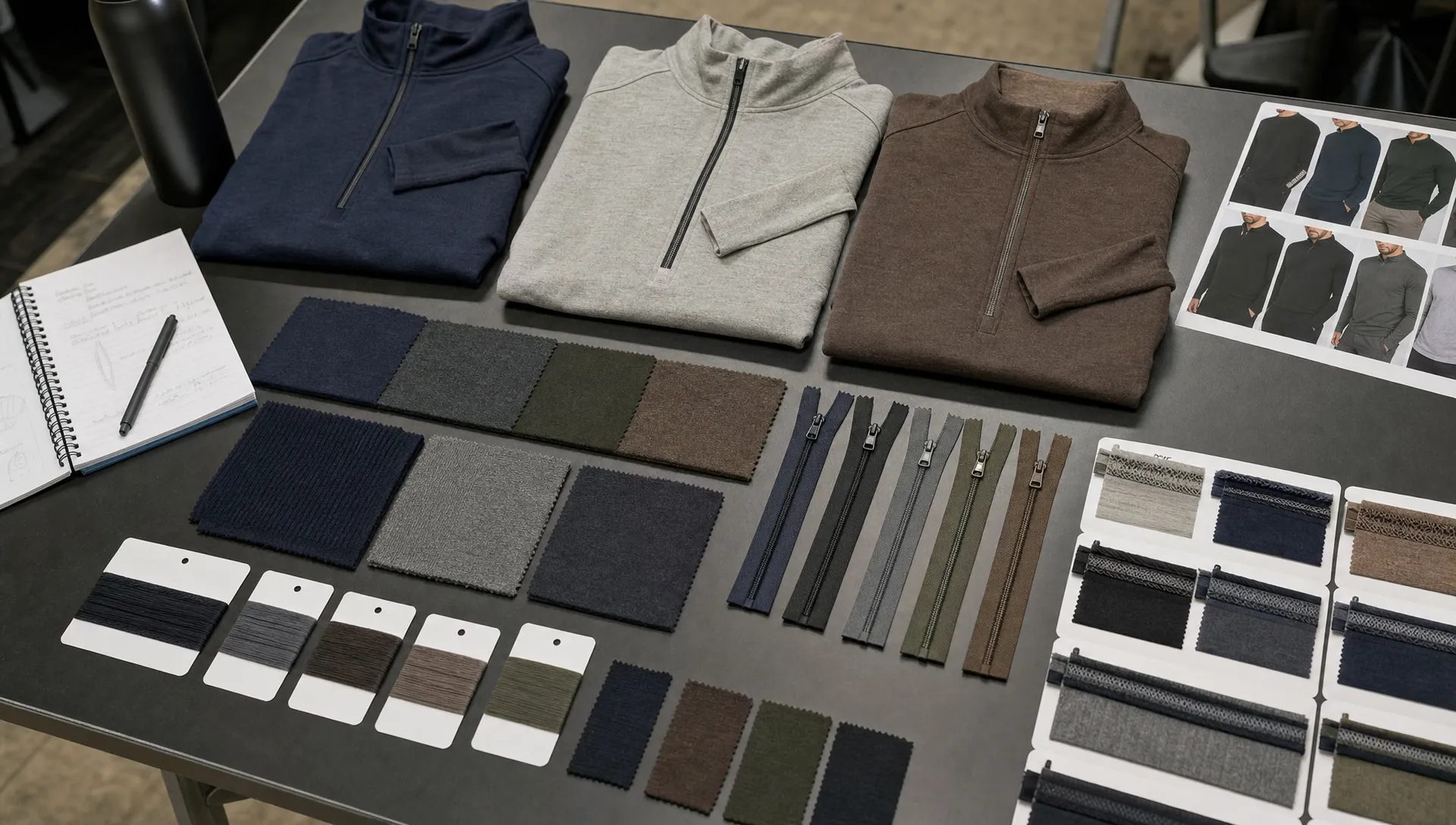
Micron count also matters. Finer merino generally feels softer against the skin, while stronger yarn and fabric construction support durability. Many performance brands consider blends with nylon or elastane when the garment will face abrasion, frequent washing or high-movement wear. The point is not to make every style as soft as possible. It is to match softness, strength and recovery to the job of the garment.
Fit should be tested on bodies in motion, not only on a standing fit model. Sleeve pitch, armhole shape, back length and hem sweep all change how the top behaves during running, climbing or lifting. A technically sound pattern can make a simple garment feel more premium than a complicated style with poor movement.
Merchandising a line around long sleeve styles
A merino long sleeve collection should be easy for customers to understand at a glance. If every piece has similar weight, fit and features, the line may look cohesive but fail commercially because shoppers cannot tell which style is right for them.
One useful approach is to build a clear tier system. The entry style can be a lightweight crew in core colors. The mid-tier style can add a half-zip, pocket or improved blend. The premium tier can introduce higher fabric weight, specialty construction or a more technical fit. This structure gives retailers and ecommerce pages a cleaner story.
Color strategy matters too. Merino often performs well in understated palettes because customers expect versatility from premium natural fibers. Black, charcoal, navy, olive, cream and seasonal earth tones can support repeat wear. Brighter accent colors may work for run or outdoor visibility, but they should not overwhelm the collection unless that is central to the brand identity.
Gender and fit strategy should be decided before sampling. A unisex block can simplify production but may not serve all customers well, especially in base layers. Separate men’s and women’s blocks can improve fit credibility, though they add development and inventory complexity. The right answer depends on audience, assortment size and launch budget.
Development steps from concept to production
Turning a merino long sleeve concept into a production-ready garment requires more than selecting a wool fabric. The process usually begins with a clear product brief, then moves through material sourcing, pattern development, sampling, fit review, wash testing and production planning.
For newer brands, small batch manufacturing can reduce risk while the assortment is validated. Low minimum order quantities can also make it possible to test more than one style role without overcommitting to inventory. The tradeoff is that every variation still needs disciplined development. Too many colors, trims or fits can quickly create complexity.
Quality control is especially important with merino because fabric handling, shrinkage management, seam tension and finishing can affect the final customer experience. In-house production management helps keep those details connected from first sample to finished goods. If your team needs a partner that can support custom apparel development, material sourcing, pattern development and manufacturing coordination, Arcus Apparel Group is built around that full-service model.
Common mistakes to avoid
The easiest way to weaken a merino long sleeve program is to design from trend references alone. Inspiration is useful, but performance apparel has to survive movement, washing, layering and customer expectations around value.
Watch for these common issues:
- Choosing a fabric because it feels soft in hand without testing recovery, shrinkage or pilling
- Adding technical features that do not match the customer’s actual activity
- Using the same fit block for base layers, trail tops and lifestyle pieces
- Ignoring seam placement in high-friction areas such as shoulders, underarms and pack zones
- Launching too many similar styles instead of giving each piece a distinct role
A focused assortment usually outperforms a crowded one. If a brand can explain why each style exists, the customer can understand the line faster and the production team can execute with fewer avoidable revisions.
Frequently Asked Questions
What is the best merino long sleeve style to start with? A lightweight or midweight crew is often the best first style because it works across base layer, training and travel use cases. It is also easier to fit and merchandise than a highly technical top.
Should performance brands use 100 percent merino or a blend? It depends on the activity and positioning. 100 percent merino supports a natural fiber story and soft hand feel, while blends with nylon or elastane can improve durability, stretch recovery or abrasion resistance.
What fabric weight works best for a long sleeve performance top? Many versatile styles fall around 170-200 gsm, but lightweight base layers may use 140-170 gsm and thermal pieces may move above 200 gsm. The right weight depends on climate, layering system and intended activity.
How many long sleeve styles should a new brand launch? A focused launch with one to three clearly differentiated styles is often easier to manage than a broad assortment. Start with the roles your customer will understand fastest, then expand after fit, demand and production quality are validated.
Build a stronger merino performance collection
Merino can support a broad range of performance products, but strong results come from clear style roles, disciplined fabric decisions and careful production planning. When the concept, fit and manufacturing process are aligned, a long sleeve top can become more than a seasonal item. It can become a repeatable platform for future collections.
Arcus Apparel Group helps apparel brands move from idea to finished product through custom apparel development, material sourcing, pattern development, small batch manufacturing and quality control at every stage. If you are planning a merino program or expanding an existing performance assortment, connect with Arcus to build it with the right development and production support.



