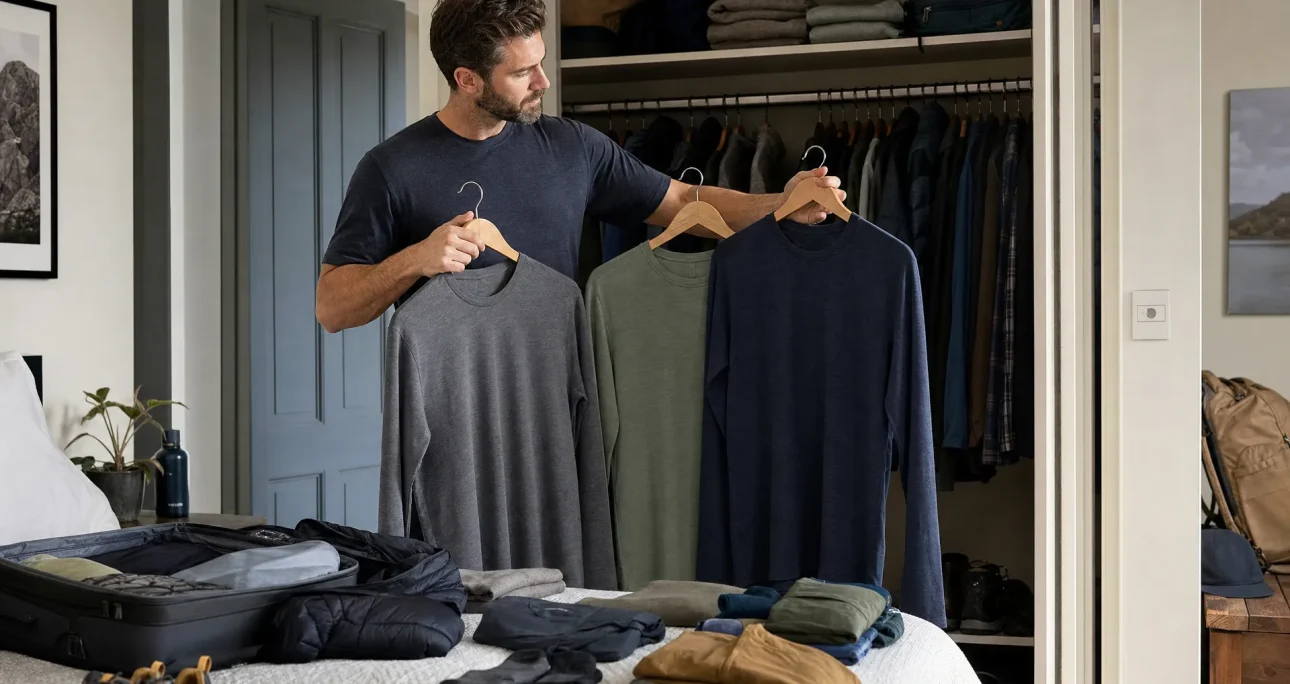
For apparel brands, merino shirts succeed when the fabric weight matches the job the customer expects the garment to do. A 135 GSM travel tee, a 190 GSM office-ready polo and a 250 GSM winter layer can all use the same fiber family, but they will feel, fit, drape, wash and perform very differently. Choosing weight by use case is the fastest way to avoid vague product briefs and expensive sampling loops.
Fabric weight is usually measured in grams per square meter, or GSM. The number does not tell the whole story, but it gives designers, developers and sourcing teams a shared starting point. Lower GSM fabrics feel lighter, pack smaller and dry faster. Higher GSM fabrics add warmth, opacity, structure and durability, though they can feel too warm if the use case is wrong.
Why Fabric Weight Matters Before You Sample
The right fabric weight affects more than seasonal positioning. It shapes the garment pattern, shrinkage allowance, seam choice, labeling, care instructions and target retail price. If a brand starts with a mood board instead of a use case, the first prototype may look right on a hanger but fail in real wear.
When merino shirts are developed around specific activities, decisions become easier. A commuter tee needs enough opacity and recovery to look presentable after a train ride. A backpacking base layer needs low bulk, fast drying and seams that do not rub under a pack. A winter overshirt needs warmth, structure and enough abrasion resistance for repeated wear.
Merino also behaves differently from cotton or synthetic jersey. It can offer excellent temperature regulation and odor resistance, but fine wool fibers are sensitive to aggressive construction, poor laundering tests and overly loose knits. Weight selection should be tied to the garment’s role, not just to a competitor’s spec sheet.
Choosing Fabric Weight for Merino Shirts by Use Case
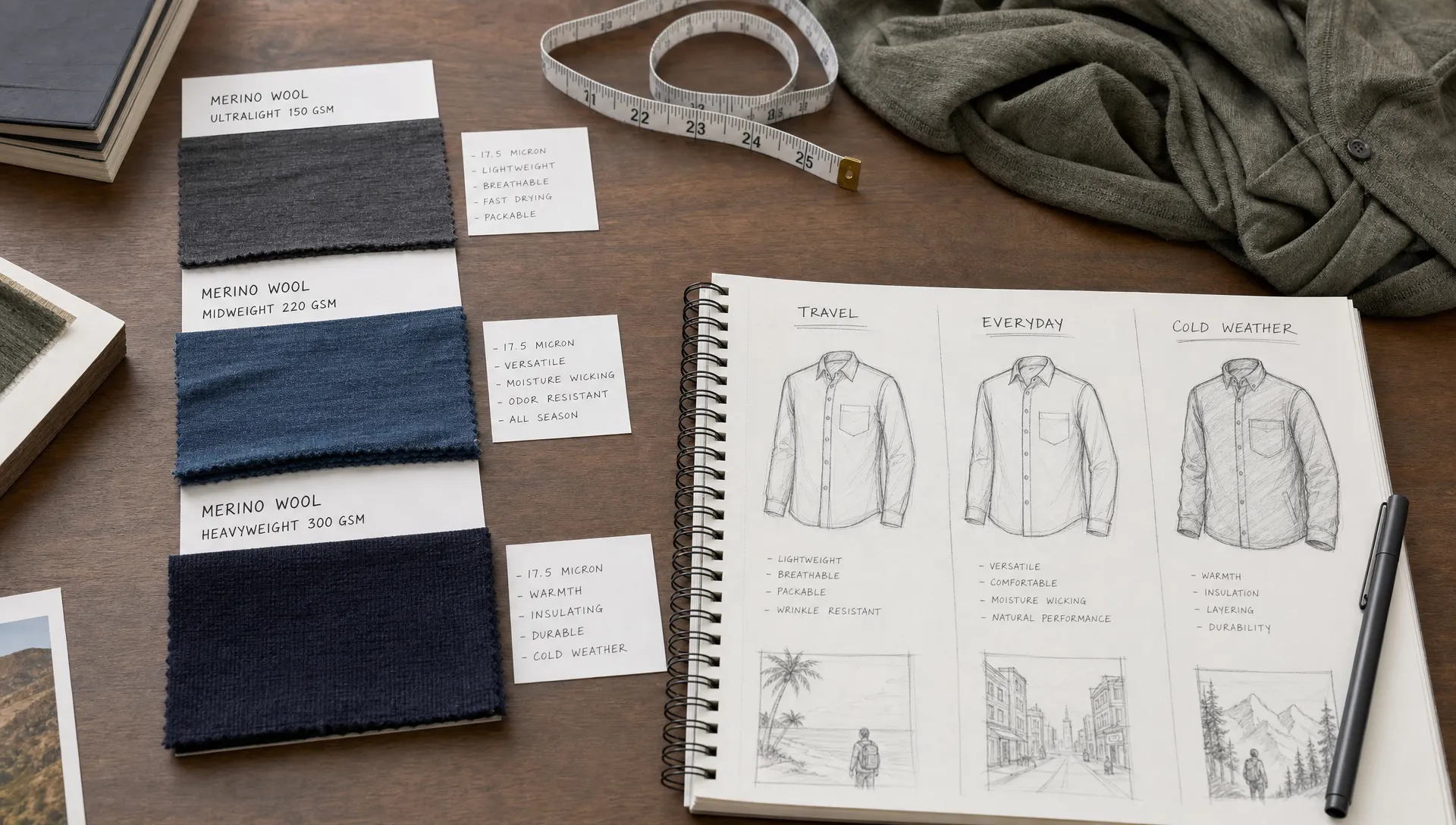
The simplest way to evaluate merino shirts is to map fabric weight against activity level, climate and intended fit. The ranges below are common development starting points, not fixed rules. Yarn quality, micron count, knit structure and finishing can make two fabrics with the same GSM feel noticeably different.
| Use case | Common starting weight | Best for | Development watchouts |
|---|---|---|---|
| Hot weather travel tee | 120 to 150 GSM | Warm climates, packing light, quick drying | Sheerness, shoulder distortion, pilling |
| Active short-sleeve top | 140 to 170 GSM | Hiking, running, gym, high-output movement | Recovery, sweat management, seam abrasion |
| Everyday T-shirt | 160 to 190 GSM | Lifestyle wear, casual layering, year-round basics | Opacity, shrinkage, neckline stability |
| Polo, henley or office casual shirt | 180 to 220 GSM | Smart casual styling, cooler offices, premium handfeel | Drape, collar structure, button placket stability |
| Long-sleeve layering shirt | 180 to 240 GSM | Shoulder seasons, outdoor layering, travel | Sleeve twist, cuff recovery, layering fit |
| Cold weather thermal or overshirt | 220 to 280 GSM and above | Low-output cold weather, winter layering | Bulk, drying time, cost, wash behavior |
Ultralight Weights: 120 to 150 GSM
Ultralight merino is best when the customer values low bulk and comfort in heat. This range works for travel capsules, warm-weather hiking tops and minimalist everyday tees. It can also support premium underlayers where the shirt is worn close to skin but not expected to provide major warmth.
For merino shirts built for hot climates or one-bag travel, 120 to 150 GSM can feel luxurious when the yarn is fine and the knit is stable. The main tradeoff is durability. Thin wool jerseys can become transparent in light colors, lose shape at the neckline or show backpack wear at the shoulders if the construction is not reinforced.
Brands developing in this range should test abrasion, pilling and dimensional stability early. Fit should not be overly tight unless the fabric has adequate recovery, often through knit engineering or a small amount of stretch fiber. Darker colors and heather effects can also reduce the visual risk of sheerness.
Lightweight Weights: 150 to 180 GSM
Lightweight merino is often the most versatile range for T-shirts because it balances breathability, opacity and everyday durability. It is light enough for layering but substantial enough to feel like a standalone garment, especially in darker shades or compact jersey constructions.
Many merino shirts in this range are designed as year-round essentials. For a brand, that makes 150 to 180 GSM a useful starting point for core tees, travel basics and active lifestyle tops. Customers can wear them under a flannel, jacket or hoodie without feeling bulky, then use the same shirt alone in mild weather.
If the product is specifically a T-shirt, it is worth comparing weight with fit and performance expectations. Arcus covers those details in its guide to merino wool T-shirts for fabric weight, fit and performance, including how fiber, construction and composition influence comfort.
Midweight Weights: 180 to 220 GSM
Midweight fabrics help a merino top feel more structured and premium. This range works well for polos, henleys, long-sleeve crewnecks and elevated casual shirts where the garment needs to hold its shape after repeated wear. It is also a good range for shoulder-season layering.
For merino shirts intended for office-to-outdoor use, 180 to 220 GSM offers a practical middle ground. The fabric can drape cleanly without clinging too much, and it usually gives better opacity than ultralight jerseys. The added weight also helps collars, plackets and cuffs look more finished when paired with the right trims and interfacing.
The risk is overheating. If the customer is moving fast or wearing the shirt in a warm indoor environment, a dense 220 GSM knit may feel too warm. Developers should align GSM with sleeve length, silhouette and ventilation details instead of treating midweight fabric as automatically more premium.
Heavyweight Weights: 220 to 280 GSM and Above
Heavyweight merino moves away from lightweight T-shirt territory and toward thermal wear, overshirts and cold-weather layers. The fabric feels warmer, more protective and more substantial, which can support a higher perceived value when the garment is positioned correctly.
The best merino shirts in this weight class are usually built for lower-output activity, cold commutes or layered outdoor systems. A heavier long-sleeve shirt can replace a light sweatshirt in mild winter conditions, while a dense thermal knit can serve as a warm base layer under outerwear.
Development teams should watch drying time, bulk and cost. A heavier garment consumes more raw material, may take longer to dry after washing and can feel restrictive if the pattern is too close. If your brief points toward true cold-weather performance, compare the shirt concept with Arcus resources on merino wool thermal wear for cold weather before locking the range.
Match Weight With Knit Construction
GSM is only one part of fabric behavior. A 180 GSM single jersey can feel soft and fluid, while a 180 GSM interlock can feel smoother, denser and more stable. Rib, waffle, pique and terry constructions change stretch, warmth and surface texture even when the scale shows the same weight.
This is why merino shirts should never be approved by GSM alone. Ask for handfeel notes, stretch and recovery data, shrinkage results and pilling performance before selecting a production fabric. If the style has a collar, placket or pocket, review how the fabric behaves in those areas after washing, not just on a flat swatch.
Single jersey is common for T-shirts because it is soft, familiar and efficient. Interlock can add stability and opacity but may feel warmer. Rib works well for close-to-body layers because it stretches and recovers, though it can look more technical. Pique can create a polo-like texture, but it needs careful testing because wool yarns can snag if the structure is too open.
Consider Micron Count, Blends and Handfeel
Micron count describes fiber diameter. Lower micron merino generally feels softer next to skin, which matters for collars, underarms and close-fitting base layers. Many next-to-skin products use fine or superfine merino, often around 17.5 to 19.5 microns, depending on the brand’s comfort target and price point.
When merino shirts need more abrasion resistance or faster recovery, blends can make sense. Nylon can improve durability, polyester can support drying speed and elastane can improve stretch recovery. A 100 percent merino garment may have strong natural appeal, but the right blend can better match a performance use case.
The blend decision should be made before pattern finalization because recovery and shrinkage affect fit. A close base layer, for example, needs different negative ease than a relaxed travel tee. For close-fitting layering systems, Arcus has a separate merino base layer guide for fit, weight and warmth that goes deeper into those tradeoffs.
Development Checklist by Use Case
Once the weight range is chosen, the sample request should be specific enough for the mill, pattern team and factory to work from the same assumptions. Vague briefs such as premium merino tee or lightweight wool top leave too much room for interpretation.
Use case should define the test plan for merino shirts as much as the design direction. A travel shirt needs repeated wash testing and odor-resistance positioning. A gym top needs sweat, stretch and abrasion review. A smart casual polo needs collar stability, placket behavior and appearance after laundering.
| Development question | Why it matters | What to review in samples |
|---|---|---|
| Is the shirt worn alone or layered? | Affects opacity, drape and fit ease | Try-on over and under typical garments |
| Is the activity high-output or low-output? | Affects warmth and drying expectations | Wear testing, sweat behavior, drying time |
| Is the garment next to skin? | Affects micron count and seam decisions | Itch testing, seam placement, label comfort |
| Does the style need structure? | Affects knit type and trims | Collar, placket, hem and neckline stability |
| How will customers wash it? | Affects shrinkage and care claims | Dimensional stability after multiple washes |
A strong sample review should include more than a fit photo. Measure the garment before and after washing, record torque at side seams, inspect high-rub zones and compare handfeel after laundering. Wool can look excellent at first sample stage but reveal problems only after several wash and wear cycles.
Building a Balanced Product Line
A single fabric weight rarely covers every customer need. Brands that sell merino successfully often build a small architecture: an ultralight travel or active tee, a core everyday tee, a midweight long sleeve and a heavier cold-weather layer. That structure makes assortment planning clearer and helps customers choose without confusion.
For a direct-to-consumer launch, product architecture should also connect to merchandising and site experience. If the difference between 150 GSM and 210 GSM is not explained clearly, shoppers may buy the wrong item and blame the garment. Retail teams working on digital experience, product education and conversion can benefit from partners focused on AI-powered digital transformation for retail, especially when technical apparel needs clearer online storytelling.
At the manufacturing level, keep the first line tight. It is usually better to perfect two or three weights with strong fit blocks than to launch too many fabric options at once. This also supports more controlled sourcing, clearer quality standards and smarter small-batch production planning.
Common Mistakes When Choosing Weight
One common mistake is assuming heavier always means better. Heavyweight merino can feel premium, but it may disappoint customers who expected breathability. Another mistake is choosing ultralight fabric for a white or pale pastel shirt without checking opacity in real lighting.
Another issue is ignoring trim compatibility. Merino shirts with collars, zippers, snaps or structured pockets need fabrics that can support those details without sagging or twisting. Lightweight jersey may be perfect for a crewneck tee but unsuitable for a button placket unless the construction is adjusted.
Finally, do not approve a fabric from a swatch alone. Swatches hide how a fabric behaves across a full body, especially at the shoulders, hem and neckline. A proper prototype reveals drape, recovery, seam performance and how the garment feels after actual movement.
Frequently Asked Questions
What GSM is best for everyday merino shirts? For everyday wear, 160 to 190 GSM is often a strong starting point because it balances breathability, opacity and durability. If the shirt needs a more structured premium feel, consider moving closer to 200 GSM.
Are lightweight merino fabrics less durable? They can be, especially below 150 GSM, but durability depends on yarn quality, knit density, blend, finishing and construction. Always test pilling, abrasion and shrinkage rather than judging by weight alone.
Should performance shirts use 100 percent merino or a blend? Both can work. A 100 percent merino shirt has a strong natural fiber story, while a blend with nylon, polyester or elastane can improve durability, drying speed or recovery for active use.
How many fabric weights should a new brand launch with? Most new brands are better off starting with one or two well-tested weights. Add more once you understand customer feedback, return reasons and which use cases drive repeat purchases.
Develop Merino Shirts With Arcus Apparel Group
Choosing fabric weight is a product strategy decision, not just a sourcing detail. The right choice connects customer use case, fiber quality, knit construction, fit, testing and production planning.
Arcus Apparel Group helps apparel brands develop custom garments from material sourcing and pattern development through small-batch manufacturing, quality control and scalable production options. If you are building merino shirts for travel, performance, lifestyle or cold-weather layering, a clear fabric-weight brief will help your samples move faster and perform better in market.



