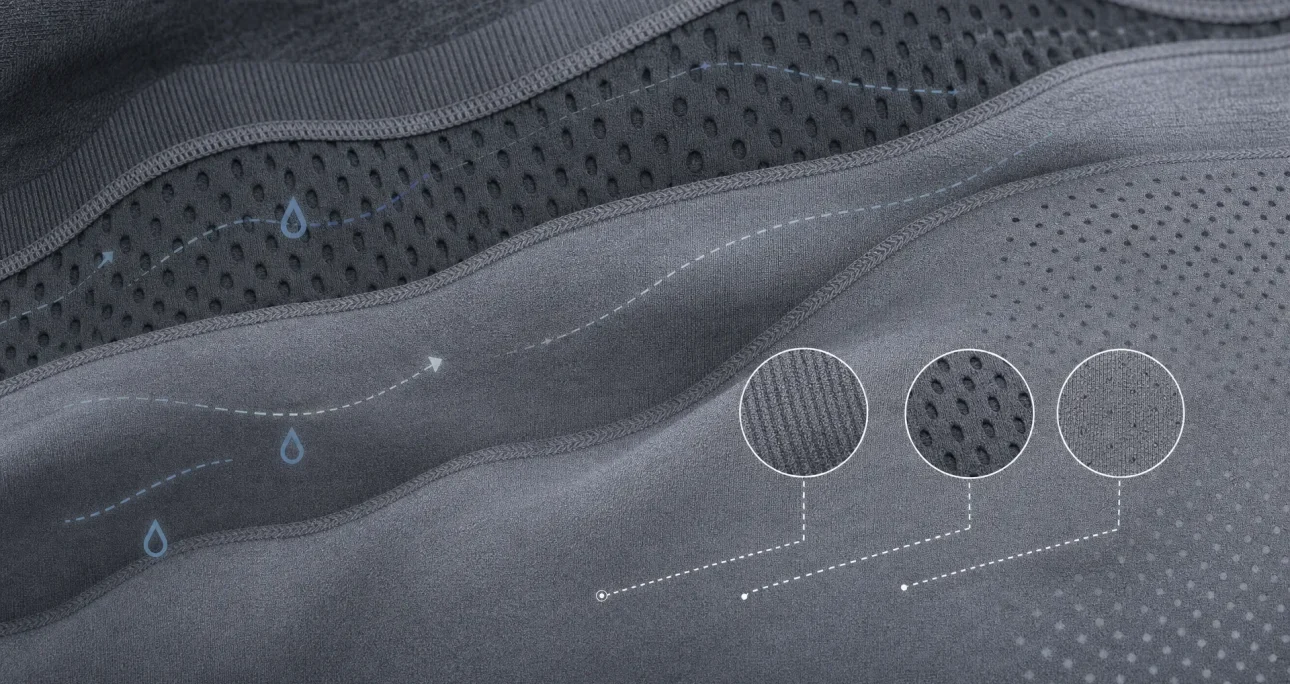
Merino wool activewear can feel premium, regulate temperature well and stay fresher between washes, but those benefits do not happen automatically. A performance garment succeeds when the fiber, fabric, fit, construction and testing plan all support the same use case.
For apparel brands, that means treating merino as an active material with its own behavior, not simply swapping it into a pattern built for polyester. Merino absorbs moisture vapor, stretches differently, can be more sensitive to abrasion and needs careful handling in production. Design around those realities and the result is a product that feels better in motion, lasts longer and earns repeat wear.
If you want a broader material primer before getting into design decisions, Arcus has also covered what makes merino wool workout clothes perform. This guide focuses on the next step: how to translate those properties into better activewear design.
Start With the Activity, Not the Fabric
The first design decision is not whether to use 17.5 micron or 19.5 micron wool. It is what the garment has to do during actual use.
A merino yoga top, trail running base layer and gym training tee all face different stresses. Yoga needs stretch, opacity and a soft hand against the skin. Running needs moisture management, chafe control and fast enough drying for repeated sweat cycles. Hiking adds backpack abrasion, temperature swings and longer wear periods.
Build the product brief around the activity profile before choosing weight, construction or blend. A simple development matrix can prevent expensive sampling mistakes.
| Activewear use case | Main performance need | Fabric direction | Fit direction |
|---|---|---|---|
| Yoga and low impact training | Stretch, softness, opacity | Lightweight to midweight jersey with elastane | Close fit with recovery, not compression-first |
| Running and high sweat training | Moisture buffering, reduced cling, low chafe | Lightweight merino blend or zoned fabric | Athletic fit with ventilation and seam control |
| Hiking and outdoor training | Odor control, durability, temperature regulation | Midweight merino nylon blend | Body-skimming fit with abrasion-aware panels |
| Cold weather training | Warmth without overheating | Midweight to heavyweight merino knit | Layering fit with longer body coverage |
| Travel activewear | Multi-day freshness, comfort, easy styling | Fine gauge jersey or pique blend | Versatile fit that works beyond workouts |
This brief should also define expected wear frequency, care method, target retail price and sustainability goals. Merino can support many product positions, but the best fabric for a premium hiking layer may be wrong for a lower priced studio tee.
Choose Micron Count for Skin Comfort and Durability
Micron count measures the diameter of wool fibers. Lower micron merino generally feels softer against the skin, which matters for activewear because sweat and movement make irritation more noticeable. For next-to-skin garments, many brands look at fine merino in the rough range of 17.5 to 19.5 microns, depending on price point, durability targets and fabric construction.
Finer is not always better. Very fine fibers can feel luxurious, but they may also require more careful engineering to control pilling, abrasion and shape retention. A trail layer under backpack straps needs a different balance than a lounge-to-studio tee.
Length and consistency matter too. Longer, more uniform fibers tend to spin into smoother yarns, which can improve hand feel and reduce visible fuzzing. If a collection is positioned around premium performance, ask suppliers about fiber origin, staple length, yarn count, blend ratio and certification options. Responsible sourcing is not only a marketing question. It affects supply stability, material story and the way customers evaluate a premium wool product.
The Responsible Wool Standard from Textile Exchange is one recognized framework brands may review when building sourcing requirements. Not every product needs the same certification path, but sourcing expectations should be clear before sampling begins.
Match Fabric Weight to Sweat, Season and Transparency
Fabric weight is one of the easiest specs to compare and one of the easiest to misuse. A lighter merino fabric can feel breathable and refined, but it may become too sheer, clingy or fragile if used for the wrong silhouette. A heavier fabric can improve coverage and warmth, but may dry more slowly or feel too warm for indoor training.
For merino wool activewear, gsm should be selected with movement and sweat in mind, not just hand feel on a swatch card.
| Fabric weight range | Typical activewear role | Design considerations |
|---|---|---|
| 120 to 150 gsm | Lightweight tees, warm weather base layers, travel tops | Check transparency, seam strength and cling when wet |
| 150 to 180 gsm | Training tees, long sleeves, versatile active tops | Good balance for many next-to-skin products |
| 180 to 220 gsm | Cooler weather tops, outdoor layers, heavier tees | Watch drying time and heat buildup during high output use |
| 220 gsm and above | Thermal layers, cold weather training pieces | Best for insulation-focused designs rather than hot studio use |
Knit construction can change how the same weight performs. Jersey often feels soft and familiar, interlock can add stability and coverage, rib structures increase stretch and pique or mesh zones can improve airflow. If you are developing merino tops specifically, Arcus has a deeper breakdown of fabric weight, fit and performance for merino wool T-shirts.
Use Blends With a Clear Performance Purpose
Pure merino has a strong natural story, especially for odor resistance, softness and temperature regulation. The Woolmark Company notes that wool can absorb a significant amount of moisture vapor before feeling wet, which helps explain why merino often feels comfortable across changing conditions.
Activewear, however, often benefits from blends. The key is to blend for a reason rather than adding synthetic fibers by default.
Nylon can improve abrasion resistance, which is valuable in high-wear zones such as shoulders, elbows, inner thighs and backpack contact points. Polyester can help reduce drying time and support print options in certain constructions. Elastane adds stretch and recovery, but too much can affect hand feel, heat retention, recyclability goals and long-term garment behavior.
Many performance merino fabrics use a small percentage of elastane for movement. Others use core-spun yarns, where merino wraps around a stronger filament, or plated knits that place different fibers on different faces of the fabric. Those choices affect cost, durability, moisture feel and branding claims, so they should be evaluated during wear trials rather than selected from a spec sheet alone.
A good rule for design teams is simple: every non-wool fiber should have a job. If it does not improve stretch, durability, drying, structure, color, printability or cost in a meaningful way, it may be weakening the product story.
Engineer Fit for Motion, Not Just Size Charts
Merino activewear should be patterned on bodies in motion. A fit that looks clean on a standing model can pull across the shoulders, ride up at the hem or create friction at the underarm during training.
Designers should be especially careful with negative ease. Merino knits can stretch comfortably, but recovery depends on yarn, construction and elastane content. A close fit without enough recovery becomes baggy. Too much compression can make wool feel warmer and wetter than intended.
Key fit decisions include:
- Shoulder and armhole shape for overhead movement
- Gussets or panel shaping where the garment needs range of motion
- Body length that stays covered when bending, reaching or cycling
- Neck openings that do not distort after repeated dressing
- Sleeve and cuff dimensions that stay secure without restricting circulation
- Hem sweep that works with both relaxed wear and active movement
For layering pieces, fit is even more important. A cold weather base layer should sit close enough to manage moisture, but not so tight that it restricts circulation or distorts the knit. Arcus explores that balance in its merino base layer guide for fit, weight and warmth.
Place Seams Where the Body Will Not Fight Them
Chafe control is one of the most practical design tips for better merino performance. Merino is soft, but a poorly placed seam can still irritate skin during repetitive movement.
Avoid bulky intersections at the underarm, side waist, inner thigh and shoulder top. If the garment will be worn under a pack, move shoulder seams away from pressure zones or use paneling that reduces ridge buildup. For leggings or fitted bottoms, think carefully about inseam placement, gusset shape and waistband construction.
Flatlock seams can reduce bulk, but they are not automatically superior in every product. The right stitch depends on fabric weight, seam stretch, machinery, thread, cost and the desired appearance. Coverstitch hems, bonded details and clean-finished necklines can all work, but each needs testing after laundering and stretch.
Design Moisture Zones Instead of Relying on One Fabric Everywhere
Merino helps buffer moisture vapor, but it is not a magic solution for every sweat pattern. High output athletes may sweat heavily at the back, chest, underarms and waistband. Using the same fabric everywhere can create unnecessary wet zones, cling or drying delays.
Zoned construction can improve comfort without losing the merino identity of the garment. Lighter panels under the arms, open knit structures at the back yoke or more durable blends at high abrasion points can make the garment perform better in the real world. This is especially useful for hybrid products that need to work for both training and outdoor wear.
Ventilation does not always need to look technical. A subtle mesh knit, shaped back panel or slightly more open structure can deliver airflow while keeping the product suitable for travel and everyday use. This matters for brands selling premium activewear that customers expect to wear beyond the gym.
Plan Color, Printing and Branding Around Wool Behavior
Color development for merino activewear needs more care than a standard synthetic program. Wool takes dye differently than polyester or nylon, and shrinkage, shade variation, crocking and colorfastness should be checked early. Dark colors can look rich on merino, but they also need testing for wash performance and surface appearance over time.
Branding methods should be selected with stretch, softness and care requirements in mind. Heat transfers can feel uncomfortable if placed in high-flex zones or directly against the skin. Woven labels may irritate, especially on next-to-skin activewear. Printed neck labels, soft trims and low-profile branding are often better for comfort.
Dye sublimation deserves special attention. Sublimation is commonly associated with polyester because the process bonds best with polyester fibers. For merino wool activewear, it may be more appropriate on polyester-containing panels, trims or blended constructions rather than on pure merino fabric. If sublimated graphics are part of the concept, bring that requirement into material sourcing early so the fabric and print method are developed together.
Build Durability Into High-Wear Areas
Merino’s comfort can be undermined if the garment pills quickly or wears through in predictable zones. Durability starts with fiber and yarn, but design also plays a major role.
For tops, inspect shoulder seams, underarms, lower side seams and backpack contact points. For bottoms, focus on the inner thigh, seat, waistband edge and knee recovery. For sports bras or fitted tanks, test strap stability, elastic recovery and edge finishing.
Reinforcement does not need to make the garment bulky. Designers can use strategic blends, double-layer zones, more stable knit structures or adjusted seam placement. The best solution depends on the product’s aesthetic. A minimalist premium training top may need invisible reinforcement through yarn and construction, while an outdoor piece can show more technical paneling.
Test Prototypes Like Customers Will Use Them
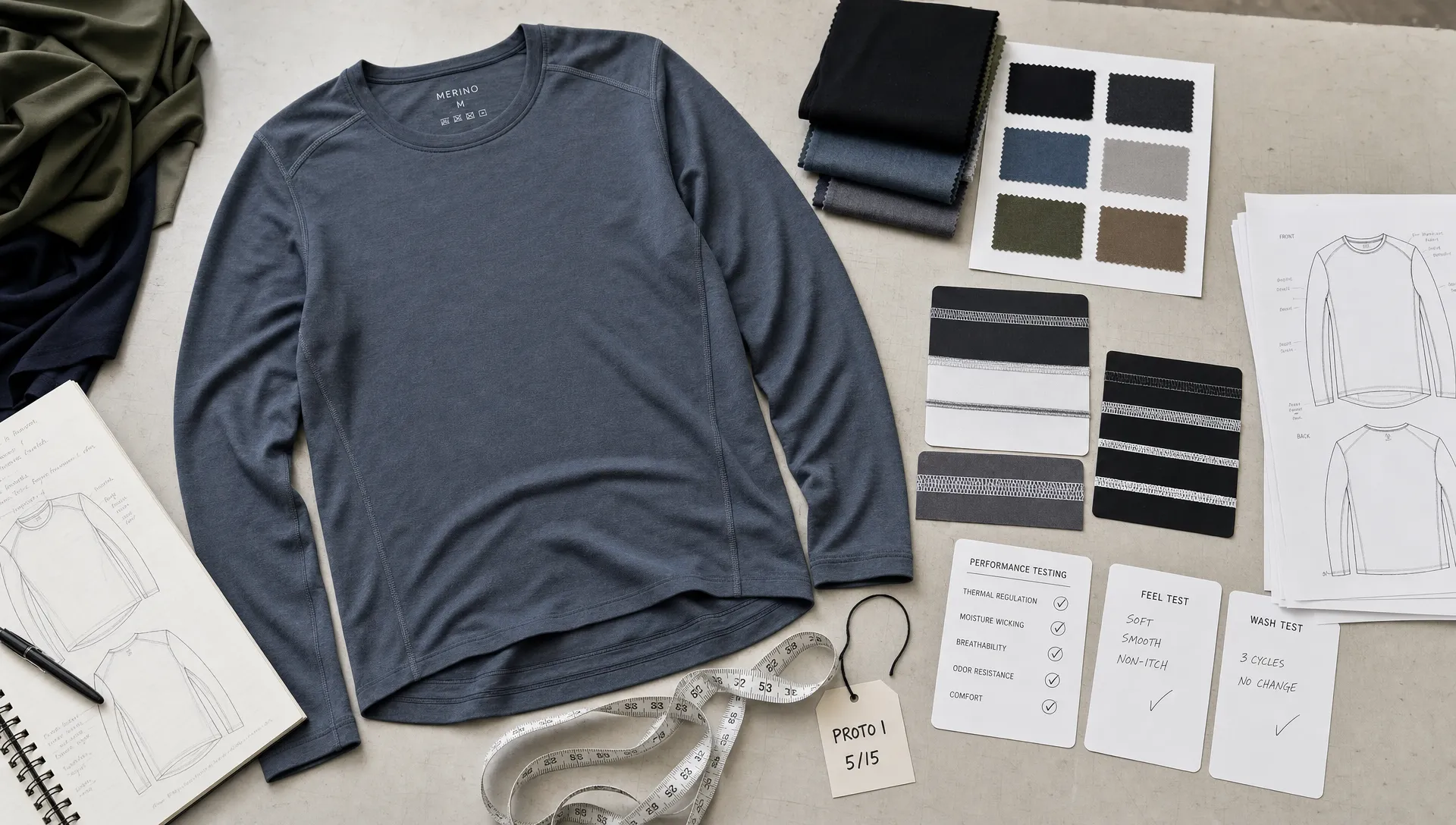
A merino activewear sample can look excellent before washing and still fail after three weeks of use. Testing should include lab checks where appropriate, but wear testing is just as important because activewear performance is sensory. Customers notice cling, odor, itch, twisting, seam rub, bagging and drying time quickly.
At minimum, prototypes should be reviewed after repeated wash and wear cycles. Test multiple sizes, not only sample size, because strain points change across the size range.
| Test area | What to evaluate | Why it matters |
|---|---|---|
| Dimensional stability | Shrinkage, twisting, body length and sleeve length | Protects fit and customer satisfaction after laundering |
| Pilling and abrasion | Surface fuzz, backpack wear, inner arm and thigh wear | Preserves premium appearance and durability |
| Stretch recovery | Elbows, knees, cuffs, waistband and hem recovery | Prevents bagging in active zones |
| Seam comfort | Chafe, bulk, seam stretch and thread irritation | Improves next-to-skin comfort |
| Colorfastness | Washing, rubbing and perspiration response | Reduces returns and quality complaints |
| Wear comfort | Heat, cling, odor, drying feel and range of motion | Confirms that lab specs translate to real use |
Document test results with photos, measurements and wearer notes. A structured feedback form can help separate one person’s preference from a recurring design issue.
Scale Carefully From Sample to Production
Merino wool activewear often needs tighter production control than basic cotton knits. Fabric relaxation, cutting stability, sewing tension, pressing temperature and wash finishing can all affect final measurements. If a development team approves a sample without locking down these details, production can drift.
A strong production package should include final fabric specs, shrinkage allowances, stitch types, seam tolerances, label placement, trim requirements, care instructions and quality checkpoints. Pre-production samples should be reviewed after wash, not just fresh from sewing.
This is also where minimum order strategy matters. A new brand may not want to commit to a large run before validating fit, fabric and customer demand. Small batch manufacturing and low minimum order quantities can make merino development more manageable, especially when a brand is testing multiple weights or silhouettes.
Common Design Mistakes to Avoid
Many merino activewear problems come from treating wool like a direct replacement for synthetic jersey. The material has different strengths, which means the design process has to adapt.
Avoid these common mistakes:
- Choosing fabric by softness alone without testing pilling, stretch recovery and laundering
- Using too light a fabric for fitted silhouettes where opacity matters
- Placing seams in backpack, underarm or inner thigh friction zones
- Adding elastane without checking heat, recovery and long-term hand feel
- Assuming sublimation will work on pure merino the same way it works on polyester
- Approving color before wash and perspiration testing
- Skipping wear trials across multiple body types and sizes
The goal is not to make merino behave exactly like synthetic activewear. The goal is to let merino do what it does best while engineering around its limitations.
Frequently Asked Questions
Is merino wool activewear good for high intensity workouts? Yes, when the fabric and construction are designed for sweat, movement and drying. For very high sweat activities, many brands use lightweight merino blends, ventilation zones or hybrid paneling rather than one heavy wool fabric throughout the garment.
What fabric weight is best for merino wool activewear? Many active tops fall between 120 and 180 gsm, depending on opacity, climate and use case. Cooler weather layers may move into 180 to 220 gsm or higher. The right weight should be confirmed through fit, wash and wear testing.
Should merino activewear be 100 percent wool? Not always. Pure merino can be excellent for softness, odor resistance and natural positioning, but blends can improve durability, stretch recovery, drying speed or print compatibility. The blend should support a clear performance goal.
How can brands reduce pilling in merino activewear? Start with appropriate fiber quality, yarn selection and fabric construction. Then test abrasion zones, adjust panel placement and consider blends or more stable knits where friction is expected. Pilling control should be evaluated after repeated wear and wash cycles.
Can merino wool activewear use dye sublimation printing? Pure merino is generally not the ideal base for sublimation in the same way polyester is. If sublimation is central to the design, consider polyester-containing panels, compatible blends or alternative branding methods after testing.
Develop Merino Wool Activewear With the Right Production Partner
Better merino performance comes from decisions made early: fiber selection, fabric weight, fit engineering, seam placement, testing and production control. When those pieces are aligned, merino wool activewear can deliver comfort, freshness and versatility that customers notice.
Arcus Apparel Group helps apparel brands move from concept to production with custom apparel development, material sourcing, pattern development, small batch manufacturing, flexible scaling and quality control at every stage. If you are building a merino program or refining an existing activewear line, connect with Arcus Apparel Group to develop garments that are designed for performance from the start.



