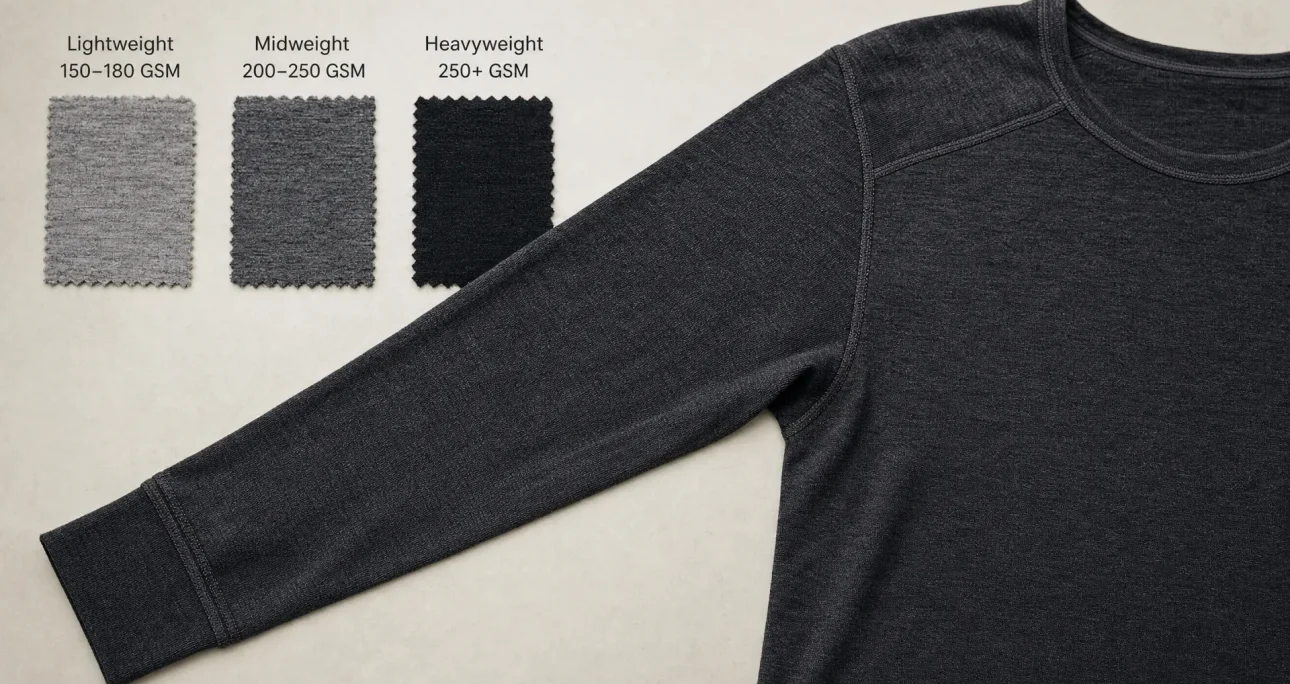
A merino base layer looks simple from the outside: a long sleeve top, leggings, or a close-fitting tee worn next to skin. In product development, though, it is one of the most technical garments in an outdoor, travel, ski, or performance apparel line. If the fit is too loose, it loses thermal efficiency. If the fabric is too heavy, it overheats during movement. If the seams, stretch, or shrinkage control are wrong, customers notice immediately.
This guide breaks down the three decisions that shape how a merino base layer performs: fit, fabric weight, and warmth. It is written for apparel founders, product developers, and growing brands that need to turn a good idea into a base layer people actually wear, wash, and repurchase.
What a merino base layer is supposed to do
A base layer is the first layer in a clothing system. Its job is not simply to feel soft. It must help manage moisture, reduce clamminess, provide warmth relative to activity level, and stay comfortable through repeated movement.
Merino wool is popular for this category because of its balance of softness, temperature regulation, odor resistance, and moisture management. The Woolmark Company explains that wool fibers can absorb and release moisture vapor, which is one reason merino can feel more comfortable across changing temperatures than many basic cotton knits.
For brands, the key point is that merino performance is not automatic. A 100 percent merino fabric with the wrong weight or poor fit can disappoint. A well-engineered merino blend with the right knit structure, pattern, and construction can perform better for the intended use case. If you are still evaluating the fiber itself, Arcus Apparel Group’s overview of merino wool properties brands should know before sourcing is a useful foundation.
Fit: the first performance decision
Fit controls how the fabric interacts with the body. A merino base layer should usually sit close enough to trap a thin layer of warm air and move moisture away from skin, but not so tight that it restricts movement or feels like compression wear unless that is the design intent.
The right fit depends on the activity. A ski base layer can be body-skimming because it is worn under insulating layers. A travel base layer may need a slightly easier fit because it doubles as a standalone top. A running base layer may need more stretch, venting, and raglan or articulated sleeves to handle repetitive motion.
| Fit profile | Best use | Pattern considerations | Common risk |
|---|---|---|---|
| Next-to-skin | Skiing, snowboarding, hiking, cold-weather training | Slight negative ease, close armhole, long sleeve and torso coverage | Feels restrictive if stretch and grading are poor |
| Athletic but not tight | Travel, outdoor lifestyle, layering under jackets | Balanced chest and waist shaping, moderate sleeve ease | Too loose to wick efficiently if over-relaxed |
| Relaxed base layer | Everyday wear, cabin wear, casual outdoor use | Straighter body, softer shoulder slope, comfortable neck opening | Less thermal efficiency in active cold conditions |
| Compression-inspired | High-output performance niches | High elastane content, engineered recovery, precise grading | Not suitable for broad customers unless clearly positioned |
A strong fit starts before sampling. Brands should define the target wearer, activity, and layering system. A base layer designed for alpine skiing might need a longer back hem to stay tucked under bibs or snow pants. A hiking crew neck may need shoulder seams moved away from pack pressure points. A women’s base layer may require more attention to bust shaping, hip ease, and sleeve mobility than a simple scaled-down men’s block.
For startups, this is where many products fail. They choose a fabric first, then force a generic block pattern around it. A better process is to build fit, stretch, and fabric behavior together. Arcus has a helpful guide on how to design custom apparel that fits if you are developing a sizing system from the ground up.
Fabric weight: how gsm changes comfort and use
Fabric weight is usually expressed in gsm, meaning grams per square meter. In merino base layers, gsm is one of the quickest ways to communicate intended warmth, but it should not be treated as the only performance metric.
A 150 gsm merino jersey and a 150 gsm merino rib can feel different. A dense 200 gsm interlock may feel warmer and smoother than a looser 200 gsm single jersey. Blends, yarn count, knit tightness, finishing, and stretch recovery all change the experience.
Still, gsm gives a practical starting point.
| Fabric weight | Typical category | Best for | Product notes |
|---|---|---|---|
| 120 to 150 gsm | Ultralight | Warm-weather hiking, travel, high-output training, year-round layering | Breathable and packable, but may be more transparent or delicate |
| 150 to 180 gsm | Lightweight | Everyday base layers, three-season hiking, active winter use | Versatile balance of comfort, moisture management, and layering ease |
| 180 to 220 gsm | Midweight | Skiing, cold-weather hiking, winter travel, lower-output outdoor use | Noticeably warmer, often the safest first base layer weight for cold lines |
| 220 to 320 gsm | Heavyweight or thermal | Very cold conditions, low-output activity, expedition-inspired products | Warm and durable, but can overheat during intense movement |
For many brands, a 170 to 200 gsm fabric is the most commercially flexible starting point. It can work for ski, hike, travel, and everyday layering without feeling too niche. However, brands serving runners, backpackers, or ultralight customers may prefer lower weights. Brands targeting resort, cold-weather lifestyle, or winter workwear may need a more substantial fabric.
The question is not simply, “What weight is warmest?” The better question is, “What weight supports the customer’s activity level, climate, and layering habits?”
Warmth: why weight alone does not tell the full story
Warmth comes from trapped air, moisture control, body coverage, and how the base layer works with outer layers. Merino helps because its crimped fibers can create natural loft, and because it can feel more comfortable when humidity changes inside a layering system.
But a merino base layer is not windproof. A lightweight merino top may feel warm under a shell but chilly in direct wind. A heavyweight merino crew may be cozy while standing around but too warm for uphill touring. The product has to be designed for real use, not just a warmth rating on a hangtag.
Several variables influence perceived warmth:
- Micron count: Finer merino, often around 17.5 to 19.5 microns for next-to-skin apparel, usually feels softer and less prickly.
- Knit structure: Rib, interlock, waffle, and thermal constructions can trap more air than a flat jersey at similar weights.
- Fiber composition: Nylon can improve durability, elastane can improve recovery, and synthetic blends can change drying time.
- Coverage: Longer cuffs, higher necklines, thumb loops, and longer hems can make a garment feel much warmer in practice.
- Moisture state: A damp base layer will feel different than a dry one, so moisture management matters as much as insulation.
Warmth should be tested in movement. A sample may feel ideal in an office fitting, then overheat on a steep climb or ride up under a pack. Wear testing across activity levels is one of the most reliable ways to refine gsm, fit, and construction before production.
Choosing the right knit construction
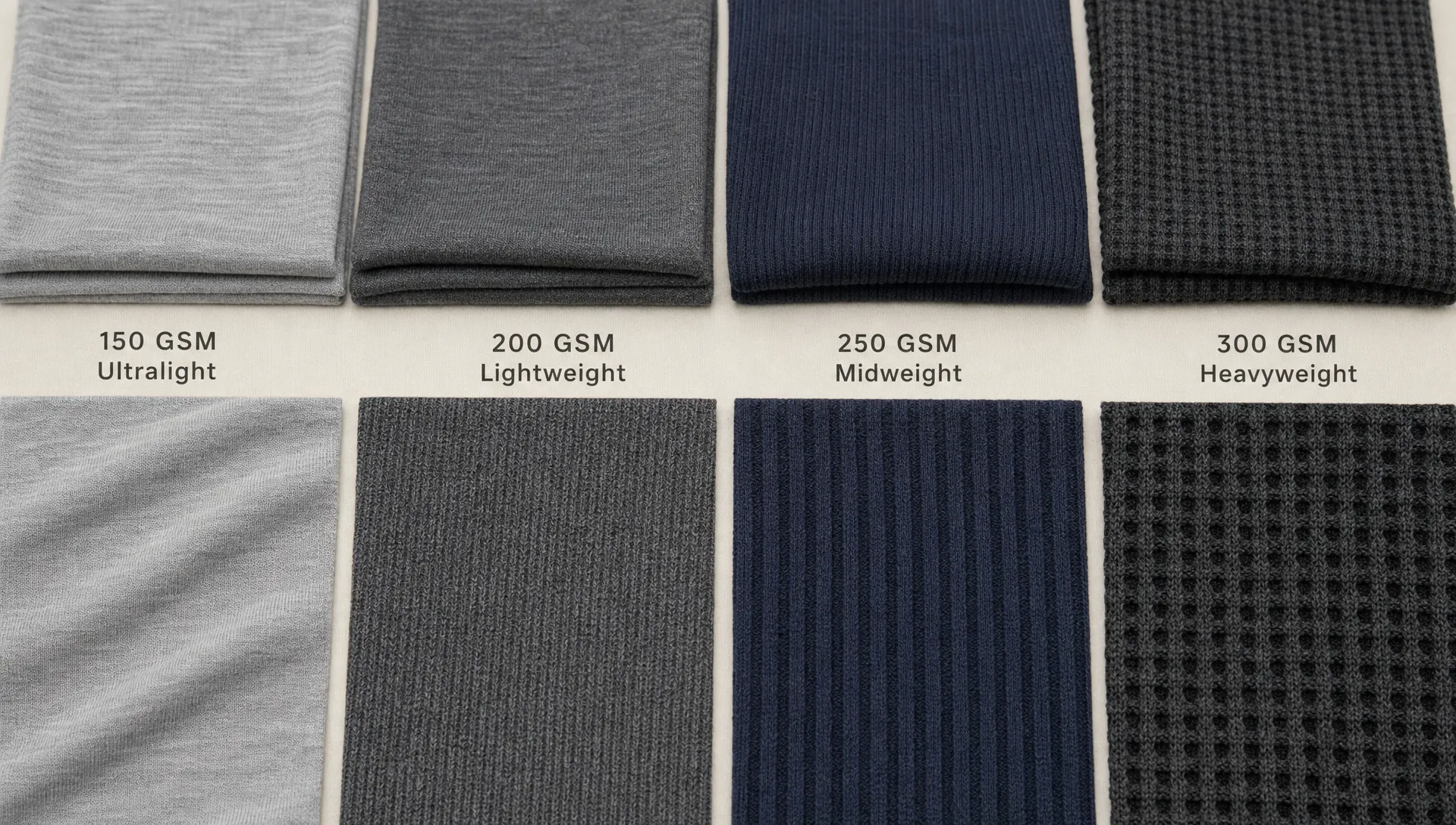
Knit construction shapes softness, stretch, durability, and warmth. For a merino base layer, the best fabric is rarely chosen by fiber content alone. Two fabrics with the same merino percentage and gsm can behave very differently after cutting, sewing, washing, and wearing.
Single jersey is common because it is soft, flexible, and comfortable against skin. It works well for lightweight and midweight tops, but it can be more prone to curling at cut edges and may need careful handling in production.
Interlock has a smoother, more stable hand. It can feel slightly thicker and more structured than jersey at a similar weight, making it useful for premium base layers where opacity and stability matter.
Rib knits offer excellent stretch and body conformity. They can be useful for fitted tops, leggings, cuffs, and panels where recovery is important. However, poor recovery can lead to bagging at elbows, knees, or hems.
Waffle and thermal knits create small air pockets, which can increase warmth without relying only on heavier gsm. They are especially useful for cold-weather or lifestyle base layers, though they may feel bulkier under slim outer layers.
| Knit type | Strengths | Watchouts |
|---|---|---|
| Single jersey | Soft, familiar, versatile, good for next-to-skin comfort | Edge curl, transparency at low weights, durability depends on yarn and finishing |
| Interlock | Stable, smooth, more opaque, premium hand feel | Can feel warmer and less breathable than jersey |
| Rib | High stretch, strong body conformity, good for cuffs and fitted silhouettes | Needs excellent recovery to avoid bagging |
| Waffle or thermal | Traps air, adds texture, increases perceived warmth | Can add bulk and may not suit all layering systems |
If your brand is developing both base layers and merino tees, fabric decisions may overlap, but the use case is different. A standalone T-shirt prioritizes drape, opacity, and everyday styling, while a base layer prioritizes layering comfort, moisture behavior, and range of motion. Arcus covers the T-shirt side in more detail in its guide to merino wool T-shirts, fabric weight, fit, and performance.
100 percent merino or merino blend?
A 100 percent merino base layer has a strong natural fiber story and can offer excellent softness, odor resistance, and temperature comfort. It is often attractive for premium outdoor, travel, and lifestyle positioning.
Blends can be equally valid, especially when the product needs more durability, stretch recovery, or shape retention. A merino and nylon blend, for example, may improve abrasion resistance in high-wear zones. A small amount of elastane can help leggings, fitted tops, and cuffs recover after repeated movement.
The decision should come from the product promise. If the brand message centers on natural fiber purity, 100 percent merino may be right. If the product is built for hard use, repeated pack abrasion, or high-mobility activity, a blend may be the better customer experience.
Transparency matters. If you make claims about wool sourcing, animal welfare, or traceability, keep documentation aligned with those claims. Standards such as the Responsible Wool Standard from Textile Exchange can be relevant for brands that want third-party verified sourcing, though certification requirements should be planned early in development.
Matching fit and weight to common base layer use cases
A clear use case prevents overbuilding. Many base layer products try to serve every condition, but customers usually buy for a specific scenario: skiing, hiking, travel, winter commuting, or general cold-weather comfort.
| Use case | Recommended fit direction | Common weight range | Design priorities |
|---|---|---|---|
| Ski and snowboard | Next-to-skin, long body, secure cuffs | 180 to 250 gsm | Warmth, stay-tucked hem, flat seams, no bulky shoulder seams |
| Hiking and backpacking | Athletic, mobile, not restrictive | 150 to 200 gsm | Breathability, pack comfort, odor resistance, quick layering |
| Running and high-output training | Close but highly mobile | 120 to 180 gsm | Low bulk, stretch, ventilation, fast moisture movement |
| Travel and everyday wear | Athletic or relaxed depending on styling | 150 to 200 gsm | Softness, odor resistance, easy styling, wash stability |
| Cold-weather work or low-output activity | Comfortable, coverage-focused | 200 to 320 gsm | Warmth, durability, coverage, abrasion resistance |
This table is a starting point, not a rulebook. A premium travel brand might choose a 160 gsm merino jersey for packability. A ski brand might choose a 220 gsm interlock for warmth and opacity. A hunting or cold-weather workwear brand might choose a heavier thermal knit with reinforced zones.
What matters is that the fit, weight, construction, and customer promise all point in the same direction.
Design details that affect warmth and comfort
Small construction choices can make a base layer feel premium or frustrating. Customers may not know the term “flatlock seam,” but they know when a seam rubs under a backpack or when a hem rides up all day.
Seam placement is especially important. Shoulder seams should be evaluated under packs and jackets. Side seams should not twist after washing. Legging inseams should be tested for chafing and durability. Necklines should sit comfortably without gaping or constricting.
Cuffs and hems also affect warmth. A loose wrist opening lets warm air escape. A short torso creates gaps when the wearer bends or reaches. Thumb loops can improve coverage, but only if the sleeve length and opening are graded correctly across sizes.
Labels, trims, and branding should be chosen carefully. Scratchy neck labels can ruin an otherwise soft merino base layer. Heat transfers, woven labels, and exterior branding all need to be tested for comfort, wash durability, and compatibility with the fabric surface.
Production specifications brands should define early
Before moving into production, brands should document the fabric and garment requirements in a clear tech pack. This reduces ambiguity between design, sourcing, sampling, and manufacturing teams.
Key specifications often include fiber content, micron range, fabric weight with tolerance, knit construction, stretch and recovery targets, shrinkage limits after laundering, colorfastness expectations, pilling resistance, seam type, stitch density, measurement specs, and packaging requirements.
Shrinkage deserves special attention. Merino and merino blends can change after wash and tumble conditions, especially if finishing and care instructions are not aligned. Sample measurements should be checked before and after wash testing, then pattern specs should be adjusted if needed.
Quality control should happen at multiple stages, not just at final inspection. Fabric inspection, lab dip review, pre-production sample approval, inline checks, and final measurement audits all reduce the risk of inconsistent sizing or performance.
For brands that need support moving from concept to production, Arcus Apparel Group offers end-to-end custom apparel development and manufacturing services, including material sourcing, pattern development, small batch manufacturing, production management, and quality control. You can learn more about the company’s approach to full-service apparel development through Arcus Apparel Group.
Common mistakes when developing a merino base layer
The first mistake is choosing fabric weight without defining the use case. A heavy fabric may seem more premium, but it can reduce comfort for active customers. A very light fabric may feel technical, but it may not provide enough opacity, durability, or warmth for winter use.
The second mistake is treating fit like a standard T-shirt or legging block. Base layers interact with movement, sweat, packs, jackets, bibs, and waistbands. They need dedicated fittings and wear tests.
The third mistake is ignoring wash performance. Customers expect base layers to hold shape after repeated laundering. If the garment shrinks, twists, pills heavily, or loses recovery, the brand experience suffers.
The fourth mistake is relying on a fiber claim alone. “Merino” is a strong selling point, but customers judge the garment by softness, warmth, odor control, durability, and fit. The whole product has to support the claim.
Frequently Asked Questions
What is the best weight for a merino base layer? For many cold-weather and all-around base layers, 150 to 220 gsm is the most versatile range. Lighter weights suit high-output activity and travel, while heavier weights suit very cold or low-output conditions.
Should a merino base layer fit tight? It should usually fit close to the body, but not restrict movement. A next-to-skin fit improves layering and moisture management, while a slightly easier fit may be better if the garment is also worn on its own.
Is 100 percent merino better than a merino blend? Not always. 100 percent merino is valued for softness, natural fiber positioning, and odor resistance. Blends can improve durability, stretch recovery, and shape retention, which may be better for performance products.
What micron count is best for next-to-skin merino? Many next-to-skin merino garments use fine fibers around 17.5 to 19.5 microns for softness. The right choice depends on target price, fabric construction, durability goals, and customer sensitivity.
Can a merino base layer be worn in warm weather? Yes, if the fabric is light enough and the fit supports airflow. Ultralight merino in the 120 to 150 gsm range can work for travel, hiking, and variable climates, but it should be tested for opacity and durability.
Build a better merino base layer with the right development partner
A strong merino base layer is not defined by one spec. It comes from the right balance of fiber, gsm, knit construction, fit, testing, and production control. When those pieces work together, the result is a garment that feels comfortable on day one and keeps performing after repeated wear.
If your brand is developing a merino base layer, Arcus Apparel Group can help turn your concept into production-ready apparel through material sourcing, pattern development, sampling, small batch manufacturing, and quality control. Start with a clear use case, then build the fabric and fit around the customer’s real environment.



