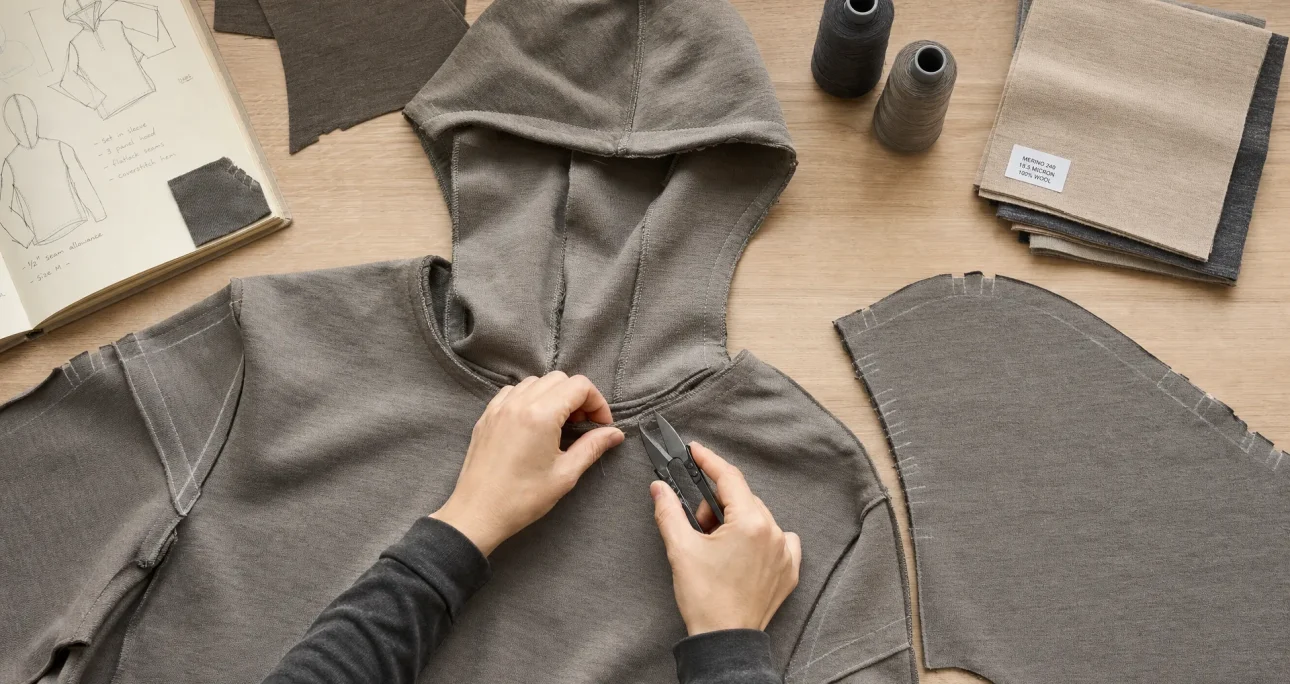
A merino hoodie can deliver the warmth people expect from a sweatshirt with a cleaner, lighter feel, but only if the garment is engineered from the fabric up. Bulk usually appears when brands copy cotton fleece construction, then swap in merino without adjusting weight, stretch, seam placement, hood structure or pocket layers. For apparel brands, the goal is not simply to make a softer hoodie. It is to create a piece that insulates, breathes, layers well under outerwear and still looks sharp after repeated wear. That takes disciplined design choices across yarn, knit, pattern and production, especially when the hoodie is meant for travel, active recovery, commuting or premium everyday wear.
Why a merino hoodie becomes bulky before it becomes comfortable
The easiest way to overbuild a hoodie is to chase warmth with fabric mass alone. Cotton fleece often relies on thickness, brushed loft and roomy silhouettes. Merino behaves differently. Fine wool fibers trap air, manage moisture vapor and regulate temperature without needing the same dense, plush construction.
A well designed merino hoodie gains comfort from balance: enough fabric weight to feel substantial, enough recovery to hold shape and enough structure to keep the hood and hem from collapsing. The Woolmark Company describes merino wool as naturally soft, breathable and able to help regulate body temperature, which is why it can support warmth without the heavy feel of conventional fleece.
Bulk usually enters through small decisions that stack together. A double-layer hood, thick rib cuffs, a kangaroo pocket, wide seam allowances and a relaxed block can turn a streamlined garment into something heavy at the neck, waist and wrists. Instead of adding more material everywhere, design should place warmth and structure only where the wearer needs it.
Start with the use case, not the fabric swatch
A merino hoodie for airport travel should not be built like one for trail warmups or office layering. The end use determines fabric weight, fit tolerance, pocket architecture, seam type and how much stretch the garment needs. Before sampling, define the product promise in one sentence: lightweight warmth for packing, breathable recovery after training or refined comfort for everyday wear.
That use case helps designers avoid contradictory decisions. A travel piece may prioritize odor resistance, fast recovery from packing and a smooth outer face. A light active piece may need more stretch, underarm mobility and lower seam friction. A premium lifestyle piece may tolerate a little more weight if the hand feel and drape justify it.
For brands developing a larger merino assortment, the hoodie should also fit into the layering system. A lightweight long sleeve can sit under it, a shell can sit over it and the hoodie should not fight either layer. Arcus covers this broader performance context in its guide to merino wool activewear design tips, which is useful when the hoodie is part of a full collection rather than a standalone style.
Choosing fabric weight for a lighter merino hoodie
Fabric weight is the first lever, but it is not the only one. A 250 gsm fabric can feel sleek if the knit is compact and resilient, while a lighter fabric can feel sloppy if it grows, twists or lacks recovery. For a merino hoodie, the best starting point is usually a midweight knit that gives coverage without the sweatshirt-like thickness of heavy fleece.
Use these ranges as practical development starting points, then validate with sampling and wash testing.
| Hoodie goal | Common fabric direction | Design considerations |
|---|---|---|
| Packable travel layer | 180-220 gsm jersey or interlock | Keep pockets minimal and avoid heavy rib trims |
| Everyday lightweight hoodie | 220-260 gsm interlock, ponte-like knit or fine French terry | Balance drape with shape retention at hood and hem |
| Active warmup layer | 190-240 gsm merino blend with stretch | Prioritize mobility, dry hand feel and seam comfort |
| Premium cold-weather style | 260-320 gsm dense knit or brushed back option | Control hood weight, pocket layers and cuff bulk carefully |
Micron count matters too. Finer merino, often around 17.5 to 19.5 microns, generally feels better next to skin. Slightly stronger or blended yarns may be appropriate for outer-layer durability. The best choice depends on whether the garment touches bare skin, is worn over a tee or needs to survive backpack straps and frequent washing.
Knit structure can reduce bulk more than weight alone
Two fabrics with the same gsm can wear completely differently. Jersey has a soft drape and works well for packable styles, but it may need help at the hood opening and hem. Interlock feels more stable and refined, making it a strong option for a merino hoodie that needs a cleaner silhouette. French terry can be comfortable and familiar, though loop size and yarn choice must be controlled so the garment does not become too sweatshirt-like.
Stretch and recovery are just as important as warmth. A small amount of elastane can help cuffs, elbows and hems recover after wear, particularly in slim or athletic blocks. Nylon can add abrasion resistance when the hoodie is used for travel or outdoor-adjacent activity. A 100 percent merino fabric can feel luxurious, but it requires careful testing for growth, shrinkage and seam stability.
Brands should avoid choosing fabric from hand feel alone. Test the material as a garment, with the actual hood, pocket, rib and zipper choices, because bulk often appears only when all components are assembled.
Pattern architecture: where comfort is won or lost
The pattern determines whether the fabric feels elegant or cumbersome. A merino hoodie should have enough ease for layering, but excess width at the armhole, waist and hood base quickly creates folds. The wearer should be able to move, reach and sit without fabric bunching at the front body or under the arms.
A set-in sleeve can create a clean lifestyle look, especially for premium everyday styles. A raglan sleeve can improve mobility and reduce shoulder seam pressure under a backpack or jacket. Underarm gussets can also help active designs, but they add pattern complexity and seam lines, so they should be used only when the movement benefit is clear.
Hood shaping deserves special attention. A flat, oversized hood may look casual on a hanger, but it can pull backward, collapse or create a lump under outerwear. A shaped hood with controlled volume, a stable front edge and a carefully placed neckline seam usually feels more refined.
Hood, pocket and trim choices that keep the silhouette clean
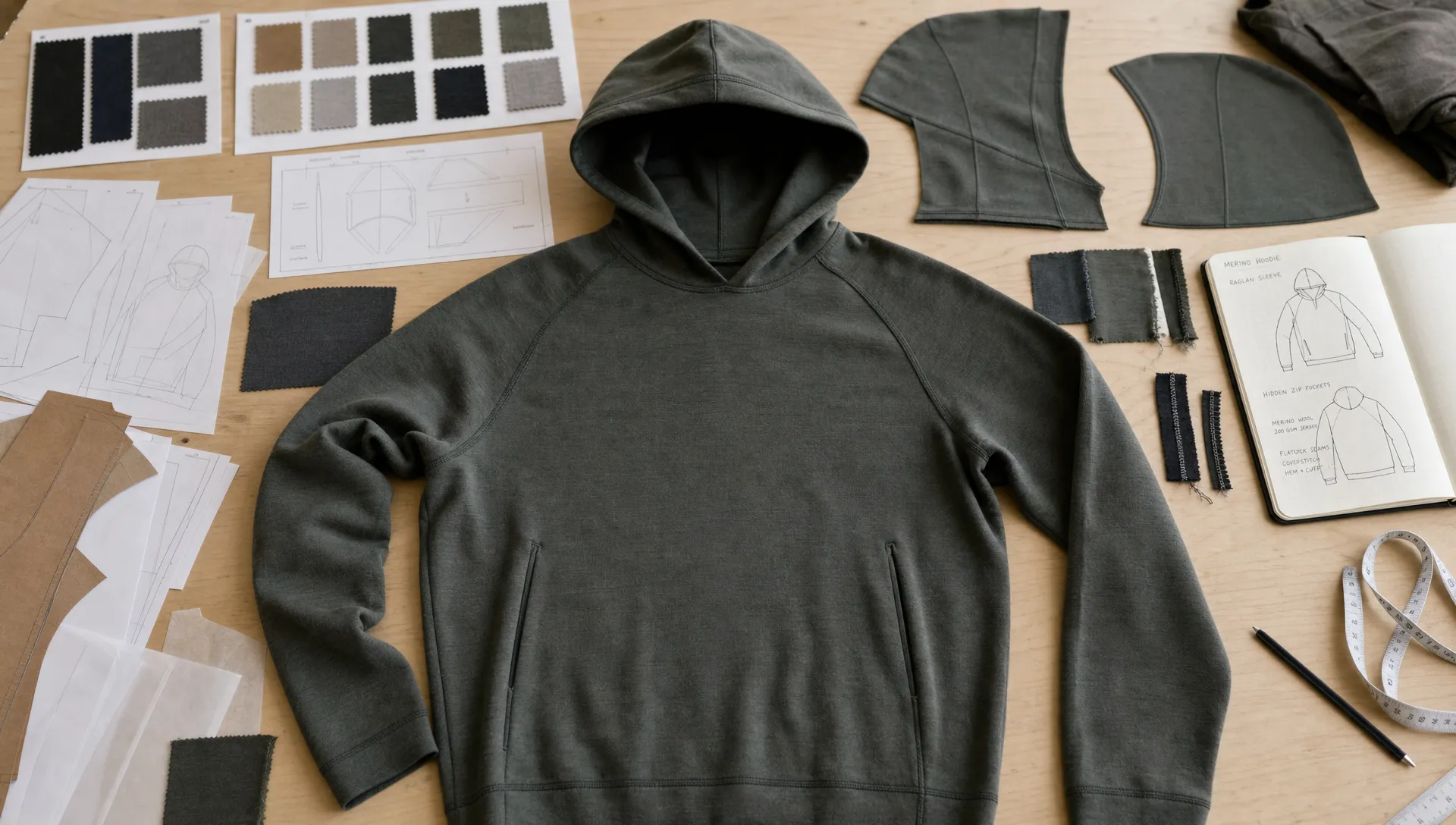
The hood is often the heaviest part of the garment. A double-layer self hood adds warmth and polish, but it also places extra weight at the neck. For lighter styles, consider a single-layer hood with a clean binding, a lighter lining fabric or a structured edge that does not require excess fabric. Drawcords, eyelets and cord channels should be scaled to the fabric. Heavy metal trims can distort fine merino knits.
Pockets need the same restraint. A classic kangaroo pocket can add four or more layers across the front body once hems and seam allowances are included. That may be acceptable for a lifestyle hoodie, but it works against a clean travel or layering piece. Side-seam pockets, low-profile welt pockets or a reduced kangaroo pocket can preserve utility with less stacking.
Cuffs and hems should match the garment concept. Thick cotton-style rib can feel out of place against fine merino. Self-fabric cuffs, lighter merino rib or engineered trims may create a smoother transition. For women-specific or gender-neutral styles, sizing and proportion should be developed deliberately rather than scaled from a generic sweatshirt block. Arcus discusses these broader hoodie development choices in its guide to designer hoodies for women.
Construction details that prevent seam bulk
Even the right fabric can feel bulky if the sewing method is wrong. Seam allowances should be narrow enough to reduce ridges but secure enough for the fabric and stress point. Overlocked seams are common and efficient, but seam thickness should be checked at shoulder joins, cuff attachments, hood seams and pocket edges.
Flatlock or coverstitch options can improve comfort in active or next-to-skin zones. Binding can make edges durable and polished, but it can also add stiffness if the binder fabric is too heavy. The goal is to reduce stacked layers where the body bends or where another garment sits on top.
A merino hoodie also needs careful stabilization. Shoulder seams, necklines, zipper openings and pocket entries may stretch out if the fabric is soft and elastic. Lightweight tape, stay stitching or suitable interlining can help, but every reinforcement should be tested for hand feel. Too much stabilization creates the exact stiffness the design is trying to avoid.
Labels and branding are part of comfort as well. A scratchy neck label can ruin an otherwise premium garment. Heat transfers, soft woven labels or low-profile exterior branding can work, depending on the fabric and brand positioning. Any decoration method should be tested for wash durability and fabric distortion.
Blends, sourcing and responsible material choices
Merino does not need to be used in isolation. Blends can make a hoodie easier to wear, produce and maintain. Nylon may improve durability, elastane may improve recovery and cellulosic fibers may change drape or softness. The tradeoff is that each added fiber changes moisture behavior, dye response, pilling risk and recyclability.
For premium brands, sourcing is part of the product story. The Responsible Wool Standard from Textile Exchange is one recognized framework for animal welfare and land management in wool supply chains. Not every product will use certified wool, but brands should understand what their customer expects and what claims can be substantiated.
Color development also requires planning. Merino and blends can take dye differently, and darker colors may reveal pilling or lint less than pale shades. If the garment includes rib, drawcords, zippers or pocket bags, all components should be reviewed under the same lighting. A lightweight merino hoodie looks more premium when trims are quiet, consistent and proportionate.
Fit testing for comfort without bulk
Fit testing should happen on real bodies, not just dress forms. Ask testers to layer the hoodie over a tee, under a jacket and with the hood up. Have them sit, drive, reach overhead, carry a backpack and pack the garment into a bag. These ordinary movements reveal whether the front pocket bunches, the hood pulls, the cuffs feel tight or the hem rides up.
Wash testing is equally important. Merino knits can relax, shrink, torque or pill depending on yarn, knit and finishing. Measure the garment before wash, after wash, after drying and after wear. Pay attention to body length, sleeve length, cross chest, hood opening and cuff recovery. A sample that looks perfect before laundering may not be production-ready.
If the hoodie is part of a full layering range, test it with adjacent styles. A merino tee or long-sleeve shirt should not create friction under the sleeves, and an outer jacket should not compress the hood into an uncomfortable lump. For base and mid-layer coordination, Arcus has a related breakdown on merino wool long-sleeve shirts.
Production planning for apparel brands
Designing a refined sample is one step. Reproducing it consistently is the harder work. Before production, lock fabric specs, shrinkage expectations, trim dimensions, seam methods and measurement tolerances. Merino styles benefit from clear handling instructions at cutting and sewing because soft knits can stretch during spreading, bundling and assembly.
Small batch manufacturing can be useful when developing a new merino hoodie because it lets brands validate fit, customer feedback and care performance before scaling. Low minimum order quantities also reduce the risk of committing too early to a fabric or block that has not been proven in wear.
Quality control should include more than final measurements. Check hood symmetry, pocket placement, seam waviness, cuff recovery, zipper behavior and color consistency. A premium hoodie is judged by how it feels after hours of wear, not just how it photographs on launch day.
Arcus Apparel Group supports apparel brands with custom apparel development, material sourcing, pattern development, small batch manufacturing, in-house production management, international manufacturing options and quality control at every stage. For a garment where comfort depends on many small technical decisions, that end-to-end process helps keep design intent aligned with production reality.
Frequently Asked Questions
What fabric weight is best for a merino hoodie? Most lightweight and everyday styles start around 180-260 gsm, depending on knit structure and use case. Heavier options can work for cold-weather products, but hood, pocket and cuff construction must be controlled so the garment does not feel bulky.
Is 100 percent merino better than a merino blend? Not always. Pure merino can feel soft and premium, but blends may improve stretch recovery, abrasion resistance and shape retention. The right choice depends on the target customer, price point, care expectations and how the hoodie will be worn.
How do you make a hood warm without making it heavy? Shape the hood carefully, reduce unnecessary layers and choose trims that match the fabric weight. A lighter lining, clean binding or stable single-layer construction can keep the hood comfortable without adding excessive weight at the neck.
Can a merino hoodie be used for activewear? Yes, if the fabric, fit and construction are developed for movement. Active styles usually need moisture management, recovery, seam comfort and mobility through the shoulders and underarms.
What is the biggest mistake brands make with merino hoodies? The biggest mistake is copying a cotton fleece hoodie pattern without adjusting for merino behavior. Merino needs its own decisions around fabric weight, stretch, seam bulk, stabilization and wash performance.
Build a lighter merino hoodie with the right development partner
Comfort without bulk is not the result of one fabric choice. It comes from aligning yarn, knit, pattern, trim, construction and production controls around a specific customer use case. If your brand is developing a merino hoodie for travel, active recovery or premium everyday wear, Arcus Apparel Group can help move the concept from design direction to production-ready garment.
Work with Arcus Apparel Group to develop custom apparel with material sourcing, pattern development, small batch options and quality control built into the process from the start.



