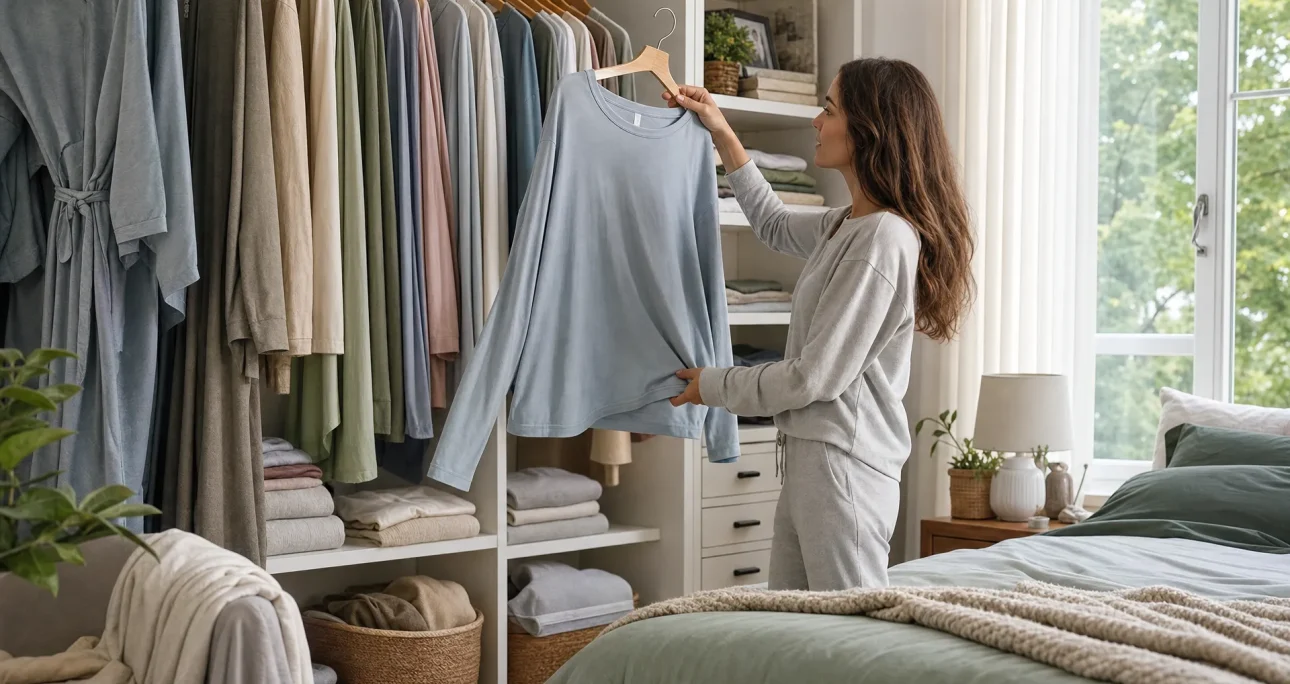
When apparel brands compare bamboo lyocell with bamboo viscose, they are usually comparing two regenerated cellulose fabrics that can feel similarly soft but are made in very different ways. Both start with plant cellulose and both can be used for breathable tees, underwear, loungewear and dresses. The differences show up in solvent systems, environmental controls, wet strength, sourcing paperwork and what you can responsibly say on a garment label.
That nuance matters because buyers increasingly ask where a fabric comes from, how it was processed and whether sustainability claims are supported. “Bamboo” alone does not answer those questions. For brands building a new apparel line, the real decision is not just bamboo versus another plant. It is which fiber process, mill partner, fabric construction and compliance documentation fit the product.
What bamboo lyocell actually means
Lyocell is a man-made cellulosic fiber. It is made by dissolving cellulose pulp, spinning that solution into fibers and finishing those fibers into yarns and fabrics. The cellulose can come from wood, bamboo or another suitable plant source, depending on the pulp supply chain.
The bamboo part refers to the feedstock, not to a fabric woven directly from raw bamboo grass. A mechanically processed bamboo linen would be a different textile with a different hand feel, cost profile and manufacturing path. Most soft “bamboo” apparel on the market is regenerated cellulose, which means the plant has been chemically transformed into a new fiber.
So when a supplier offers bamboo lyocell, ask for clarity on both sides of the phrase: evidence that the pulp source is bamboo and evidence that the fiber was produced through a lyocell process rather than a conventional viscose process. The distinction affects sustainability claims, price and performance expectations.
For background on the related viscose category, Arcus has a separate guide explaining how bamboo viscose is made and when brands use it.
Bamboo lyocell vs bamboo viscose: the manufacturing difference
Bamboo viscose and lyocell both begin with cellulose pulp, but they use different chemistry to turn that pulp into fiber. Conventional viscose production typically uses sodium hydroxide and carbon disulfide during xanthation before the fiber is regenerated in a spinning bath. That process can be managed responsibly, but poor chemical recovery and wastewater control have made conventional viscose a sustainability concern.
Lyocell production uses a direct solvent-spinning route, most commonly with N-methylmorpholine N-oxide, often shortened to NMMO. The cellulose is dissolved in the solvent, extruded into fibers and then the solvent is recovered for reuse in a closed-loop system. In practice, bamboo lyocell avoids the viscose xanthation step, which is one reason it is often positioned as the cleaner option.
That does not mean every lyocell supply chain is equal. Solvent recovery rates, pulp sourcing, energy mix, wastewater management and chemical handling still depend on the producer. For any apparel program, supplier documentation matters more than a broad category claim.
| Factor | Lyocell from bamboo | Bamboo viscose |
|---|---|---|
| Fiber family | Regenerated cellulose | Regenerated cellulose, often marketed as rayon from bamboo |
| Main process difference | Direct solvent-spinning route | Viscose route with xanthation |
| Common solvent concern | NMMO recovery and handling | Carbon disulfide emissions and wastewater controls |
| Typical positioning | Premium, cleaner-process cellulosic | Soft, drapey and often more cost accessible |
| Key sourcing question | Can the supplier prove bamboo pulp origin and lyocell process? | Can the supplier prove responsible viscose production and chemical controls? |
How they feel and perform in garments
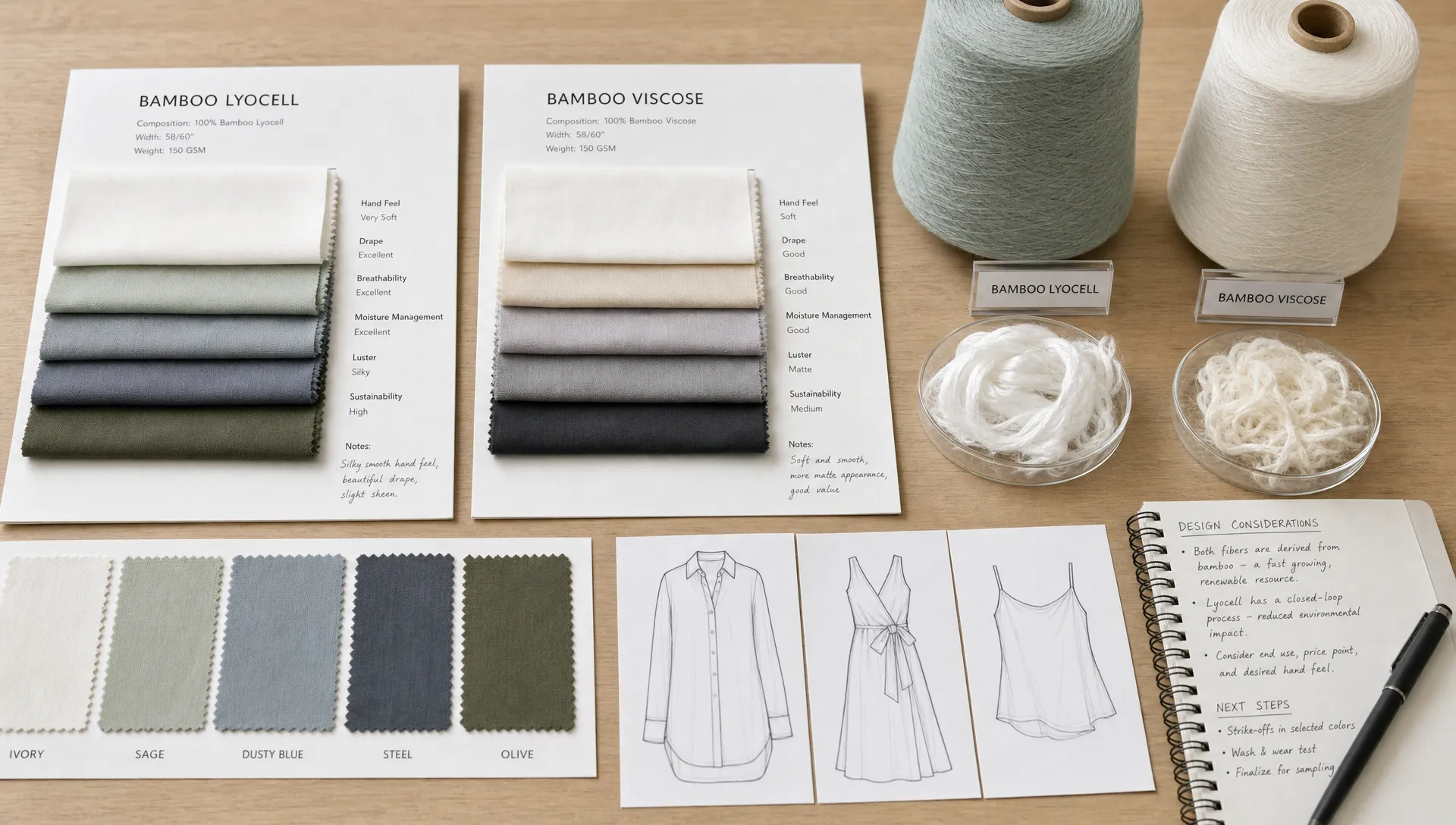
From a consumer’s perspective, the two fabrics can look and feel close. Both can be soft, cool to the touch, breathable and fluid. Both can be knitted into jersey, rib or interlock and both can be woven into shirting, dresses and sleepwear. The largest differences often come from yarn count, knit structure, fabric weight, finishing and garment construction.
Still, fiber properties matter. Lyocell is generally known for good strength, including better wet strength than many conventional viscose fabrics. That can help garments keep their shape through wash and wear when the fabric is engineered well. Viscose can deliver a beautiful drape and a very soft hand, but it may be more vulnerable to stretching, shrinkage or abrasion if the construction and finishing are not carefully specified.
For brands, bamboo lyocell usually sits in a more premium position because it combines a smooth hand with a more modern production story. Bamboo viscose may remain a good choice for cost-sensitive fashion products where drape, softness and color absorption are the main priorities. Neither fiber solves every requirement by itself.
If your team is evaluating lyocell beyond bamboo feedstocks, this Arcus overview of why lyocell clothing feels soft and performs well offers a broader performance lens.
Sustainability and sourcing claims need proof
The sustainability conversation around bamboo can be confusing because bamboo as a plant is not the same thing as bamboo-derived fabric. Bamboo can grow quickly and may require fewer agricultural inputs than some crops, but those farming advantages do not automatically carry through a chemical fiber process.
The strongest case for bamboo lyocell depends on verified pulp sourcing and documented closed-loop solvent management. Brands should ask whether the pulp comes from responsibly managed sources, whether forest or land-use certifications apply and whether the fiber producer can provide technical documentation on solvent recovery.
The same scrutiny applies to bamboo viscose. A responsible viscose supplier may have chemical recovery systems, wastewater treatment, traceability programs and third-party audits. A weak supplier may not. The category label alone will not tell you which situation you are buying into.
Useful verification tools can include FSC or PEFC documentation for pulp, OEKO-TEX Standard 100 for harmful substance testing and supplier participation in recognized chemical management programs. Textile Exchange’s overview of man-made cellulosic fibers is a useful starting point for understanding why pulp sourcing and processing transparency matter.
Labeling: avoid overclaiming “bamboo”
In the United States, bamboo textile claims are closely watched. The Federal Trade Commission has warned brands not to market rayon made from bamboo as simply “bamboo” if the fiber has been chemically transformed. The same principle applies when communicating about regenerated cellulose fabrics: be precise about the generic fiber name and the bamboo-derived source.
The safest consumer-facing language depends on the actual fiber and documentation. A product might be described as lyocell made from bamboo-derived cellulose if that is accurate and supported. If the material is viscose or rayon, calling it “bamboo fabric” without qualification can create compliance risk.
The FTC’s business guidance on avoiding misleading bamboo textile claims is worth reviewing before hang tags, web copy or packaging claims are approved. Marketing teams should also avoid unsupported claims like “naturally antibacterial” or “chemical-free” for regenerated bamboo fabrics, since chemical processing changes the original plant material.
When a mill offers bamboo lyocell, the right documentation should include fiber composition, pulp source claims, test reports where relevant and any certifications being used in marketing. If a claim cannot be backed up, it should not be printed on the garment.
When to choose one over the other
Choose bamboo lyocell when the product needs a premium hand feel, better wet-strength expectations and a sustainability story based on a cleaner regenerated-cellulose process. It can make sense for elevated basics, underwear, sleepwear, soft active layers, women’s tops and loungewear where touch and comfort are central to the customer experience.
Choose bamboo viscose when the design brief prioritizes fluid drape, strong color expression and a softer cost structure. It can work well for fashion knits, dresses, robes, lightweight tops and promotional apparel, provided shrinkage, pilling and wash performance are tested before production.
A simple decision table can help frame the choice before sourcing begins.
| Product priority | Better starting point | Why it may fit |
|---|---|---|
| Premium sustainability positioning | Lyocell from bamboo | Cleaner-process story when documentation is strong |
| Lowest possible fabric cost | Bamboo viscose | Often more accessible depending on mill and order volume |
| Softness with improved wash resilience | Lyocell from bamboo | Typically stronger than many conventional viscose options |
| High drape for fashion silhouettes | Bamboo viscose | Excellent fluidity when fabric construction is right |
| Compliance-sensitive marketing | Either, if documented | Claims must match fiber content, process and certifications |
The better choice is the one that matches the target price, garment use, care expectations and brand promise. A premium label may lose credibility if it chooses a cheaper fabric but markets it like a verified closed-loop fiber. A value-focused label may not need the added cost if bamboo viscose performs well and the claims are conservative.
Development checks before production
Fabric choice should be confirmed through sampling, not just supplier descriptions. Request swatches from multiple mills, compare hand feel after wash and test the fabric in the actual garment silhouette. A rib tank, oversized tee and fitted base layer can behave differently even when the fiber content looks similar on paper.
For bamboo lyocell programs, pay special attention to shrinkage, spirality in knits, colorfastness, pilling resistance and seam recovery. These issues are influenced by spinning quality, knitting tension, finishing and garment construction. The fiber gives you a starting point, but development decisions determine the final product.
Brands should also clarify minimum order quantities, lab dip timing, fabric lead times and whether small batch manufacturing is available for launch testing. If the fabric is sourced internationally, build extra time for approvals and quality control before bulk cutting.
A full-service manufacturing partner can help connect material sourcing, pattern development, sampling and production decisions so the fabric choice supports the garment from the first tech pack to the final inspection. Arcus Apparel Group supports brands through custom apparel development and manufacturing, including sourcing, small batch production and quality control at each stage.
Frequently asked questions
Is bamboo lyocell natural? It comes from plant cellulose, but it is not a raw natural fiber like cotton, wool or mechanically processed linen. It is a regenerated cellulose fiber made through a chemical solvent-spinning process.
Is bamboo lyocell always more sustainable than bamboo viscose? Not automatically. It often has a stronger sustainability case because of the lyocell process, but the real answer depends on pulp sourcing, solvent recovery, wastewater management, energy use and supplier documentation.
Does bamboo viscose feel different from lyocell made from bamboo? It can, but construction often matters as much as fiber type. Viscose is known for softness and fluid drape, while lyocell is often selected for softness with better strength and wash resilience.
Can a clothing label simply say “bamboo”? In the United States, brands should be careful. If the fiber is regenerated cellulose, labeling should reflect the correct fiber name and the bamboo-derived source only when that claim is accurate and supported.
Turn the fabric decision into a production-ready garment
Choosing between bamboo lyocell and bamboo viscose is not just a sourcing decision. It affects fit, testing, care labels, marketing claims and production planning. If you are developing a new apparel line or refining an existing program, Arcus Apparel Group can help align fabric selection with sampling, small batch manufacturing and quality control so your material story holds up in the finished product.



