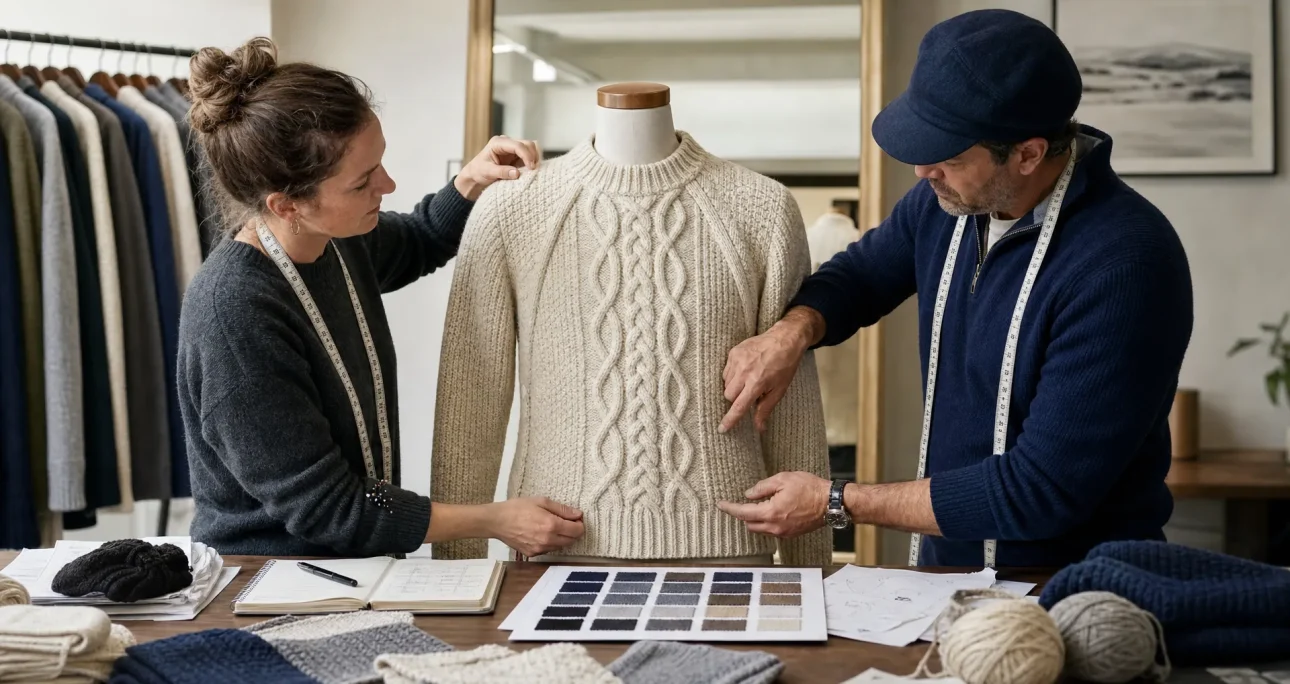
A merino wool fisherman sweater is not defined by thickness alone. Its value comes from the way yarn, gauge, stitch depth and panel engineering work together to create warmth, texture and shape retention. For apparel brands, this makes the category more complex than a standard crewneck. A fisherman style may use cables, ribs, honeycomb textures, moss stitch or combinations of all four, and each choice changes cost, weight, stretch and production risk. Understanding the knit structure early helps prevent a sweater that looks strong in a sample but grows, twists or loses definition after wear.
What Makes a Merino Wool Fisherman Sweater Different?
Traditional fisherman sweaters are often associated with coastal and Aran-inspired knitwear, where raised stitches created dense, insulating garments with visible craft value. In a modern product line, the same visual language can be adapted into refined merino styles for premium casualwear, outdoor lifestyle brands or elevated basics.
The difference is structural. A flat jersey sweater can rely on yarn quality and fit to do much of the work. A textured fisherman knit adds three-dimensional stitches that pull yarn in different directions. Cables compress width, ribs add stretch, moss stitch stabilizes surfaces and honeycomb patterns trap more air. The garment becomes a system of tensions rather than a simple knitted panel.
That is why development should start with construction decisions, not only a mood board. If your team is building a broader knitwear program, Arcus Apparel Group's guide to premium sweater construction is a useful companion to the structure-focused decisions covered here.
Knit Structure in a Merino Wool Fisherman Sweater
A fisherman knit is not one universal stitch. It is a family of textured structures, usually built from raised cables, ribbed sections and compact surface stitches. In merino, these structures behave differently than they would in coarse wool because merino fibers are finer, softer and more flexible.
That softness is one of merino's strengths, but it also means the design must be engineered for stability. A very soft yarn can make a sweater feel premium at first touch, yet the same softness may blur cable definition or allow heavy panels to stretch downward. A successful structure balances loft with control.
Core stitch types and their product impact
For brands, each stitch should be treated as both an aesthetic and performance choice. The table below shows how common fisherman textures influence the finished garment.
| Knit structure | Visual effect | Development consideration |
|---|---|---|
| 1×1 or 2×2 rib | Vertical texture with strong stretch | Useful for hems, cuffs, collars and body panels that need recovery |
| Cable stitch | Raised rope-like pattern | Adds depth and heritage character but increases yarn consumption |
| Moss or seed stitch | Pebbled surface texture | Helps stabilize panels and reduces overly smooth areas |
| Honeycomb stitch | Raised geometric texture | Creates bulk and warmth but can become heavy in dense gauges |
| Fisherman's rib | Plush, deep ribbed surface | Feels substantial, though it may grow if yarn and gauge are not controlled |
The key is not to use every stitch in one garment. Too many structures can compete visually and create uneven tension across the body. Strong fisherman designs often use one dominant texture, one stabilizing texture and rib trims that manage stretch at openings.
Yarn, Gauge and Ply Shape the Texture
For a merino wool fisherman sweater, the yarn decision sets the limits of what the stitch structure can achieve. A finer merino yarn can create a softer hand and cleaner drape, while a thicker yarn emphasizes bold relief. Neither option is automatically better. The right choice depends on intended season, retail positioning, target weight and how much surface definition the brand wants.
Ply and twist also matter. A loosely twisted yarn may feel airy and luxurious but can pill more quickly or lose crispness in cables. A firmer twist can sharpen stitch definition and improve abrasion resistance, though it may feel less lofty. This is why yarn testing should happen before finalizing the stitch map.
Gauge controls scale. A low-gauge sweater creates chunky, visible texture but adds weight. A higher-gauge sweater can still reference fisherman styling, yet the result is more refined and less rugged. For a broader overview of how yarn and gauge influence merino development, see Arcus Apparel Group's guide to merino sweater yarn, gauge and care basics.
Practical gauge ranges for fisherman textures
| Gauge direction | Typical result | Best use case |
|---|---|---|
| Lower gauge | Chunkier texture, heavier hand, stronger relief | Heritage-inspired statement sweaters |
| Mid gauge | Balanced texture, manageable weight, versatile wear | Premium everyday knitwear |
| Higher gauge | Subtle fisherman reference, smoother hand, lighter weight | Refined layering sweaters |
Gauge should be confirmed through swatches, not assumptions. A cable that looks beautiful in a small swatch may become too heavy across a full front panel, especially after washing and relaxation.
Balancing Texture, Weight and Drape
A merino wool fisherman sweater needs enough structure to hold its pattern but not so much density that it feels stiff or overheats the wearer. This balance is one of the central development challenges. Dense cables and honeycomb patterns increase yarn consumption, which affects garment cost and finished weight. They can also reduce drape, making the sweater look boxier than intended.
Merino's natural elasticity helps textured knits recover, but recovery is not unlimited. Heavy front panels can pull against shoulder seams. Long sleeves with dense cables can stretch at the elbow. Wide ribs can relax at the hem if they are not engineered with enough tension. These problems are easier to solve in development than after production.
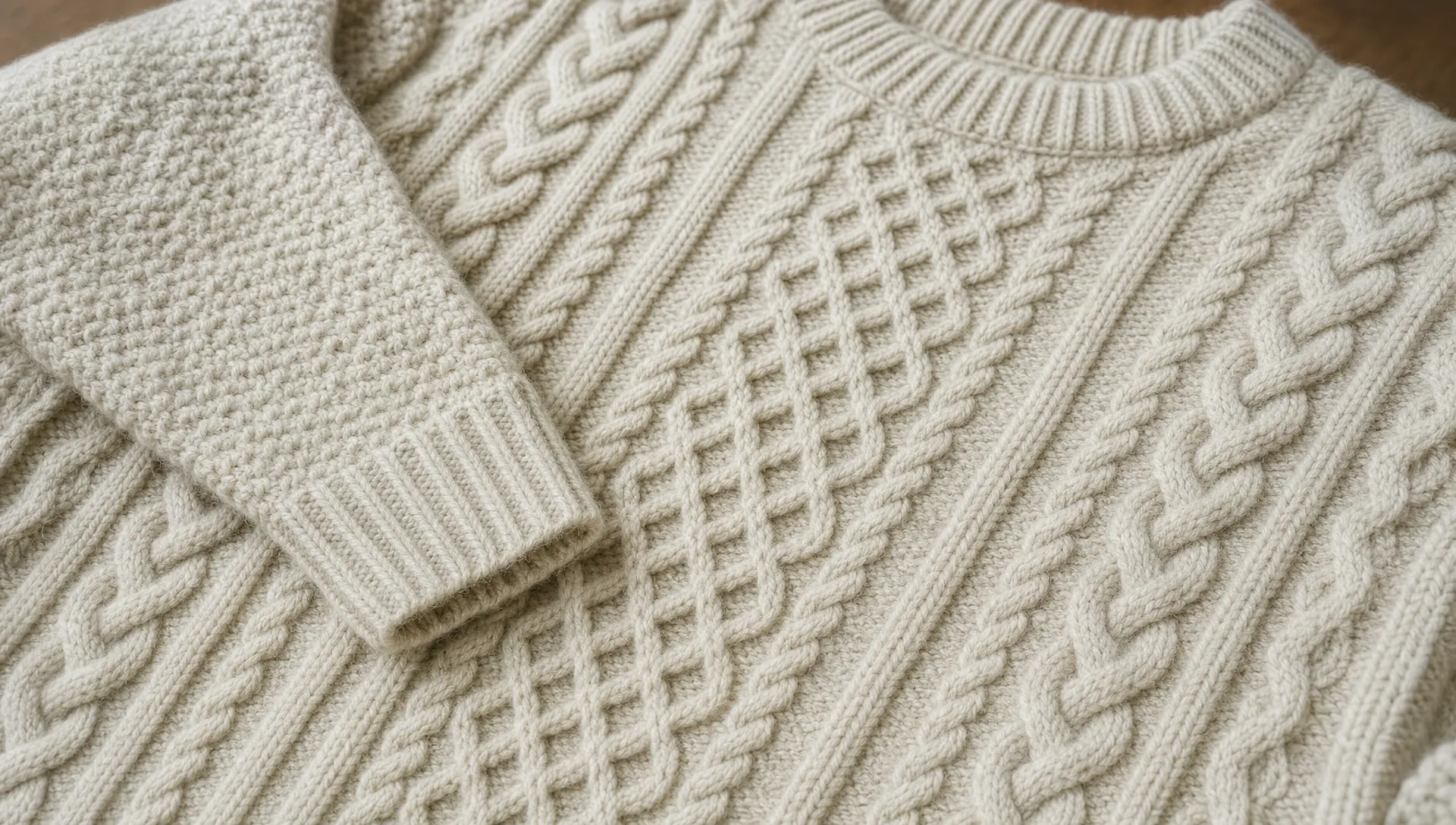
The best approach is to test structure in the areas where stress occurs: shoulder slope, sleeve bend, hem opening and neckline. A beautiful center-front cable panel is only successful if the surrounding fabric can support it through wear.
Engineering the Garment Panels
When a merino wool fisherman sweater is engineered well, the front, back and sleeves do not need to carry the same stitch density. In fact, using identical heavy texture everywhere can make the garment uncomfortable and difficult to control. A more refined approach is to place the most dimensional structures where they create visual value, then use stabilizing stitches where movement and fit matter more.
The front panel usually carries the strongest design identity. This may be a central cable arrangement, honeycomb field or mixed Aran-inspired layout. The back can be simplified to reduce weight and improve comfort under outerwear. Sleeves often need careful moderation because dense texture adds bulk at the arms and may restrict movement.
Panel width also changes during knitting because cables draw fabric inward. If the pattern maker treats cable fabric like jersey, the finished garment may come out narrower than planned. Technical development should include relaxed measurements, post-wash measurements and tolerance standards by panel type.
Neckline, cuffs and hem structure
Trim areas are not secondary details. They control how the sweater sits on the body. A ribbed collar should recover after being pulled over the head. Cuffs should hold shape without squeezing. The hem should sit cleanly without flaring, rolling or collapsing under the weight of the body.
For crewnecks, the neck trim often needs a tighter gauge or firmer tension than the body. For mock necks or shawl-inspired fisherman styles, collar weight becomes a bigger issue because the neckline must stand or fold consistently. If trims are too soft, the sweater can look tired after only a few wears.
Construction Method: Linking, Seaming and Shape Retention
A premium fisherman sweater is judged not only by its stitches but also by how the pieces are joined. Fully fashioned knitting, linked seams and carefully controlled shoulder construction all help the garment maintain shape. Poor seaming can distort the pattern, interrupt cables or create bulky ridges that reduce comfort.
A merino wool fisherman sweater with large raised structures needs special attention at the armhole and shoulder. If thick cable sections are forced into a standard seam allowance, the seam can become rigid or uneven. If the shoulder lacks support, the weight of the body can pull the garment downward. Stabilizing the shoulder with the right construction method is often more important than adding more yarn weight.
Some brands also explore cut-and-sew sweater panels or hybrid construction for cost or design reasons. These approaches can work, but they require testing because cutting textured knits may affect edge stability. The production method should match the structure, not the other way around.
Common Development Problems and Fixes
Many fisherman sweater issues appear only after the first sample is washed, steamed or worn on a body. That is why fit comments based on an unwashed sample can be misleading. Textured merino needs relaxation testing before final approval.
| Problem | Likely cause | Development fix |
|---|---|---|
| Cable pattern looks flat | Yarn too soft, gauge too fine or twist too loose | Test firmer yarn twist or adjust gauge |
| Body grows in length | Structure too heavy for yarn recovery | Reduce stitch density or add stabilizing panels |
| Hem flares after wear | Rib tension too loose | Increase rib recovery and review trim height |
| Sleeve feels bulky | Dense texture placed across high-movement areas | Simplify sleeve stitch or adjust fit ease |
| Pattern twists off center | Uneven stitch tension or poor panel balancing | Rework stitch map and confirm symmetry after wash |
For a merino wool fisherman sweater, the most expensive mistake is approving texture without testing behavior. A swatch tells you stitch potential. A prototype tells you whether that stitch can survive real garment use.
Quality Control for Production Consistency
Quality control should start before bulk production. The approved sample must document yarn specification, gauge, stitch layout, measurements, wash method and finishing process. Without that reference, production can drift from the original hand feel and shape.
Key inspection points include stitch clarity, panel symmetry, seam alignment, trim recovery and finished measurements after relaxation. Fisherman textures make inconsistencies more visible, especially along center-front cables and sleeve joins. Even small tension changes can affect the way light hits raised stitches.
Before a merino wool fisherman sweater moves into production, brands should confirm the tolerance for body length, chest width, sleeve length, hem opening and neckline stretch. These tolerances should reflect the structure. A chunky cable garment may need different measurement expectations than a fine-gauge jersey sweater.
Finishing is equally important. Steaming can improve presentation, but excessive steam may relax the garment too much. Washing can soften the hand, yet it may also reveal growth. The production team should use consistent finishing methods from sample approval through bulk inspection.
Frequently Asked Questions
What is the difference between a fisherman sweater and a regular cable sweater? A cable sweater may use one or more raised cable motifs, while a fisherman sweater usually combines several textured structures such as ribs, cables, moss stitch and honeycomb panels. The fisherman style is more about overall knit architecture than one decorative stitch.
Is a merino wool fisherman sweater too warm for indoor wear? It depends on gauge, yarn weight and stitch density. A chunky low-gauge version will feel warmer and heavier, while a mid-gauge merino design can work as a versatile cold-weather layer without feeling overly bulky.
Why do some fisherman sweaters stretch out? Stretch usually comes from a mismatch between yarn softness, garment weight and stitch density. Merino has good natural elasticity, but heavy structures still need supportive panel engineering, correct rib tension and controlled finishing.
Can fisherman knit structures work for small batch production? Yes, but the design should be developed with clear technical specifications and tested samples. Small batch production is often a smart way to validate fit, weight and customer response before scaling.
Develop Textured Merino Knitwear With Arcus Apparel Group
Fisherman knitwear rewards careful development. The right yarn, gauge, stitch map and finishing process can turn a familiar sweater category into a premium product with clear brand value.
Arcus Apparel Group supports brands with custom apparel development, material sourcing, pattern development, small batch manufacturing and production management. If you are planning a textured merino program, our team can help translate your concept into a production-ready garment with quality control at every stage. Start with Arcus Apparel Group's end-to-end apparel manufacturing support to build the sweater your brand actually wants to deliver.



