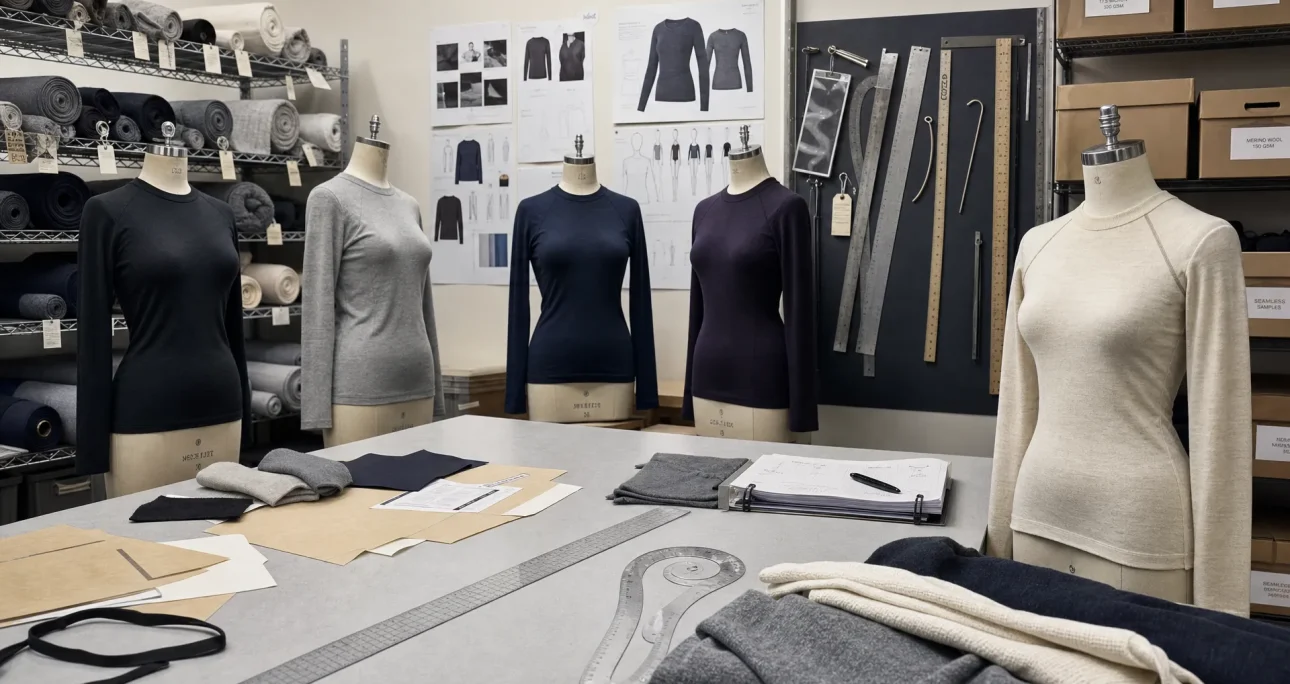
If your brief starts with the phrase wool base layer womens, translate that search demand into measurable product specs: fiber content, fabric weight, micron count, knit construction, fit, seams, testing and care. A women’s wool base layer can look simple on a product page, but from a development standpoint it is a technical garment that has to manage moisture, warmth, stretch, comfort and repeated laundering without losing shape.
For apparel brands, the goal is not just to choose a soft merino fabric. The goal is to define a spec that your pattern maker, sourcing partner, sample room and factory can all execute consistently. That means making decisions before sampling, not trying to fix vague choices after the first prototype arrives.
Wool Base Layer Womens Specs Start With the Use Case
The best spec begins with how the wearer will use the garment. A base layer for resort skiing needs different warmth and recovery than a lightweight hiking top, a travel layer or a cold-weather hunting piece. If the use case is unclear, the product often lands in the middle: too warm for active wear, too thin for static cold and not differentiated enough for retail.
Start by defining activity level, expected temperature range, layering system and how close the fabric will sit to the skin. This will guide almost every other decision.
| Primary use case | Fabric direction | Fit direction | Development note |
|---|---|---|---|
| Running, hiking, travel | 135 to 170 gsm | Close but not compressive | Prioritize breathability and dry handfeel |
| General outdoor, ski layering | 170 to 220 gsm | Next-to-skin athletic fit | Balance warmth, mobility and odor control |
| Cold-weather work, hunting, low-output use | 220 to 280 gsm | Slightly more room for comfort | Prioritize insulation and coverage |
| Expedition or severe cold layering | 280 gsm and above | Designed under mid layers | Watch bulk at seams and cuffs |
These ranges are not fixed rules, but they give your team a practical starting point for sampling.
Choose the Right Wool Fiber, Blend and Micron Count
For a wool base layer womens product, fiber choice affects softness, durability, cost and performance. Merino wool is the common choice for next-to-skin base layers because its fine fibers are softer than traditional coarse wool and can help regulate comfort across changing temperatures. The Woolmark Company describes merino as a fine, breathable natural fiber, which is why it appears so often in premium outdoor layering.
Micron count is one of the most important comfort specs. It measures the average diameter of the wool fiber. Lower micron wool usually feels softer, but it can cost more and may need blending or careful construction to improve durability.
| Micron range | Typical positioning | Best use |
|---|---|---|
| 17.5 to 18.5 micron | Premium next-to-skin | High-end tops, leggings and sensitive-skin products |
| 18.5 to 19.5 micron | Balanced softness and value | Mainline women’s base layers |
| 19.5 to 21 micron | More robust handfeel | Heavier layers, utility use or blended fabrics |
A 100 percent merino fabric offers strong natural positioning, but blends are often more practical. Nylon can improve abrasion resistance, polyester can help with dry time and elastane can support stretch recovery. If your brand wants certified wool, review programs such as the Responsible Wool Standard early, because traceability requirements affect sourcing and documentation.
Specify Fabric Weight and Knit Construction Together
A wool base layer womens line should never specify GSM without knit construction. Two fabrics at the same weight can feel completely different if one is a fine jersey and the other is an interlock or rib. Weight sets the warmth direction, but construction determines stretch, opacity, drape, recovery and how the fabric behaves after washing.
Single jersey is popular because it is light, breathable and familiar to consumers. Interlock feels smoother and more stable, but can be warmer and less airy. Rib improves stretch and recovery, which can help at cuffs, necklines or fitted silhouettes. Waffle or grid structures can trap air and move moisture, but they need careful testing because texture can affect handfeel under other layers.
If your assortment includes multiple weights, build a clear hierarchy. For example, a 150 gsm jersey can serve as a year-round lightweight layer, a 200 gsm interlock can anchor the core outdoor offer and a 250 gsm rib or jersey can support colder weather. For a wider breakdown of warmth and fabric weight, Arcus has a separate merino base layer guide for fit, weight and warmth that complements this spec-focused approach.
Women-Specific Fit Specs Matter More Than Generic Sizing
For wool base layer womens products, fit is not a scaled-down men’s pattern. Women’s base layers need enough negative ease to sit close to the body without binding across the bust, underarm, hip or thigh. A poor fit will create cold spots, fabric drag and returns, even if the material itself is excellent.
Your tech pack should define body length, sleeve length, shoulder slope, bust shaping, waist suppression, hip sweep and rise for bottoms. For leggings or long underwear, the front and back rise need special attention because wool fabrics can grow during wear if recovery is weak. A gusseted crotch can improve mobility and reduce seam stress, especially for skiing, hiking and climbing.
| Fit zone | What to specify | Why it matters |
|---|---|---|
| Bust and upper torso | Finished measurements, stretch direction and ease | Prevents pulling, gaping and restricted breathing |
| Underarm | Armhole shape, seam placement and gusset option | Reduces friction under backpacks or shells |
| Waist and hip | Waist suppression, sweep and hem behavior | Keeps the layer tucked and prevents riding up |
| Legging rise | Front rise, back rise and waistband height | Improves coverage when bending or layering |
For a deeper fit discussion, see Arcus Apparel Group’s guide to women’s merino wool base layers, especially if your brand is building a full size range.
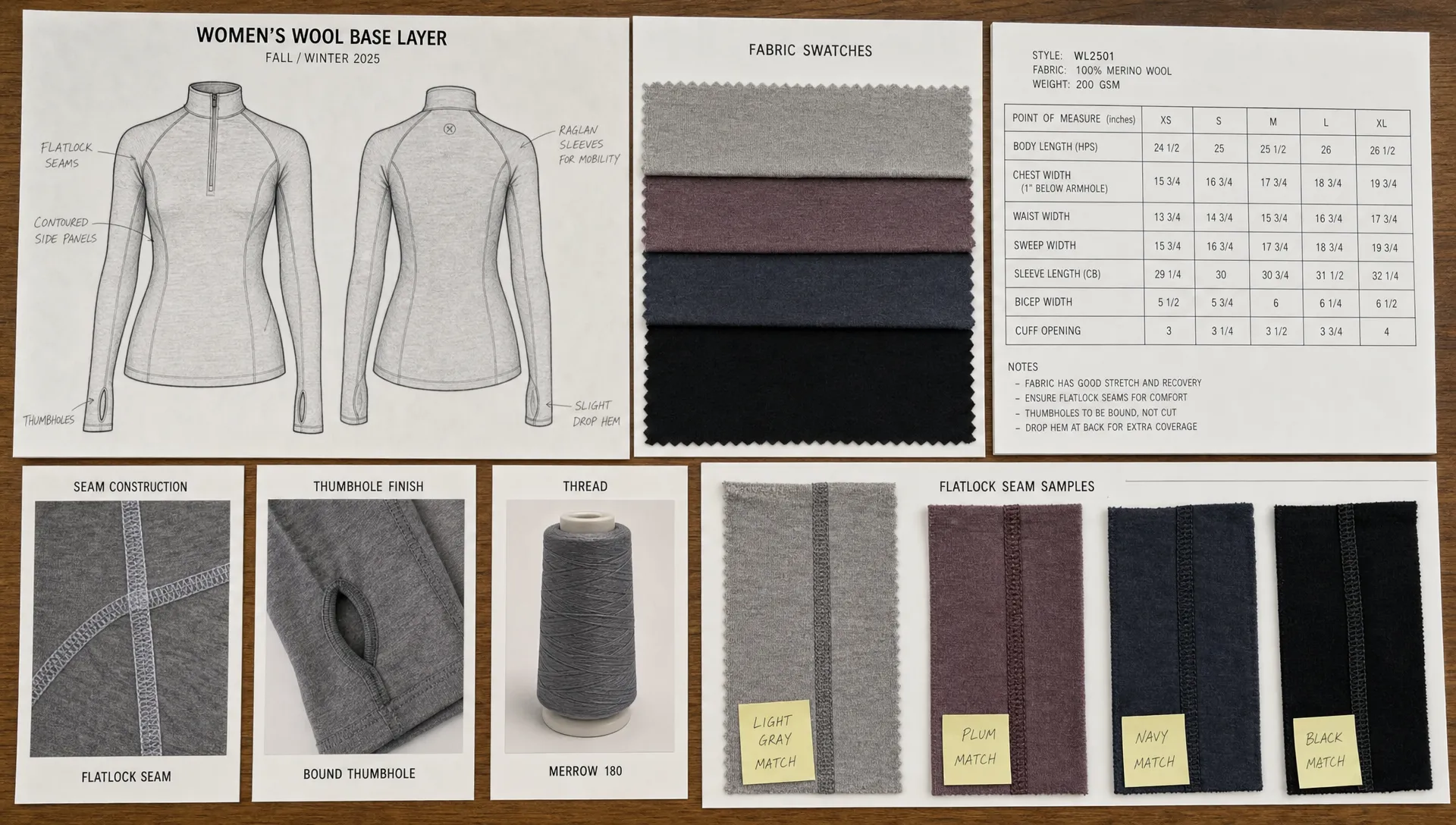
Construction Details That Should Be in the Spec
On a wool base layer womens style, construction details can decide whether the garment feels premium or irritating. Wool is often worn directly against skin, so seam bulk, label choice and trim placement matter more than they would on a mid layer.
Flatlock seams are common in performance base layers because they reduce bulk and give a technical look, but they still need testing for comfort and durability. Overlock plus coverstitch may be suitable for some styles if the seam is soft and low profile. Shoulder seams should be moved away from backpack pressure points when the garment is intended for hiking, skiing or travel.
Neckline and cuff choices also affect customer perception. A crew neck is versatile, a quarter zip improves venting and a mock neck adds coverage for cold conditions. Thumbholes can be useful, but they must be patterned carefully so they do not twist the sleeve or strain the cuff. Labels should be heat transfer, tear-away or placed where they will not scratch the wearer.
Build Testing and Quality Control Into the Development Plan
Testing is where a wool base layer womens spec becomes enforceable. Without test methods and tolerances, quality control becomes subjective. A fabric that feels good in a hand sample may shrink, twist, pill or lose recovery after repeated wash cycles.
Common lab references include AATCC 135 for dimensional change after home laundering, ASTM D4966 for Martindale abrasion, AATCC 61 for colorfastness to laundering, AATCC 15 for perspiration and AATCC 195 for moisture management. Your exact testing plan should match the product claim, sales channel and price point.
| Test area | What to check | Why it matters |
|---|---|---|
| Shrinkage | Length, width and torque after wash | Protects fit consistency and size accuracy |
| Pilling | Surface change after abrasion | Supports premium appearance over time |
| Colorfastness | Laundering, crocking and perspiration | Reduces bleeding, fading and complaints |
| Stretch recovery | Growth and recovery after wear simulation | Helps leggings and fitted tops keep shape |
| Seam strength | Stress points at underarm, crotch and cuff | Prevents failures during active use |
For US sales, fiber labeling and claims should also align with FTC requirements under the Wool Products Labeling Act. If you market a garment as merino, wool-rich or certified, make sure the claim is supported by supplier documentation.
What to Include in a Production-Ready Tech Pack
A wool base layer womens tech pack should remove guesswork from sampling and production. The more specific the package, the easier it is for a manufacturer to quote accurately, source the right material and control repeat production.
Include the following elements before requesting samples:
- Finished garment measurements with tolerance by size
- Fabric composition, GSM, micron count and knit construction
- Stretch direction, recovery expectations and shrinkage allowance
- Stitch types, seam placements, thread type and seam appearance
- Trims, labels, zipper specifications and packaging requirements
- Color standards, lab dip requirements and testing methods
- Size range, grading rules and fit model notes
- Care label instructions and compliance requirements
Sample stages should also be clear. Most brands benefit from a prototype, fit sample, size set, pre-production sample and top-of-production review. Skipping stages may save time on paper, but it often increases risk once production begins.
If you need help moving from concept to a production-ready spec, Arcus Apparel Group supports custom apparel development and manufacturing with material sourcing, pattern development, small batch manufacturing, production management and quality control.
Common Spec Mistakes to Avoid
One common mistake is choosing fabric only by feel. Handfeel matters, but it does not tell you how the garment will perform after ten washes or a week of active use. Always pair handfeel approval with shrinkage, pilling, recovery and colorfastness testing.
Another mistake is designing the women’s style after the men’s style is complete. A strong wool base layer womens assortment should be developed from women’s body measurements, mobility needs and styling expectations from the beginning. This is especially important for leggings, fitted crews and quarter-zip tops.
Brands also underestimate care instructions. Some merino fabrics can be machine washable, but wash method, drying method and shrinkage tolerance must be validated. If the garment requires delicate care, that needs to fit the customer’s lifestyle and the product’s intended use.
Finally, avoid vague blend descriptions such as “merino blend” without exact percentages. Buyers, factories and compliance teams need precise fiber content. Customers also expect clarity, especially at premium price points.
Frequently Asked Questions
What fabric weight is best for a women’s wool base layer? For active use, 135 to 170 gsm is often a good lightweight range. For all-around outdoor layering, 170 to 220 gsm is a practical starting point. For colder or lower-output use, many brands sample 220 gsm and above.
Is 100 percent merino better than a blend? Not always. A 100 percent merino garment has strong natural fiber appeal, but a blend with nylon, polyester or elastane can improve durability, dry time or recovery. The best choice depends on the product’s use case and price point.
What micron count should brands use for next-to-skin comfort? Many premium next-to-skin base layers use wool in the 17.5 to 19.5 micron range. Lower micron wool usually feels softer, but sourcing cost, durability and fabric construction still need to be considered.
How should a wool base layer womens spec differ from a men’s style? It should use women-specific body measurements, grading, bust and hip shaping, rise measurements for bottoms and seam placements that support mobility without pressure or friction.
Develop Better Wool Base Layer Specs With Arcus
A successful women’s wool base layer starts with clear technical decisions before the first sample is made. Fiber, fabric, fit, construction and testing all need to work together.
Arcus Apparel Group helps apparel brands turn product ideas into manufacturable garments through development, sourcing, pattern work, small batch production and quality control. If you are preparing a base layer program, a detailed spec is the best place to start.



