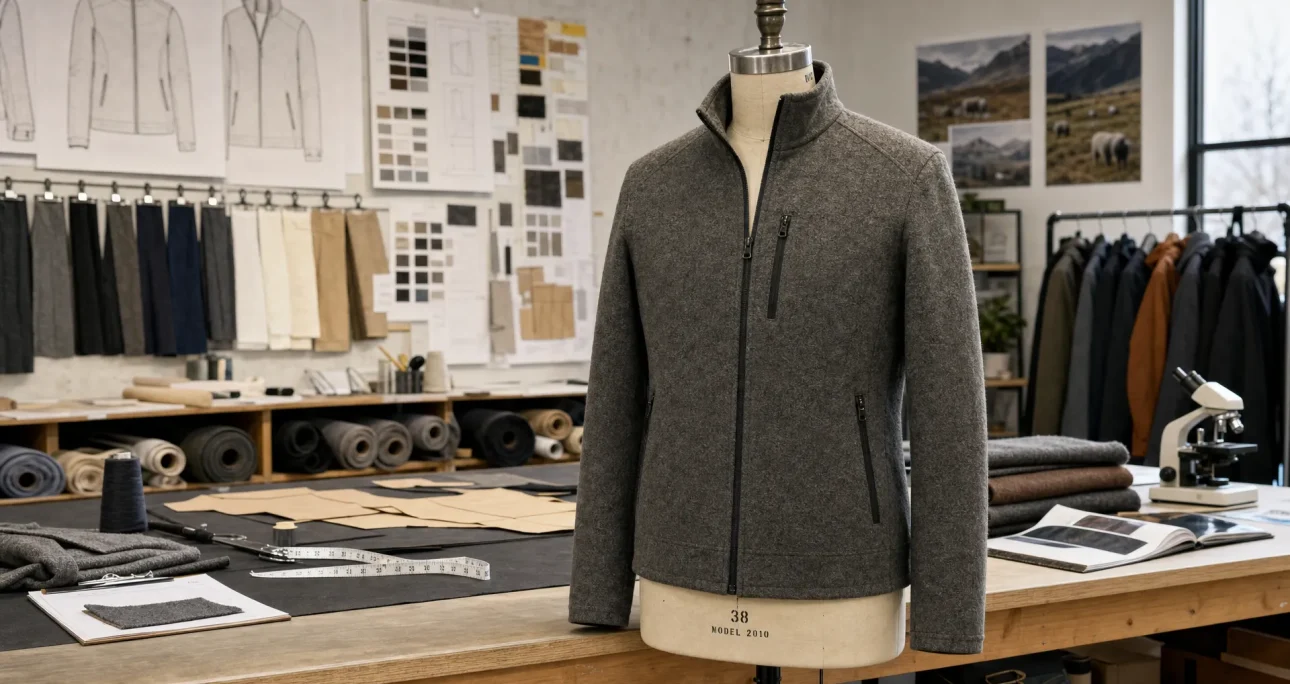
A wool outer layer fills a different role than a base layer, fleece or waterproof shell. It is about comfort across changing conditions, a more refined handfeel, natural odor control and a quieter, less technical look. For apparel brands, the opportunity is not just to make another warm jacket. It is to decide where wool genuinely improves the product and where another material would serve the customer better.
A merino wool jacket is not simply a thick sweater with a zipper. Once wool becomes the outer layer, it has to manage abrasion, fit over other garments, hold its shape, meet care expectations and support the brand story at retail. That requires different decisions around fabric weight, construction, trim, testing and sourcing.
What a wool outer layer is meant to do
Most consumers understand merino as a next-to-skin fiber, especially in base layers, thermal underwear and travel shirts. Outerwear changes the assignment. The garment must still feel comfortable, but it also needs enough structure and durability to live on the outside of the outfit.
A Merino wool outer layer can make sense when the jacket is expected to do several things at once: provide moderate warmth, reduce odor during repeat wear, breathe better than many synthetic shells and look appropriate beyond the trail. That makes it attractive for travel, commuting, resort wear, casual outdoor collections, hunting layers, après-sport pieces and premium lifestyle capsules.
The limitation is just as important. A merino wool jacket works best as a breathable outer layer for cool, dry or mixed conditions, not as a replacement for a waterproof rain shell. Wool can handle light moisture and continue to insulate when damp, but a densely knit or boiled wool jacket is not automatically waterproof. If the consumer needs storm protection, the design needs a separate membrane, coating or shell strategy.
For brands still mapping the role of merino across a full collection, Arcus Apparel Group also covers broader performance benefits of merino wool clothing, including temperature regulation, moisture management and comfort in everyday wear.
When merino wool jackets make the most sense
A wool jacket is strongest when its performance benefits match the actual use case. The table below gives product teams a practical way to evaluate whether merino belongs in the outer layer brief.
| Use case | Why merino can work | Design caution |
|---|---|---|
| Travel jackets | Odor resistance, comfort during temperature changes, fewer wears between washes | Prioritize packability, wrinkle recovery and pocket placement |
| Commuter layers | Refined appearance, breathable warmth, natural fiber appeal | Reinforce high-abrasion areas if users carry bags daily |
| Light outdoor jackets | Warmth, quiet handfeel, moisture buffering | Do not overpromise rain or wind protection without testing |
| Resort and après-sport pieces | Premium texture, warmth without a plastic look | Balance softness with enough structure to hold shape |
| Hunting or field layers | Quiet movement, odor management and insulation | Consider snag resistance, color, handfeel and layering room |
| Office-to-outdoor hybrids | Polished look with performance comfort | Fit must work over shirts, knits or light base layers |
This is the zone where wool creates a clear difference. A synthetic puffer may be warmer for its weight and a nylon shell may block weather better, but neither offers quite the same blend of comfort, quietness, odor control and natural texture. The Woolmark Company describes merino as a fiber that helps manage moisture vapor and temperature, which explains why it continues to appear in both performance and lifestyle apparel.
When wool should not be the main outer layer
Wool is not always the right answer. If the design brief calls for ultralight packable rainwear, high-speed cycling protection, alpine storm coverage or a low-cost promotional jacket, merino is usually fighting the wrong battle.
Before you brief a merino wool jacket, ask whether the end user will expect any of the following:
- Full waterproofness in sustained rain
- High wind blocking during fast movement
- Heavy abrasion resistance from climbing, workwear or loaded packs
- Very low retail price
- Frequent hot washing and tumble drying
- A crisp synthetic shell appearance
If several of these requirements are non-negotiable, merino may still have a place as a liner, collar detail, inner face, hybrid body panel or midlayer, but it may not be the correct main shell fabric. This kind of honest material matching helps protect margin and reduces returns caused by mismatched expectations.
Choosing the right merino construction for jackets
Developing a merino wool jacket starts with fabric construction. The same fiber can produce a soft knit, compact double-face cloth, boiled wool, ponte, fleece or woven blend. Each construction changes drape, warmth, durability and perceived value.
| Construction | Best for | Typical product feel | Key development concern |
|---|---|---|---|
| Boiled or felted merino knit | Lifestyle jackets, overshirts, cold-weather casual outer layers | Dense, warm, structured, slightly rustic or premium | Control shrinkage, handfeel and seam bulk |
| Merino fleece or brushed knit | Active lifestyle, travel, light outdoor jackets | Soft, insulating, comfortable, less formal | Manage pilling and surface abrasion |
| Double-knit merino blend | Commuter, golf, resort and hybrid jackets | Smooth, stable, modern, slightly technical | Balance stretch recovery with wool content |
| Merino woven blend | Shirt jackets, chore jackets, refined outer layers | Tailored, crisp, more structured | Confirm tear strength, lining needs and pressing behavior |
| Hybrid merino with synthetic panels | Field, outdoor and performance collections | Wool comfort with added durability where needed | Keep fabric weights and stretch compatible |
For brands building a layered system, jacket fabric should be chosen in context. A heavy merino outer layer worn over a dense midlayer may feel too warm indoors, while a lighter wool jacket over a good base layer can be more versatile. If the collection includes inner layers, this guide to merino wool long-sleeve shirts for layering and performance can help align the full system.
Fabric weight and handfeel: how heavy should the jacket be?
There is no universal grams-per-square-meter answer for wool outerwear. Weight depends on construction, fiber diameter, density, finishing and whether the jacket is lined. Still, broad ranges can help frame early development conversations.
| Approximate fabric weight | Common jacket direction | What to watch |
|---|---|---|
| 200-260 gsm | Lightweight overshirt, travel layer, warm-up jacket | May feel too light for true outerwear unless structured well |
| 260-350 gsm | Midweight zip jacket, commuter knit jacket, active lifestyle layer | Good versatility, but pilling and recovery need testing |
| 350-500 gsm | Boiled wool jacket, dense shirt jacket, premium casual outer layer | Better warmth and structure, with more seam bulk |
| 500+ gsm | Coat-like wool outerwear, cold-weather capsule pieces | Warmer and more substantial, but cost, weight and drying time increase |
Micron count also matters. Finer merino generally feels softer, especially at the neck, cuffs and inside collar. Coarser wool can be more economical or structured, but if it touches the skin, it may create itch complaints. For outerwear, the fabric may not need to be as fine as premium next-to-skin base layers, but comfort points still require attention.
A jacket collar, chin guard or inner cuff can ruin the experience if it feels scratchy. This is one reason sampling should include wear trials, not only lab testing and flat fabric review.
100 percent merino or a blend?
A pure merino story is compelling at retail, but 100 percent wool is not always the best engineering choice for an outer layer. Blends can improve durability, recovery, stretch, pilling resistance or cost control. The right answer depends on where the jacket sits in the line.
For a merino wool jacket designed for casual travel or premium lifestyle wear, a high wool content may support the brand position. For a field or active jacket, adding nylon, polyester or elastane can make the garment more durable and easier to fit. The tradeoff is that the product becomes less purely natural, which may matter to a sustainability-focused customer.
Sourcing language should be precise. If animal welfare, traceability or land stewardship are part of the claim set, brands can look at recognized frameworks such as the Responsible Wool Standard from Textile Exchange. Do not imply certification unless the supply chain and finished product actually meet the requirements.
Design details that decide whether the jacket works
Outerwear is less forgiving than simple knits. A good merino wool jacket spec needs to define how the garment will perform after movement, packing, sitting, washing and repeat wear.
Fit is the first decision. A jacket needs enough ease to layer over a tee, shirt or base layer without excess fabric collapsing at the waist or sleeves. If the product is meant for active use, arm lift and shoulder mobility need to be tested in sample fittings. If it is a commuter piece, the fit should still look clean over everyday clothing.
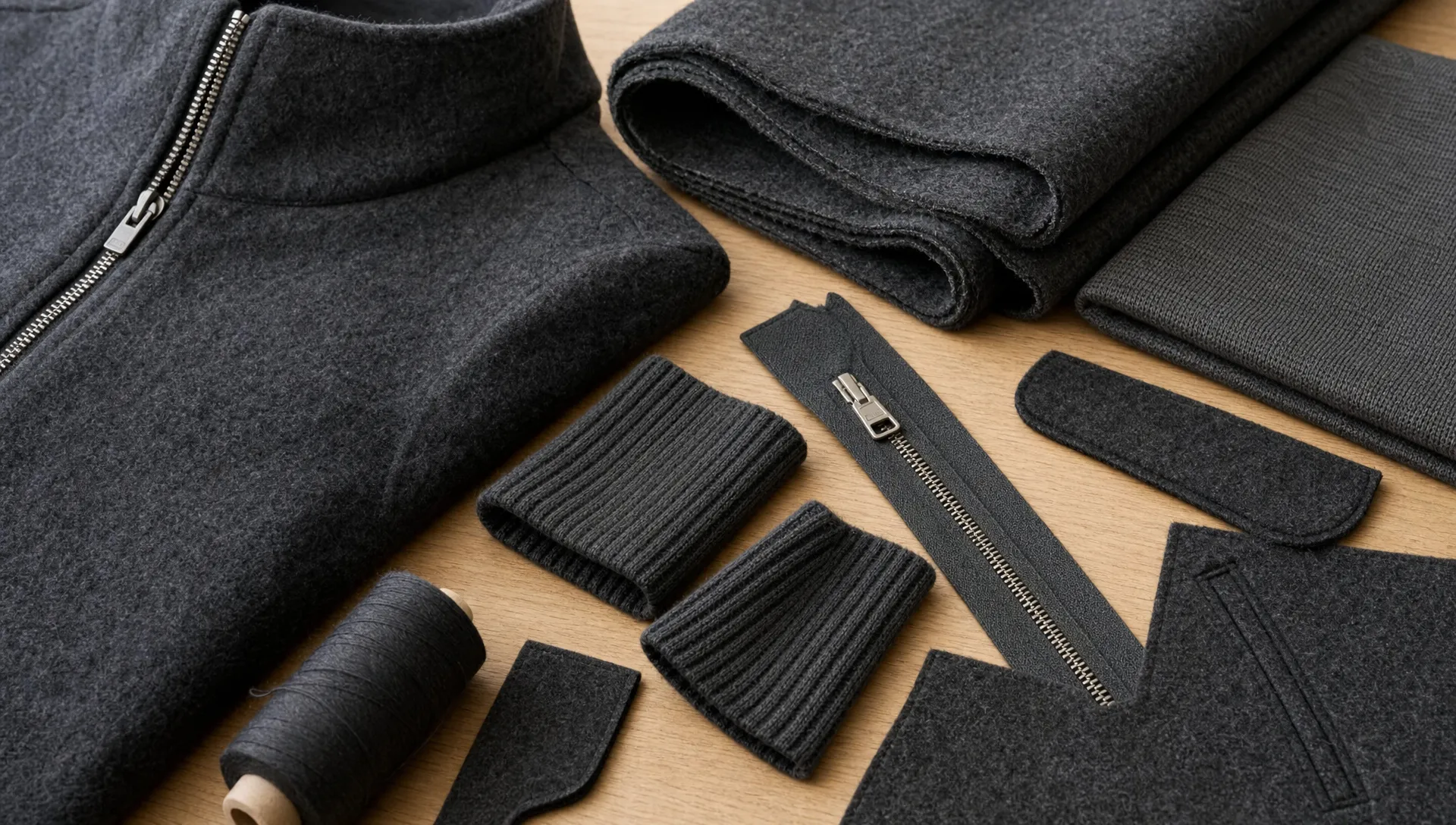
Pocketing also deserves careful attention. Wool knits can sag if pockets are overloaded, especially in lower fabric weights. Welt pockets, zipper pockets and interior pockets may need stabilization or a woven pocket bag. Heavy zippers can distort lighter merino, while flimsy zippers can cheapen a premium wool garment.
Seam construction should match fabric thickness. Boiled wool can create bulky seams at the shoulder, collar and hem. Flatlock seams may suit active knit jackets, but they may look too sporty for lifestyle outerwear. Binding, facing, taping and lining choices can elevate the garment, but they add cost and affect stretch.
Cuffs and hems shape the product category. Rib cuffs push the jacket toward sport or bomber styling. Clean hems and bound edges feel more refined. Adjustable hems can improve function, but drawcords and toggles may look out of place on a minimalist wool jacket.
Testing and quality control should come early
Merino outer layers should be tested before the brand commits to bulk production. Wool can change during dyeing, washing, pressing and finishing, so a beautiful prototype is not enough. The development process should confirm that the production garment keeps the same handfeel, measurements and surface appearance.
Key tests and checks often include dimensional stability after washing, pilling resistance, abrasion resistance, seam strength, colorfastness, zipper compatibility and appearance after laundering. For abrasion, Martindale testing is commonly used in apparel and upholstery contexts to compare surface wear. For washing behavior, brands should define realistic care instructions and then test to those instructions rather than assuming the customer will baby the garment.
Quality control is also visual. Wool outerwear can show shade variation, needle marks, seam waviness, pressing shine or inconsistent shrinkage. These issues are easier to manage when material sourcing, pattern development, sample review and production planning are connected from the start.
Merchandising the jacket within a collection
A merino jacket sells best when its role is obvious. If it is displayed beside rain shells, consumers may judge it by waterproof expectations. If it is positioned as a breathable travel jacket, refined fleece alternative or natural-fiber commuter layer, the benefits become clearer.
Product copy should explain the use case without overselling. Strong claims might include breathable warmth, comfort across changing temperatures, soft natural handfeel or odor-resistant wear between washes. Claims that require proof, such as waterproof, windproof, flame resistant or antimicrobial, should only be used when the finished garment has been tested and the legal team is comfortable with the wording.
For cold-weather assortments, a jacket may also sit above thermal underwear, base layers and midlayers. If you are building that system, this overview of merino wool thermal wear and fabric weight selection can help align warmth levels across the collection.
A practical development checklist
Before moving from concept to sampling, product teams should define the jacket in concrete terms. The clearer the brief, the easier it is for sourcing, pattern and production partners to identify the right material and construction path.
- Intended climate and activity level
- Target fabric construction and approximate weight
- Desired wool percentage and acceptable blend fibers
- Fit model, layering allowance and mobility requirements
- Pocket load, trim weight and reinforcement needs
- Care instructions and shrinkage tolerance
- Pilling, abrasion and colorfastness expectations
- Sustainability, traceability or certification requirements
- Retail positioning and claims that need proof
This checklist is not meant to slow development. It prevents vague briefs such as warm wool jacket from turning into samples that look good on a hanger but fail in use.
Frequently Asked Questions
Is a merino wool jacket waterproof? No. Merino can manage light moisture and may stay comfortable when damp, but it is not automatically waterproof. A jacket needs a membrane, coating or separate shell construction to make credible waterproof claims.
Are merino wool jackets good for travel? Yes, when designed for the right climate. Merino is useful for travel because it manages odor, feels comfortable through temperature changes and can look more polished than a technical fleece.
Does a wool jacket need to be 100 percent merino? Not necessarily. Blends can improve stretch, abrasion resistance, recovery and durability. A higher merino content supports a stronger natural-fiber story, but performance goals should guide the final composition.
What is the best fabric weight for a merino outer layer? Many light jacket concepts start around 260-350 gsm, while more structured boiled wool or cold-weather pieces may use 350-500 gsm or more. Construction matters as much as weight.
Can merino work for active outerwear? Yes, especially in low to moderate intensity conditions where breathability, odor control and comfort are priorities. For high-abrasion or severe weather use, hybrid construction or a synthetic shell may be more appropriate.
Build a better wool outer layer with the right development partner
If you are developing a merino wool jacket, the biggest decision is not whether wool is good or bad. It is whether the fiber, construction, fit and testing plan match the customer’s real use case.
Arcus Apparel Group helps apparel brands move from concept to production with custom apparel development, material sourcing, pattern development, small batch manufacturing, flexible scaling and quality control at every stage. If your next collection needs a wool outer layer that feels premium and performs as intended, connect with Arcus Apparel Group to start shaping the right development plan.



