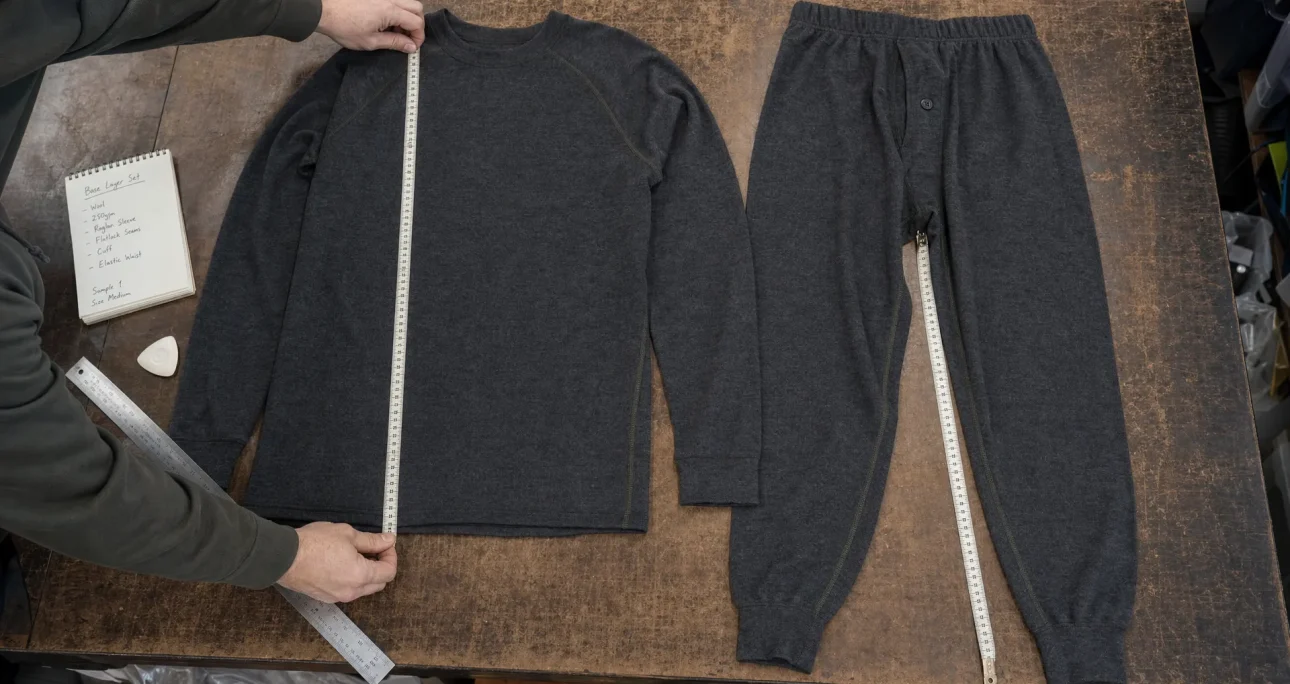
A successful men's wool base layer is not defined by wool content alone. Fit, fabric weight, knit structure, seam placement and care performance all affect whether the garment feels warm, breathable and comfortable under real use. For apparel brands, the goal is to translate a broad product idea into specs a pattern maker, sourcing team and factory can execute consistently.
For men’s performance apparel, small decisions become noticeable fast. A sleeve that pulls under a shell jacket, a hem that rides above a pack belt or a fabric that traps too much heat can turn a premium garment into a return risk. This guide focuses on practical development choices for tops, bottoms and long underwear so your product brief is clear before sampling begins.
How to specify a men's wool base layer by use case
Start with the activity, not the fabric. A runner in cold, dry weather needs a different garment than a skier sitting on a lift or a hunter waiting in a stand. The use case determines thermal demand, sweat rate, abrasion zones and how close the garment should fit to the body.
For active use, lighter fabric and a closer athletic fit usually support better moisture movement. For static cold, a heavier fabric or brushed interior may make sense because warmth retention matters more than fast cooling. For travel and daily wear, comfort, odor resistance and easy care often become stronger selling points than maximum insulation.
A simple product brief should define:
- Primary activity and climate range
- Layering system, such as next-to-skin, under fleece or under a waterproof shell
- Desired fit, from compression-adjacent to relaxed
- Top, bottom or set configuration
- Target retail positioning and durability expectations
If you are developing a broader merino program, Arcus also covers these fundamentals in its merino base layer development guide, which can help align material choices with performance goals.
Fit decisions that make or break comfort
A men's wool base layer should sit close enough to manage moisture but not so tight that it restricts movement. Wool fabrics often have less recovery than synthetic compression knits unless blended with elastane, so pattern shape and stretch testing matter. Fit should be evaluated after wash testing, not only on first samples.
For tops, pay attention to shoulder width, armhole height, sleeve pitch and torso length. Many men’s outdoor garments fail because the body length is too short once the wearer bends, reaches or wears a pack. A slightly longer back hem can improve coverage without making the front bunch under pants.
Chest and bicep ease should reflect the intended customer. A slim alpine fit works under shells and midlayers, while a relaxed travel fit needs more room across the upper back. If the garment is marketed for high output activity, excessive fabric around the torso can hold sweat and create cold spots.
Upper body pattern details
Raglan sleeves, rotated shoulder seams and underarm gussets can reduce friction when the garment is worn under backpacks or outerwear. Flatlock seams are common in next-to-skin garments because they reduce seam bulk, but they still need to be placed away from pressure zones.
Neckline choice also changes the experience. Crew necks are versatile, mock necks add coverage and quarter zips improve venting. For a performance top, zipper tape, puller size and chin guard construction should be checked carefully because they sit close to the skin.
Bottoms and long underwear fit
Base layer bottoms require a different fit logic than tops. The rise, crotch gusset, inseam length and waistband tension determine whether the garment stays in place during movement. A men's wool base layer bottom should avoid excess fabric behind the knee, but it also needs enough stretch through the seat and thigh for skiing, hiking or climbing.
Designers should decide early whether the bottom will include a fly, contoured pouch or simple front panel. Each choice affects pattern complexity, comfort and production cost. Waistbands should be soft, stable and tested for rolling after repeated laundering.
Fabric weight: matching GSM to temperature and output
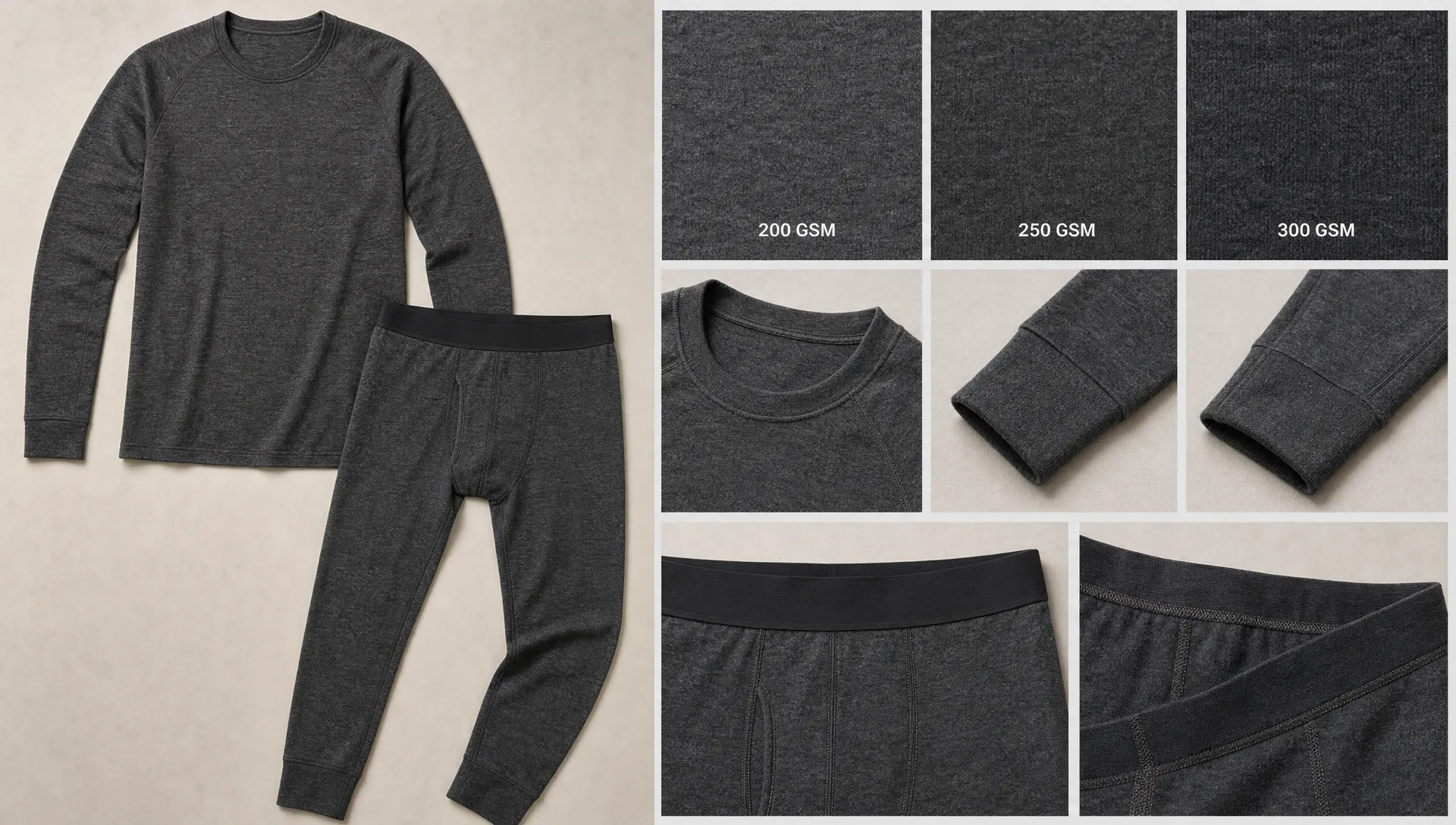
Fabric weight is usually measured in grams per square meter, or GSM. A higher GSM can feel warmer, but warmth also depends on yarn, knit construction and fit. A 200 gsm interlock may feel different from a 200 gsm jersey because the structure traps air differently.
The following ranges are common starting points for wool base layer development. They are not fixed rules, but they help teams build a sampling plan.
| Fabric weight | Typical use | Strengths | Watchouts |
|---|---|---|---|
| 120-160 gsm | Running, hiking, mild weather, travel | Lightweight, breathable, fast drying feel | Less warmth, may be more transparent in light colors |
| 170-210 gsm | General outdoor layering, skiing, daily winter wear | Balanced warmth and breathability | Fit and seam comfort become very noticeable |
| 220-260 gsm | Cold weather, lower output activity, long underwear sets | More insulation and coverage | Can overheat during high output use |
| 270 gsm and above | Expedition style warmth, very cold static use | Strong thermal feel | Bulk, drying time and cost increase |
A midweight men's wool base layer around the 170-210 gsm range is often the most flexible starting point for brands because it can serve skiing, hiking, travel and everyday winter use. Lightweight and heavyweight versions can then extend the range once fit blocks and sourcing are proven.
Warmth is more than fabric weight
Warmth comes from trapped air, body coverage and moisture control. A garment that gets wet and stays wet can feel cold even if the fabric is heavy. This is one reason wool is popular for next-to-skin layers: fine wool fibers can help regulate comfort across changing activity levels and are valued for odor resistance during multi-day wear.
Knit structure plays a large role. Jersey knits are familiar and smooth, interlock can feel more stable and substantial, while rib structures add stretch and body mapping options. Waffle or grid textures can increase air pockets, though they may add bulk and affect hand feel.
Coverage details also matter. Thumbholes, longer cuffs, dropped back hems, higher necklines and shaped waistbands can all improve perceived warmth. The challenge is to add coverage without creating pressure points under gloves, boots, helmets or pack straps.
For ski-specific layering, Arcus has a separate guide on choosing a merino wool base layer for skiing that goes deeper into cold-weather use under shells and insulation pieces.
Fiber, micron count and blend choices
A men's wool base layer is usually built around merino wool because merino fibers can be fine enough for next-to-skin comfort. Micron count refers to fiber diameter. Lower micron values generally feel softer, though yarn quality, fabric finish and garment construction also affect perceived itch.
For premium next-to-skin garments, many brands look for fine merino in the approximate 17.5 to 19.5 micron range. Coarser wool may be more durable or cost effective, but it can be harder to position as a soft base layer if worn directly against the skin.
The fiber composition should match the performance promise. A 100 percent merino fabric offers a strong natural fiber story, but blends can improve strength, recovery, dry time and shape retention. Nylon is often used for durability, polyester can support drying performance and elastane can improve stretch recovery. The tradeoff is that every added fiber changes hand feel, labeling, price and brand positioning.
Sourcing also affects credibility. If responsible wool sourcing is part of the brand promise, review standards such as the Responsible Wool Standard from Textile Exchange and confirm documentation requirements with suppliers before bulk production.
Construction details that improve real-world wear
Good construction makes the difference between a sample that looks right and a garment customers keep wearing. For tops, seam placement should avoid the shoulder crest when packs are part of the use case. For bottoms, inseams, gussets and waistband joins should be checked under movement, not only on a standing fit model.
Cuffs and hems need enough recovery to stay in place without feeling tight. If thumbholes are included, the pattern must account for hand size, sleeve length and stretch direction. Poorly placed thumbholes can twist the sleeve or create tension across the palm.
A men's wool base layer may also need different construction choices by price tier. Entry products might use simpler jersey fabric and standard coverstitching. Premium products may use finer wool, engineered panels, low-profile seams and more precise fit grading. Neither approach is automatically better, but the construction must match the customer expectation.
Labels and trims are easy to overlook. Heat transfers can reduce scratch compared with sewn labels, but they must be tested for wash durability. Zippers, elastic, thread and binding should be compatible with wool care conditions and should not shrink or distort at a different rate than the main fabric.
Testing and quality control before production
Testing should begin during development, not after bulk fabric is already ordered. At minimum, teams should verify fabric weight, shrinkage, colorfastness, seam strength, stretch recovery and pilling. AATCC and ASTM methods are commonly used in the textile industry, including standards for dimensional change after laundering and fabric mass per unit area.
A practical test plan should include lab testing and wearer feedback. Lab results help confirm measurable performance, while field testing reveals comfort issues that numbers alone can miss. Have testers wear samples under the actual intended layers and during the target activity.
For a men's wool base layer, wash testing is especially important because wool can shrink, twist or change hand feel if fabric, finishing and care instructions are not aligned. Measure garments before wash, after wash and after drying according to the intended care label. Track body length, sleeve length, chest width, inseam, rise and waistband relaxed and extended measurements.
Quality control should also define tolerances before production. A small variation in sleeve length may be acceptable, while waistband tension or neck opening variation may create fit complaints. Clear tech packs, approved samples and inspection points help prevent these issues from becoming bulk problems.
Development checklist for apparel brands
Before moving into bulk production, align the product team, sourcing partner and factory on the complete specification. This reduces sample rounds and makes cost discussions more productive.
| Spec area | Decisions to confirm |
|---|---|
| Use case | Activity, climate, layering system and customer profile |
| Fabric | Wool type, micron range, GSM, knit structure and blend ratio |
| Fit | Ease, body length, sleeve length, rise, gusset and grading rules |
| Construction | Seam type, seam placement, cuffs, hems, waistband and trims |
| Testing | Shrinkage, pilling, colorfastness, recovery and wearer trials |
| Production | MOQ, quality checkpoints, packaging and care label requirements |
A clear spec does not remove the need for sampling, but it makes every sample more useful. If you are developing related men’s wool tops outside the base layer category, the Arcus guide to men's merino wool T-shirts can help you compare fit and fabric decisions across adjacent products.
Common mistakes to avoid
One common mistake is choosing the heaviest fabric to signal warmth. Heavy fabric can work for low-output cold, but it may disappoint active users who overheat quickly. Another mistake is using a generic T-shirt block for a technical layer. Base layers need different sleeve mobility, torso length and seam planning.
Brands also run into problems when they approve fabric hand feel before wash testing. Wool can change after laundering, and small shrinkage percentages become obvious in close-fitting garments. Lab dips, print trials and trim testing should happen early enough to avoid last-minute compromises.
Finally, avoid treating men’s sizing as a simple scale-up from one fit sample. Grade rules should reflect shoulder width, chest, waist, seat and thigh changes across the full size range. A men's wool base layer must perform on different body types, especially if it is marketed for outdoor use where movement and layering are central to the product promise.
Frequently Asked Questions
What is the best GSM for a men’s wool base layer? For most general outdoor and winter layering, 170-210 gsm is a useful midweight range. Choose lighter weights for high-output activity and heavier weights for colder, lower-output use.
Is 100 percent merino better than a wool blend? Not always. 100 percent merino supports a natural fiber story and soft hand feel, but blends with nylon, polyester or elastane can improve durability, stretch recovery or drying performance.
Should a wool base layer fit tight or loose? It should fit close to the body without restricting movement. A technical men's wool base layer needs enough contact for moisture management, but enough ease through shoulders, seat and thighs for activity.
How should brands test wool base layer samples? Test shrinkage, pilling, colorfastness, seam strength, stretch recovery and fit after laundering. Field testing under the intended layers is also important because comfort issues often appear during movement.
Build a better wool base layer program
Developing a strong men’s wool base layer starts with precise decisions on fit, GSM, fiber, construction and quality control. The earlier those choices are defined, the easier it is to source the right material, build accurate patterns and reduce sample rounds.
Arcus Apparel Group supports custom apparel development, material sourcing, pattern development, small batch manufacturing and production management for brands building or scaling apparel programs. If you need help turning a concept into a production-ready garment, connect with Arcus Apparel Group to discuss your next wool base layer project.



