For apparel brands, merino wool pants women's is more than an SEO category or seasonal SKU. It is a product engineering problem: how do you create a pant that falls cleanly over the body, resists knee bagging, holds the seat after sitting and still feels soft enough for all-day wear?
The answer starts before styling. Drape and recovery are controlled by fiber blend, fabric construction, pattern balance, seam placement, finishing and testing. If those choices are made late, the pant may look polished on a sample rack but fail after a few hours of movement.
Merino Wool Pants Women's: Design Around Drape and Recovery
Drape is the way fabric hangs from the waist, hip and thigh. In women's pants, it affects whether the silhouette looks fluid, tailored, sporty or clingy. Recovery is the fabric's ability to return after stretch, especially at the knees, seat, waistband and pocket openings.
A successful brief for merino wool pants women's should describe where the garment needs softness and where it needs control. A wide-leg travel pant may need a soft fall from the hip, but a slim pull-on pant needs more snapback at the knee and seat. Treating both designs the same often leads to compromise in the wrong places.
Define the use case before choosing the fabric
Start with the wearing occasion. Office trousers, travel pants, lounge styles and active-inspired bottoms put different stress on merino. A seated commuter will test seat recovery. A traveler will test wrinkles, odor management and drying. A polished work pant needs fabric that hangs evenly through the front leg without collapsing around the calf.
Merino brings comfort advantages because wool fibers can buffer moisture, feel soft in fine microns and help manage odor between washes. The Woolmark Company describes wool as naturally breathable and elastic, but a pant still needs the right construction to make those fiber traits work in a garment.
Choose Fabric Architecture Before Styling
Fabric architecture is the hidden decision that determines how the finished pant behaves. Fiber content matters, but construction often matters more. A merino-rich knit and a merino-blend woven can have similar content labels yet produce completely different drape, stretch and recovery.
When developing merino wool pants women's for a premium market, avoid selecting fabric by handfeel alone. A fabric that feels luxurious on the roll can grow at the knee, twist at the inseam or cling at the thigh after washing. Sampling should include movement, laundering and pressing before the style is approved.
Blends that hold shape without losing softness
Pure merino can work for some relaxed silhouettes, but many pants benefit from blended yarns. Nylon can improve abrasion resistance. Polyester can support dimensional stability. A modest amount of elastane can improve stretch recovery, especially in slim fits or pull-on styles.
The blend should support the customer's expectation. A refined trouser usually needs less visible stretch and more surface stability. A travel or athleisure pant can accept more stretch if the fabric still recovers cleanly. For a broader look at weight and fit trade-offs, Arcus Apparel Group's guide to merino wool pants fabric weights and everyday wear is a useful companion to this drape-focused approach.
Knit versus woven behavior
Knits usually offer more comfort stretch and easier movement, but they can also grow if the structure is too open or the elastane is not stabilized. Ponte, interlock and double-knit structures can add body, which helps pants skim rather than cling.
Wovens give a cleaner trouser line, especially in twills, gabardines and compact plain weaves. They may need mechanical stretch, elastane or pattern ease to maintain comfort. For brands balancing trouser elegance with wear resistance, the related Arcus guide on balancing merino wool trouser drape and durability goes deeper into reinforcement and long-term wear.
Pattern Choices That Protect Drape
Fabric can only do part of the work. The pattern determines how tension is distributed around the body. If the rise, hip curve or inseam balance is wrong, even a well-developed merino blend may pull, wrinkle or lose shape.
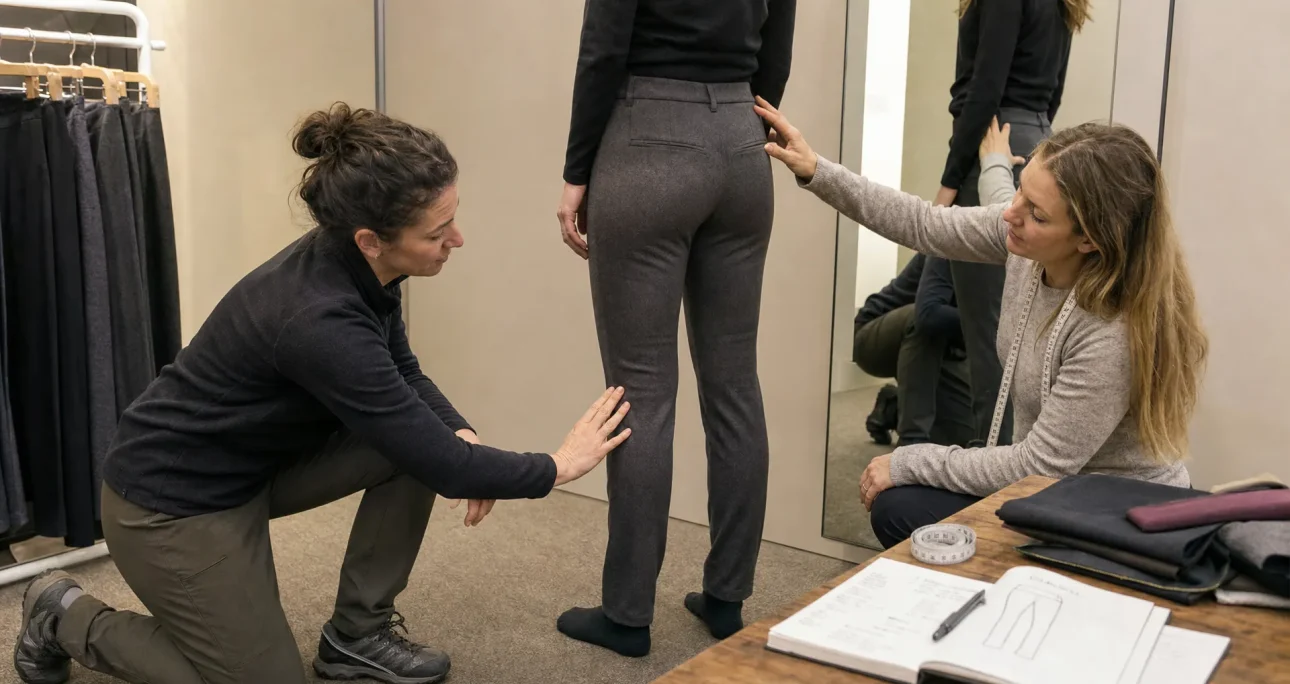
The pattern for merino wool pants women's should be built around the highest-stress zones: the seat, front crotch, knee and waistband. These areas decide whether a customer sees the pant as flattering or frustrating after real movement.
Balance ease through the hip and seat
Too much ease can make merino hang heavily and create folds under the seat. Too little ease can force constant stretch, which weakens recovery and makes knee or seat bagging more visible. The goal is controlled ease: enough room for movement, but not so much that the fabric collapses.
Fit models should sit, climb stairs, bend, squat lightly and walk during review. Static standing photos are not enough for pants. The back rise and seat curve should be checked after movement, not only before.
Use waistbands and pockets as structure
Waistbands, pocket bags and facings stabilize the top block. A pull-on waistband may need elastic recovery plus internal support so it does not roll. A tailored waistband may need interfacing compatible with wool care requirements.
Pocket bags should not drag the side seam forward or create bulk at the hip. Lightweight pocketing can preserve drape, but it must still support the pocket opening. For wide-leg or fluid styles, hem weight also matters because a slightly more stable hem can improve the vertical fall of the leg.
Build Recovery Into Construction
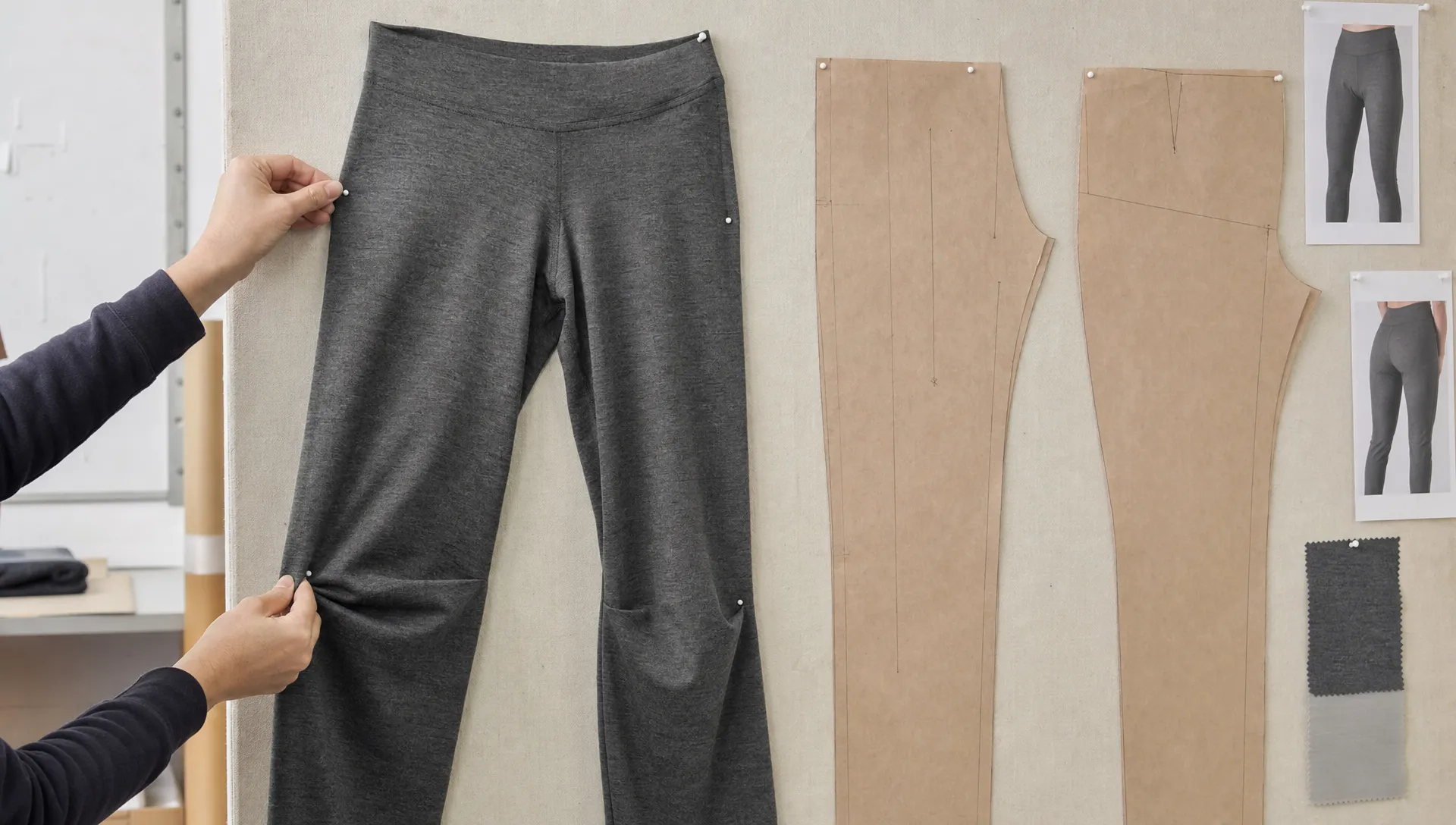
Recovery is not only a fabric property. Seams, stitch type, waistband construction and finishing all influence how the pant rebounds after wear. If one component grows more than the others, the garment may twist or distort even when the main fabric tests well.
For merino wool pants women's, recovery should be considered at every construction point that stretches during wear. The waistband, crotch seam, inseam and knee area carry repeated tension. Strong design keeps those zones stable without making the pant feel rigid.
| Design variable | Drape effect | Recovery effect | Development note |
|---|---|---|---|
| Fabric weight | Heavier fabrics fall straighter, lighter fabrics move more fluidly | Very light fabrics may show growth faster | Match GSM to silhouette and opacity needs |
| Elastane content | Too much can create a synthetic snap or cling | Helps return at knee and seat when properly stabilized | Test after wash and wear, not only on the roll |
| Knit density | Denser knits skim the body better | Open knits can stretch out over time | Review stretch and growth together |
| Waistband support | Controls top-block shape | Prevents rolling and expansion | Choose elastic, facing or interfacing by style |
| Hem structure | Adds visual weight to the leg line | Can reduce twisting if balanced | Keep bulk appropriate to fabric weight |
Control the knees without overbuilding them
Knee bagging is one of the most common failures in soft pants. It happens when the fabric stretches during sitting and does not fully return. Pattern shaping, fabric recovery and construction all contribute.
A slim pant may need more stretch recovery and a slightly shaped knee position. A wide-leg pant may need less stretch but better vertical stability. Reinforcement should be subtle, since a stiff knee area can break the drape and make the pant look technical rather than refined.
Specify finishing, not just feel
Finishing affects shrinkage, surface smoothness, handfeel and dimensional stability. For merino blends, finishing can also influence whether the fabric feels lofty, compact, brushed or clean. These details must be specified in the development record so the approved sample can be repeated.
Do not approve a fabric because one sample feels good after steaming. Review how it behaves after washing or dry cleaning according to the intended care label. The approved finish should be linked to measurable requirements, not described only with subjective words like soft or luxe.
Testing and Sampling Plan for Production
Testing turns preferences into production decisions. A brand does not need every possible lab test for every style, but it does need a focused plan that reflects the garment's use. Pants face more abrasion, sitting pressure and seam stress than tops, so the standards should be higher.
For merino wool pants women's, testing should confirm that the approved sample can survive the customer's normal routine. That includes dimensional stability, stretch and growth, pilling, seam strength and care performance.
| Test focus | What to check | Why it matters for drape and recovery |
|---|---|---|
| Stretch and growth | Fabric return after extension | Predicts knee, seat and waistband recovery |
| Dimensional stability | Shrinkage after the intended care method | Protects inseam, rise and leg opening measurements |
| Pilling and surface change | Abrasion-prone areas such as inner thigh and seat | Maintains a clean premium appearance |
| Seam performance | Slippage, cracking or distortion under stress | Keeps the pant balanced during movement |
| Colorfastness | Rubbing, washing and perspiration response | Reduces shade issues in production and wear |
Recognized methods such as AATCC dimensional-change procedures or ASTM stretch, abrasion and pilling methods can guide test selection. The point is not to overload development with paperwork. The point is to catch fabric and construction failures before purchase orders are scaled.
Use wear trials as a technical checkpoint
Lab data is useful, but wear trials reveal how the pant behaves on real bodies. A compact merino knit may pass stretch testing yet still crease oddly at the front rise. A woven trouser may look excellent after pressing but feel restrictive in a seated position.
Wear trial notes should be structured. Record the wearer's size, body measurements, activities, duration, laundering method and visible changes. Review photos before wear, after wear and after care. This creates a clearer path from sample feedback to pattern correction.
From Prototype to Scalable Manufacturing
Production planning for merino wool pants women's should connect the design brief, fabric testing and factory execution. If the approved sample depends on a specific fabric finish, waistband elastic or seam allowance, those details need to be documented before grading and cutting.
Small production runs can be especially useful for merino pants because they allow a brand to validate fit, return rates and customer feedback before scaling. Low minimum order quantities can also reduce risk when testing a new silhouette, blend or price point.
Align the tech pack with quality control
A strong tech pack should include fabric specifications, shrinkage allowance, stretch direction, seam construction, pressing instructions, graded measurements and tolerance points. The quality control plan should check the same areas that matter most to drape and recovery: rise, inseam, hip, thigh, knee, waistband and leg opening.
If production moves internationally, the approved sample and fabric standard become even more important. In-house production management can help keep sourcing, pattern revisions, sampling and quality checks aligned, especially when a brand is working with merino for the first time.
Frequently Asked Questions
What makes merino pants drape well on women? Drape comes from the combination of fabric weight, construction, yarn behavior, pattern balance and finishing. A well-draped pant usually has enough body to skim the hip and leg without stiffness or cling.
How much stretch should women's merino pants have? The right amount depends on the silhouette. Slim and pull-on styles usually need more stretch recovery, while wide-leg and tailored styles often need controlled ease and stable construction rather than high stretch.
Are pure merino pants better than merino blends? Not always. Pure merino can feel beautiful, but blends with nylon, polyester or elastane can improve recovery, abrasion resistance and dimensional stability when the blend is developed correctly.
How should a brand test merino wool pants women's before production? Test stretch and growth, shrinkage, pilling, seam performance and colorfastness. Add wear trials that include sitting, walking, bending and laundering so the team can see how the pant behaves outside the sample room.
Can merino wool pants work for travel collections? Yes. Merino's comfort, odor management and moisture-buffering properties make it useful for travel, but the garment still needs recovery at the knees and seat. For broader travel assortment planning, see Arcus Apparel Group's guide to merino wool travel clothes.
Develop Women's Merino Pants With the Right Production Partner
Designing women's merino pants is a technical process, not just a fabric choice. The best results come from aligning material sourcing, pattern development, sampling, testing and quality control before the style moves into production.
Arcus Apparel Group supports brands with custom apparel development, material sourcing, pattern development, small batch manufacturing, low minimum order quantities, international manufacturing options and in-house production management. If you are building a merino pant program or refining an existing one, Arcus Apparel Group can help turn the concept into a production-ready garment.



