
A 100 merino wool base layer usually means a next-to-skin garment whose main fabric is made entirely from merino wool, rather than a wool-synthetic blend. Its appeal is clear: comfortable temperature buffering, useful odor resistance and a soft feel. The tradeoffs are equally important, including slower drying than many lightweight synthetics, potential abrasion damage and more demanding care.
For apparel brands, the question is not whether pure merino sounds more premium. It is whether its benefits match the customer’s activity, laundry habits and expectations. Fiber content is a starting point, not a guarantee of performance.
What “100% merino” actually tells you
The percentage describes fiber composition, not fabric weight, softness, durability or warmth. Two garments with the same fiber claim can perform differently because their yarns, knit structures and finishes differ.
It also does not necessarily mean every component is wool. Sewing thread, zipper tape, elastic and labels may use other materials. Product descriptions should make the scope of the claim clear rather than imply that every part of the finished garment is merino.
For U.S. sales, review the FTC’s textile and wool labeling guidance. Keep supplier documentation supporting both fiber percentages and the merino designation. A generic wool-content test alone does not establish the breed origin of the fiber.
Where a 100 merino wool base layer earns its place
Moisture buffering during changing activity levels
Wool can absorb water vapor within its fibers. That helps buffer changes in humidity near the skin as a wearer moves between exertion and rest. The Woolmark Company’s overview of wool fiber explains the fiber properties behind its moisture absorption and natural crimp.
This is different from rapidly moving liquid sweat across a fabric. A garment can absorb vapor well without being the fastest option for transporting heavy perspiration or drying after saturation. Knit structure, finishing and the layers worn over it all affect the experience.
Pure merino can be useful for hiking, travel and activities with intermittent effort. For sustained high-output exercise, compare it with a lightweight synthetic or blend under realistic conditions rather than assuming that “moisture management” means identical performance.
Odor resistance between washes
A 100 merino wool base layer can be appealing for repeated wear because wool often develops less noticeable odor than polyester during comparable use. Wool’s interaction with moisture and odor compounds contributes to that behavior, but results vary with the wearer and garment.
This is particularly valuable when customers cannot wash clothing every day, such as on a hut-to-hut trip or while traveling with limited luggage. Airing the garment between uses can also help manage residual moisture.
Odor resistance is not an antibacterial guarantee. Avoid claims that the fabric kills bacteria, stays odor-free indefinitely or requires no washing unless the finished product has evidence supporting those specific statements.
Comfort across temperature changes
Merino’s crimp helps create a fabric structure that can retain insulating air. Its moisture absorption also contributes to comfort as conditions change. That combination suits a layer worn through cool mornings, active periods and indoor breaks.
However, composition alone does not determine warmth. Fabric thickness, knit density, garment fit and the outer layering system matter. A thin pure-wool top is not automatically warmer than a thicker blended one.
Softness is similarly conditional. Fiber diameter and the presence of coarser fibers influence skin feel, while seams and finishes can create irritation independently of the wool. “100% merino” should never substitute for evaluating an actual fabric sample.
The tradeoffs that deserve equal attention
Drying speed after heavy sweating or washing
A 100 merino wool base layer generally takes longer to dry than a comparable lightweight polyester garment because wool can hold substantial moisture within its fibers. The difference depends on fabric construction, airflow, temperature and how wet the garment becomes.
That matters during frequent washing, humid travel or activities where clothing repeatedly becomes saturated. A quick-drying blend may better serve a customer who needs a washed layer ready again within a short window.
Wool can retain some insulating value when damp, but this does not make a wet garment equivalent to a dry one. In cold conditions, changing saturated layers and managing exposure still matter.
Abrasion, pilling and localized wear
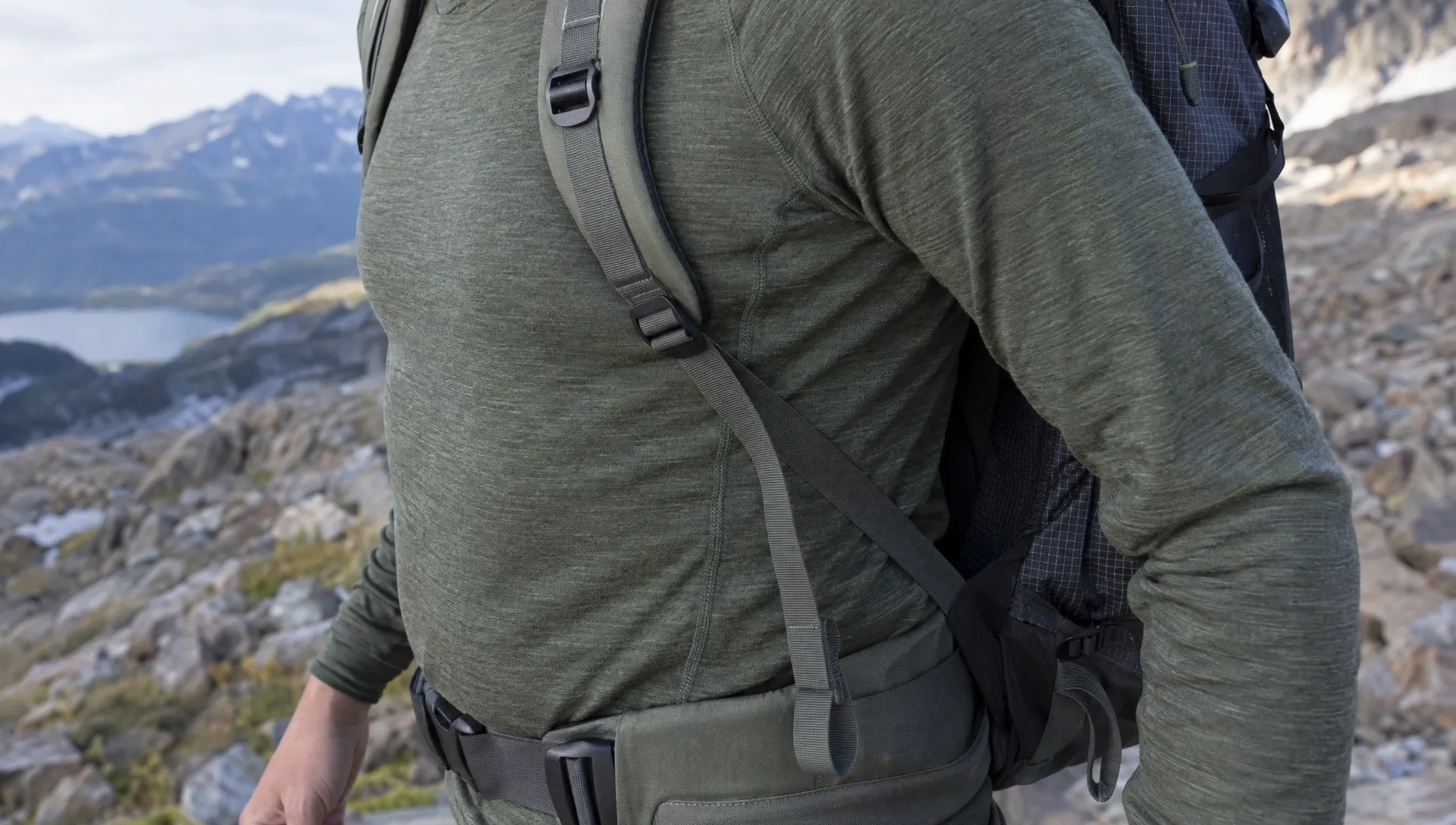
Pure merino does not have synthetic reinforcement unless it is added through a separate component or construction. Lightweight fabrics can develop holes where pack straps, waist belts or repeated rubbing concentrate stress.
Pilling is another possible issue. It depends on factors such as fiber length, yarn twist, knit structure and finishing, not just composition. A heavier or better-engineered pure-wool fabric may outlast a poorly constructed blend.
Brands should examine the likely wear zones of the finished garment. A backpacking top, fitted legging and travel shirt face different stresses. Testing only an untouched fabric swatch misses seam strain and garment-level friction.
Shape retention and laundry sensitivity
Wool has natural elasticity, but that does not make it interchangeable with elastane. Close-fitting garments may lose shape at elbows, knees or cuffs if the fabric does not recover adequately after repeated extension.
Laundry performance depends on whether the wool has been treated for machine washing, how the fabric was stabilized and which wash and drying conditions are used. Some constructions can shrink or felt with unsuitable combinations of moisture, agitation and heat.
Care instructions should follow tests on the actual fabric and garment. Do not describe a product as machine-washable simply because another merino style survived a machine cycle.
Cost and value expectations
Pure merino often costs more than mainstream polyester base-layer fabrics, although sourcing, yarn quality, finishing and production volume all affect the comparison. The finished price also reflects construction and quality-control requirements.
Customers paying a premium may expect both superior comfort and long service life. That creates a potential mismatch when a very lightweight garment is marketed for abrasive use without explaining its care needs.
A stronger value proposition connects the material to a specific benefit, such as repeated-wear odor management, rather than suggesting that a higher wool percentage improves every performance measure.
Pure merino versus blends: choose the tradeoff deliberately
Choosing a 100 merino wool base layer over a blend makes sense when wool’s next-to-skin feel and odor performance are central to the product promise. A blend can be the better choice when faster drying, greater stretch recovery or reinforcement takes priority.
The added fiber matters. Nylon can provide reinforcement in an appropriately engineered yarn or fabric. Polyester may support faster drying. Elastane can improve stretch and recovery. None of those outcomes is guaranteed merely by adding a small percentage to a specification.
| Product priority | Why pure merino may fit | Why a blend may fit | What to verify |
|---|---|---|---|
| Repeated wear between washes | Wool’s odor resistance is a central benefit | A wool-rich blend may retain useful odor performance | Wear trials under comparable conditions |
| Fast turnaround after washing | Acceptable when drying time is flexible | Some synthetic blends dry faster | Drying time at comparable fabric weights |
| Backpack and belt contact | A robust pure-wool construction may work | Reinforced constructions may better tolerate rubbing | Abrasion, pilling and garment wear |
| Close-fitting movement | Natural wool elasticity may be sufficient | Elastane can support recovery | Bagging after movement and laundering |
| Simple material positioning | Main fabric can carry a straightforward wool claim | Multiple fibers allow targeted engineering | Accurate composition and supplier records |
For detailed fit and construction decisions, use the guide to choosing a merino wool base layer. Those choices should follow the product’s performance priorities, not replace them.
Evidence brands should request before production
Verify the fabric, then test the garment
Before approving a 100 merino wool base layer for production, separate supplier claims from measured results. Request composition documentation, care recommendations and available test reports, then confirm that the reports apply to the fabric and finish being purchased.
Useful evaluations include dimensional change after laundering, pilling, abrasion resistance, colorfastness and stretch recovery. Established methods include ISO 12945-2 for pilling and ISO 12947-2 for Martindale abrasion. The laboratory should help select methods appropriate to the fabric and intended use.
Set acceptance criteria before testing. There is no universal abrasion score or shrinkage limit that proves suitability for every base layer. A travel garment and a high-friction expedition layer need different expectations.
Finished-garment trials should then check seam comfort, persistent dampness, cuff distortion and wear under straps. Record the activity, layering system and laundering conditions so feedback is interpretable. For a broader development framework, Arcus’s merino base layer guide for fit, weight and warmth connects fabric decisions with garment construction.
Keep environmental claims specific
Pure wool is not automatically the lowest-impact option for every use case. Farming practices, processing, dyeing, washability treatments, transport and garment lifespan all affect environmental performance.
Ask suppliers about traceability and any claimed certifications. Confirm what each certification covers rather than treating it as proof of every sustainability attribute.
Avoid blanket claims that the finished garment is “plastic-free” or readily biodegradable without checking thread, trims and treatments. A precise description of the main fabric is more defensible than a broad promise about the whole product.
Frequently asked questions
Is a 100 merino wool base layer better than a merino blend? It is better for some priorities, not all. Pure merino suits customers who prioritize wool’s feel and odor resistance. A well-designed blend may provide faster drying, stronger abrasion performance or better shape recovery. Compare finished fabrics rather than percentages alone.
Will 100% merino feel itchy? It can, especially for sensitive wearers or when the fabric contains coarser fibers. Fine merino often feels comfortable next to skin, but fiber distribution, finishing and seams also matter. Wear-testing is more useful than relying on the composition claim.
Can pure merino be machine-washed? Some garments can, but only according to their care instructions. Washability depends on the wool treatment, fabric construction and garment components. Do not assume tumble drying is safe because machine washing is permitted.
Does wool stay warm when wet? Wool can retain some insulation when damp, but saturation still affects comfort and increases the challenge of staying warm. Wet-weather performance depends on the full clothing system, activity level and exposure. It is not a reason to ignore wet clothing in cold conditions.
Build the product around a clear performance promise
For a brand developing pure-merino apparel, start with the intended activity, expected wear life and care requirements. Then choose the fabric and construction that can support those expectations at the target price.
Arcus Apparel Group offers custom apparel development, material sourcing, pattern development and production management, with quality control throughout the process. Bring a brief that identifies your composition target, performance priorities and testing needs, then discuss available materials, sampling requirements and manufacturing options before committing to production.



