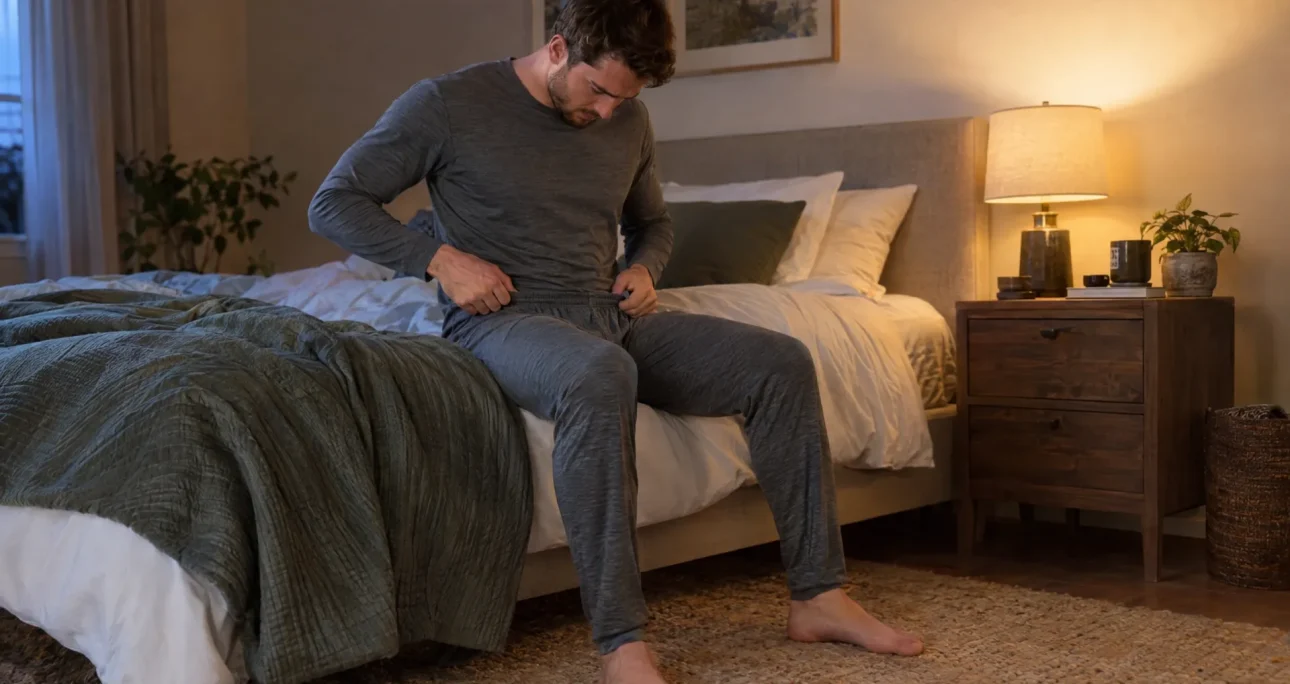
Soft fabric alone does not make comfortable merino wool pajamas. A waistband that presses into the abdomen, a seam beneath the hip or a top that twists after washing can undermine an otherwise good material choice. For apparel brands, successful sleepwear development means designing around what happens in bed, then confirming that the finished garment holds up to its care instructions.
This guide focuses on those decisions: choosing an appropriate knit, allowing movement without excess fabric, reducing pressure points and validating care before production.
Define the sleep setting before choosing a fabric
Start with the intended sleeping environment, not a general claim that wool works in every season. Bedroom temperature, bedding, personal preferences and whether customers wear the set outside the bedroom all affect the design brief.
A lightweight short set for someone sleeping under a substantial duvet needs different coverage from full-length pajamas intended for a cool room. Adding heavier fabric everywhere may solve one problem while creating another, particularly around the torso and waistband.
Merino fibers can absorb moisture vapor, which helps buffer changes in humidity near the skin. That does not mean every wool garment will feel cool, stay dry during heavy sweating or improve sleep. Knit structure, garment fit and the surrounding bedding also matter.
For merino wool pajamas, define the intended combination of room conditions, bedding and coverage before selecting fabric weight. A useful brief might describe a full-length set for a moderately heated bedroom, with a relaxed fit and no substantial cuffs. That gives the development team something specific to evaluate rather than a vague requirement for “year-round comfort.”
Select fabric for skin contact and overnight wear
Evaluate softness beyond the micron specification
Micron count describes fiber diameter and is useful when screening merino fabrics for next-to-skin use. Fine fibers generally bend more readily against the skin, but a micron specification is not a complete comfort guarantee.
Yarn construction, finishing, protruding fibers and the finished fabric surface all influence how a garment feels. Compare actual swatches rather than approving a fabric solely from its specification sheet. Include washed swatches because the initial finish may not represent the hand feel customers experience later.
For sensitive wearers, test the neckline, inner elbow and waistband area rather than relying only on a quick touch with the hand. Avoid claims such as “itch-free for everyone.” Individual reactions differ, and wool can still feel uncomfortable to some people.
The fundamentals of merino fabric selection and next-to-skin construction are useful here, but sleepwear also needs evaluation under prolonged contact and pressure from bedding.
Use fabric weight as a starting point
Fabric weight, usually expressed in grams per square meter (GSM), helps organize sampling. It does not measure warmth by itself. A compact jersey and a loftier knit of the same weight can behave differently.
Use the following ranges as illustrative development starting points, not universal prescriptions:
| Intended use | Starting weight to explore | Main concern to evaluate |
|---|---|---|
| Warm-room short set | 140 to 170 GSM | Opacity, fragility and fabric cling |
| Full-length set for moderate conditions | 170 to 210 GSM | Coverage, drape and comfort beneath bedding |
| Cooler-room sleepwear | 210 to 250 GSM | Bulk, heat buildup and drying time |
The best weight for merino wool pajamas is the one that provides suitable coverage without making the garment unnecessarily warm or bulky. Test opacity with the fabric stretched over knees and the seat, especially in pale colors.
Decide whether a blend solves a defined problem
A 100% merino composition can suit a wool-focused product, but it should not replace performance testing. Lightweight fabrics may need particular attention to abrasion, holes and shape retention.
Blends offer different trade-offs. Nylon can support durability, while elastane can improve stretch recovery. Cellulosic fibers can change drape, surface feel and moisture behavior. None of these additions automatically guarantees a better garment.
Ask the supplier what the blend is intended to improve, then verify that improvement in the actual fabric. A soft, fluid knit may feel appealing in a swatch yet grow noticeably at the knees after wear. Another may recover well but feel too close-fitting for the target customer.
When developing merino wool pajamas, choose the composition around a measurable need, such as seat durability or waistband recovery, rather than adding fibers simply because they are common in another apparel category.
How to fit merino wool pajamas for movement in bed
Check fit while lying down, not just standing
Sleepwear fit should accommodate bent knees, curled sleeping positions and rolling from one side to the other. A standing fitting cannot reveal every source of tension or discomfort.
Have fit testers sit, recline, lie on their sides and raise their arms. Observe whether the shoulder pulls, the crotch binds or the back waistband drops. Check whether the shirt hem rides up and whether the sleeves twist as the wearer moves.
Relaxed ease is useful, but excessive fabric can gather beneath the body or bunch inside bedding. The aim is controlled room for movement, not simply a larger version of a fitted base layer.
Fit decisions for merino wool pajamas should also account for washed dimensions. If the knit changes length or width during laundering, the original sample may give a misleading impression of sleeve coverage, rise and leg shape.
Design the waistband and openings carefully
The waistband deserves its own comfort assessment. Evaluate elastic width, tension and recovery with the wearer sitting and curled on their side. A narrow, firm elastic can create concentrated pressure even when the waist measurement appears correct.
If the design includes a drawcord, assess the knot or adjustment hardware beneath bedding. Decorative components that work well for loungewear may be unnecessary in a sleep-focused garment.
At the neckline, allow easy dressing without introducing an opening that slips off the shoulder. Cuffs can keep sleeves and legs in place, but tight ribbing may feel restrictive. Test cuff pressure after laundering as well as before it.
Reduce seam bulk where the body meets the mattress
Seam placement matters most where the sleeper's weight presses fabric against the bed. Side seams, seat seams and waistband joins should be evaluated in actual sleeping positions.
Flat seams are not automatically the most comfortable option. A broad or firm flatlock seam can still feel noticeable against the skin. Compare suitable seam constructions using the chosen fabric, thread and stitch settings, then assess bulk, stretch and surface feel.
For merino wool pajamas, inspect the inside of the garment as closely as the outside. Rough thread ends, bulky intersections and stiff labels can create discomfort that is easy to miss during a visual quality check.
Keep pockets purposeful. A rear pocket can add an extra fabric layer beneath the body, while a side-pocket bag may bunch at the hip. If pockets are part of the brief, test their placement while reclining and after washing.
Labels also need care. A printed label removes a sewn-in edge, but its ink may affect hand feel or durability. A sewn label should have an appropriate location and soft construction. Neither option should be approved without testing.
Validate laundering before approving production
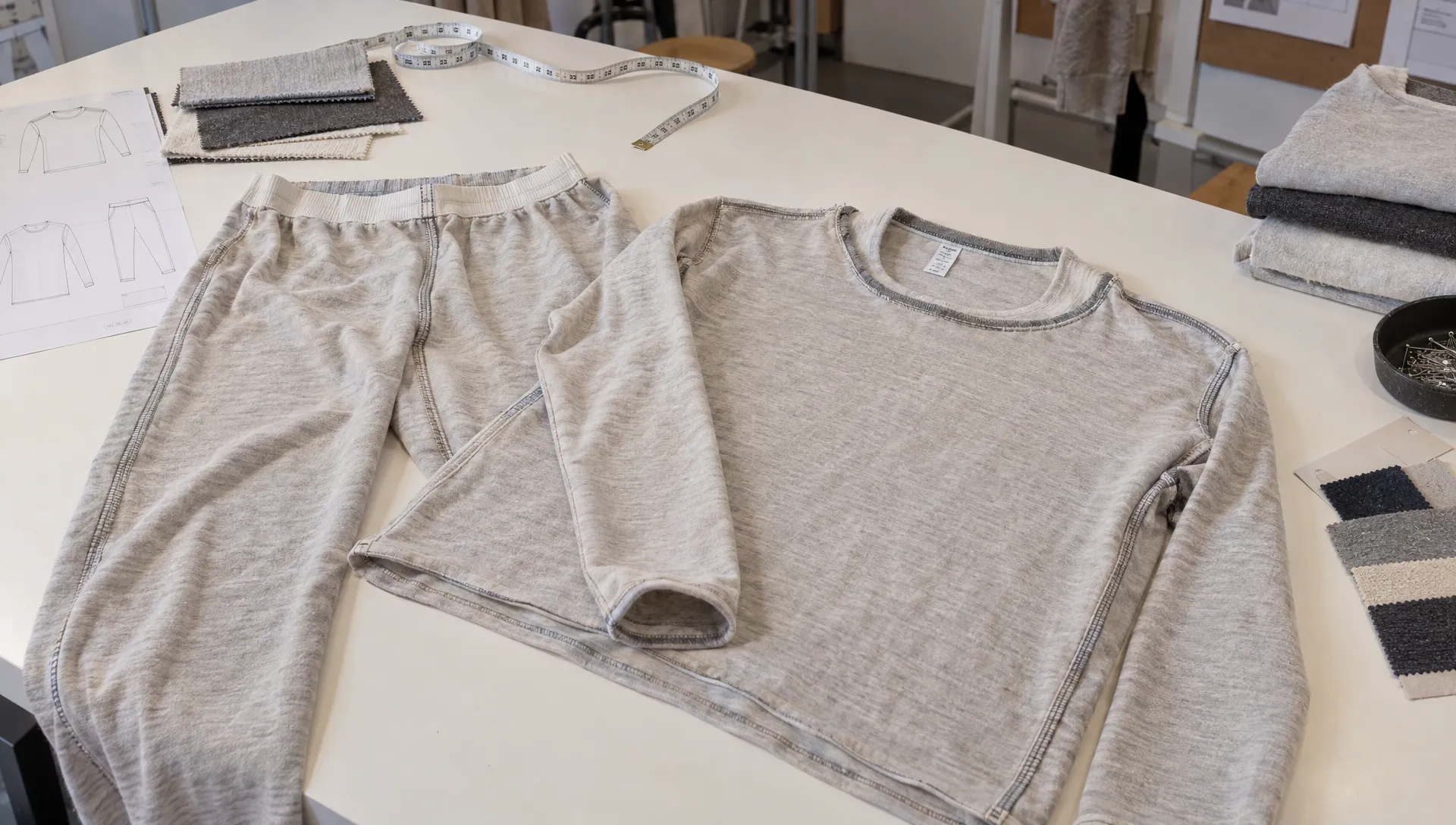
Measure the complete garment through repeated care cycles
Do not establish wash instructions from fiber composition alone. Machine washability depends on the fabric, its processing and the complete garment construction, including trims and finishes.
Set a repeatable laundering protocol based on the proposed care instructions. Record water temperature, cycle, detergent and drying method. Measure samples before and after multiple cycles rather than treating one successful wash as proof of long-term stability.
Key measurement points include body length, chest width, sleeve length, waist, rise and inseam. Record twisting, seam puckering and changes in surface appearance as well.
Laundering tests for merino wool pajamas should also include another fit assessment. A garment can remain within dimensional tolerances yet feel different because the waistband has tightened, the neckline has distorted or the fabric has lost its original softness.
Agree on acceptance criteria before testing. A blanket shrinkage allowance may not suit every component: a small length change can matter more in sleeves than in a deliberately roomy body. Use measured results to adjust the pattern, fabric choice or care method before bulk cutting.
Separate pilling, abrasion and shape recovery
These issues require different checks. Pilling concerns surface fiber entanglement, abrasion concerns wear from friction and recovery concerns whether stretched areas return toward their original shape.
Evaluate likely contact zones, including the seat, inner thighs and elbows. Examine knees after wear and after laundering. Some temporary relaxation may be acceptable in a softly draped garment, but persistent bagging can conflict with the intended appearance.
Keep test conditions consistent when comparing fabrics. One sample worn overnight and another briefly tried on will not produce a useful comparison. Document the observations so approval is based on more than a general impression of quality.
Write care instructions customers can follow
Care guidance for merino wool pajamas should be specific enough to protect the garment and simple enough for routine use. The Woolmark wool care guidance provides useful background, but the finished product's validated instructions should determine what appears on its label.
If testing supports machine washing, specify the appropriate cycle and temperature. Do not use “machine washable” as shorthand for unrestricted washing. If hand washing is required, explain gentle handling and the drying method.
Recommend a detergent suitable for wool and avoid bleach. Specify whether the garment should be reshaped and dried flat, and allow tumble drying only when that method has been validated. Do not assume that a washable fabric makes every trim or garment construction suitable for the same treatment.
Customers may choose to air garments between wears, but odor resistance does not eliminate washing needs. Avoid fixed promises about how many nights a set can be worn without laundering.
Keep the sewn-in label, packaging and online product instructions consistent. Contradictory guidance creates unnecessary risk for both the customer and the brand.
Build a production brief around verified decisions
A useful technical package captures the approved fabric and construction rather than leaving important comfort decisions to interpretation. Include the composition, knit structure, weight, color standards, measurement chart and seam specifications.
Before approving merino wool pajamas for production, confirm that the tested sample represents the intended bulk fabric and trims. Changes to yarn, finishing, elastic or thread can affect comfort and care performance, even when the garment looks similar.
A practical approval checklist should cover:
- Fabric: Approved reference swatch, composition, weight and documented test results.
- Fit: Movement checks, size grading and measurements before and after laundering.
- Construction: Seam placement, stitch settings, waistband tension and label location.
- Care: Validated washing and drying instructions for the finished garment.
- Quality control: Agreed tolerances and checks for bulk production.
If the range includes children, address compliance before finalizing the design. In the United States, CPSC children's sleepwear guidance explains requirements that depend on factors including garment category, size and fit. A relaxed adult pattern should not simply be scaled down into a children's sleepwear product without a separate compliance review.
Frequently asked questions
Are merino wool pajamas suitable for warm sleepers? They can be, particularly in lighter fabrics with appropriate coverage and a relaxed fit. Bedroom conditions and bedding still matter. Wool content alone does not guarantee that a wearer will feel cool.
Can merino sleepwear be machine washed? Some garments can. Follow the finished garment's care label rather than assuming all merino fabrics tolerate the same cycle, detergent or drying method.
Is 100% merino better than a blend? Not in every application. Pure merino may suit the brand's material goals, while a blend may address durability, recovery or drape. Compare actual fabric and garment test results before choosing.
How can a brand reduce complaints about itching? Screen fiber specifications, evaluate washed fabric and conduct wear trials with representative users. Also inspect seams, labels and elastic, since irritation may come from construction rather than the wool itself.
Discuss your sleepwear development brief
Arcus Apparel Group offers custom apparel development, material sourcing, pattern development and small-batch manufacturing. To explore a sleepwear project, discuss your requirements with Arcus Apparel Group.
Bring a defined customer profile, intended sleep setting, preferred composition and care expectations. Those details provide a stronger starting point for assessing materials, developing samples and planning production than a request for soft wool pajamas alone.



