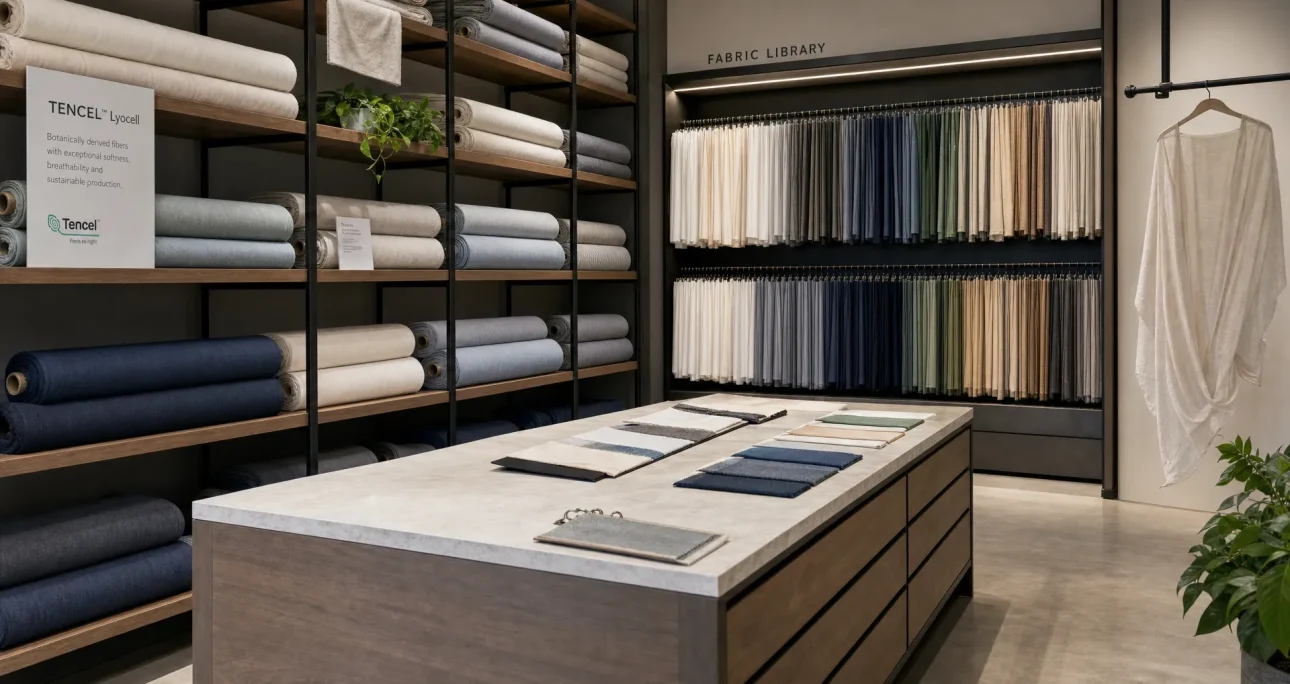
For apparel brands, TENCEL Lyocell fabric can be a smart way to build softness, drape and comfort into a collection without relying on conventional rayon or cotton alone. It works especially well when the garment needs a premium hand feel, a clean sustainability story and enough versatility for knits, wovens, loungewear, dresses, shirting or blended denim.
The sourcing side is where brands need to slow down. TENCEL is not just a nicer word for lyocell, and lyocell itself is not a finished fabric construction. A beautiful swatch can still create problems in bulk production if the fiber content, mill documentation, shrinkage, colorfastness or finishing process is unclear.
This guide focuses on what product teams, startup brands and growing labels should know before adding TENCEL Lyocell to a line: what it is, why it performs well, where to use it and how to source it with fewer surprises.
What Is TENCEL Lyocell Fabric?
TENCEL™ is a trademarked fiber brand owned by Lenzing AG. Lyocell is the generic fiber category. So, technically, “TENCEL Lyocell fabric” means a textile made with TENCEL branded lyocell fibers, either alone or blended with other fibers.
That distinction matters for product claims, supplier verification and customer-facing language. Not every lyocell fabric is TENCEL Lyocell. If a mill or supplier uses the TENCEL name, the fiber should be traceable to Lenzing and supported by documentation.
TENCEL Lyocell is made from wood-based cellulose. Lenzing describes its TENCEL Lyocell fibers as being produced through a solvent-spinning process where process water is recycled and solvent is reused at a recovery rate of more than 99.8 percent. That closed-loop manufacturing story is one reason the fiber is popular with brands looking to improve their material mix.
If you want a broader foundation on the generic fiber category, Arcus also has a deeper guide to lyocell fabric benefits, uses and care. Here, the focus is more practical: how to evaluate TENCEL Lyocell as a branded material for apparel development and sourcing.
TENCEL Lyocell vs Generic Lyocell
The finished fabric can look and feel similar, but the sourcing implications are different. TENCEL offers brand recognition, traceability advantages and clearer marketing value when the supply chain is documented correctly. Generic lyocell may still perform well, but it should not be labeled or marketed as TENCEL unless it uses verified TENCEL fibers.
| Factor | TENCEL Lyocell | Generic lyocell | Why it matters for brands |
|---|---|---|---|
| Fiber identity | Branded lyocell from Lenzing | Lyocell from other producers | TENCEL claims require verification |
| Marketing value | Recognized by many sustainability-aware shoppers | Less consumer recognition | Can support premium positioning |
| Documentation | Should be supported by supplier proof and fiber traceability | Documentation varies by supplier | Reduces claim risk and sourcing confusion |
| Performance | Depends on fiber, yarn, construction and finishing | Also depends on yarn, construction and finishing | The brand name does not replace testing |
| Cost | Often priced at a premium | May be lower depending on source | Affects margin, MOQ and retail price planning |
The key takeaway is simple: TENCEL can strengthen your material story, but the fabric still needs to pass the same development discipline as any other textile.
Benefits of TENCEL Lyocell Fabric for Apparel
Soft hand feel without a heavy finish
TENCEL Lyocell is known for a smooth, soft touch. This comes partly from the fiber structure, but the final hand feel also depends on yarn count, knit or weave, finishing and garment wash. A TENCEL jersey can feel fluid and cool, while a TENCEL twill can feel smoother and more refined than a comparable cotton twill.
For brands, that softness is useful because it can create a premium first impression at try-on. In ecommerce, where customers cannot touch the garment before purchase, this matters for repeat purchase and reviews.
Fluid drape for elevated silhouettes
TENCEL Lyocell tends to drape well, which makes it a strong candidate for wide-leg pants, dresses, blouses, skirts, camp shirts and relaxed tops. It can give garments movement without making them feel flimsy.
This is one reason many brands compare it with viscose. Both can offer softness and drape, but lyocell usually has better wet strength than conventional viscose. If your team is comparing regenerated cellulosics, Arcus has a helpful overview of viscose fabric pros, cons and uses that can support material decisions.
Moisture management and everyday comfort
TENCEL Lyocell absorbs moisture well, which supports comfort in close-to-skin garments. It is not a replacement for technical polyester in every activewear use case, but it can work well in lifestyle apparel, travel pieces, underwear, sleepwear and breathable basics.
Moisture behavior also helps reduce the clammy feel some synthetic garments can have. For customers who want comfort without a fully synthetic hand, TENCEL Lyocell blends can be a strong option.
Strength compared with some rayon alternatives
Lyocell is generally valued for better strength and durability than conventional viscose, especially when wet. That does not mean every TENCEL Lyocell fabric is rugged. Lightweight jerseys can still pill, snag or distort if the yarn and finishing are not right.
From a development standpoint, the benefit is that TENCEL Lyocell gives designers room to create soft garments that can still hold up when the fabric is properly specified and tested.
A clearer sustainability narrative, when documented
TENCEL Lyocell can support sustainability-minded collections because it is made from wood-based cellulose and associated with a closed-loop solvent process. It can also be sourced with certifications and documentation that help brands substantiate claims.
Still, a responsible material story needs more than a fiber name. Your brand should verify fiber origin, fabric processing, dyeing, finishing, certifications and the actual language used on product pages or hangtags. Claims like “eco-friendly” or “sustainable” are too broad unless you can explain and support them.
Best Uses for TENCEL Lyocell Fabric
TENCEL Lyocell is not limited to one aesthetic. It can be made into jersey, rib, fleece blends, poplin, twill, denim blends, satin, challis and other constructions. The right use depends on fabric weight, blend ratio, surface texture and garment purpose.
| Apparel category | Why TENCEL Lyocell works | Development watchout |
|---|---|---|
| T-shirts and tanks | Soft touch, breathable feel and good drape | Test recovery if using stretch blends |
| Loungewear and sleepwear | Smooth against skin and comfortable for long wear | Confirm shrinkage after laundering |
| Dresses and skirts | Fluid movement and elevated hand feel | Check opacity and seam strength |
| Blouses and shirts | Refined surface and good color depth | Manage wrinkling expectations |
| Wide-leg pants | Drape with a polished look | Test abrasion, bagging and seam slippage |
| Underwear and base layers | Close-to-skin softness and moisture absorption | Confirm stretch recovery and care label accuracy |
| Denim and chambray blends | Softer hand and improved drape versus rigid cotton alone | Validate wash effects and shade consistency |
For activewear, TENCEL Lyocell can be useful in studio, athleisure and recovery pieces, especially when blended with elastane or other fibers. For high-sweat performance garments, polyester or nylon blends may still be more appropriate, depending on dry time and durability targets.
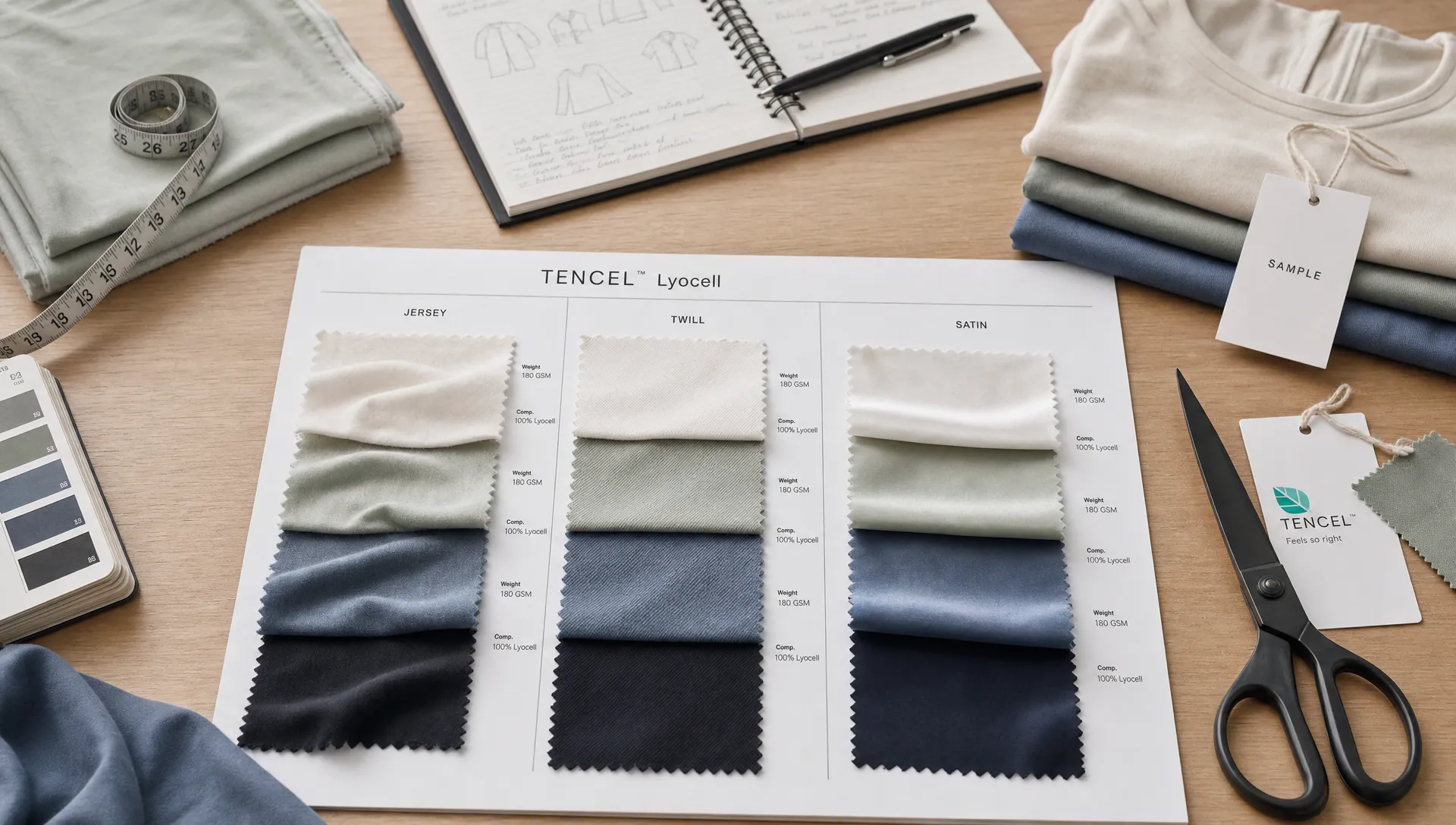
How to Source TENCEL Lyocell Fabric More Effectively
Good sourcing starts before you request swatches. If a supplier only hears “TENCEL fabric,” they may send anything from a lightweight jersey to a woven challis. The better approach is to define the garment outcome, then translate that into a fabric brief.
Build the fabric brief around the garment
A fabric brief should help the supplier understand what the garment needs to do. Include the intended product category, target customer, season, retail price range, desired hand feel, stretch requirements, care expectations and target color palette.
For example, “women’s relaxed travel pant with fluid drape, machine-washable care, minimal transparency and strong seam performance” is more useful than “TENCEL woven fabric.” It gives the sourcing partner enough context to recommend construction, weight and blend options.
| Specification item | What to request | Why it matters |
|---|---|---|
| Fiber content | Exact percentages, such as TENCEL Lyocell, cotton, elastane or polyester | Prevents confusion between branded and generic fibers |
| Fabric construction | Jersey, rib, twill, poplin, satin, fleece or denim blend | Determines drape, durability and sewing behavior |
| Weight | GSM or ounces per square yard | Affects opacity, cost, hand feel and seasonality |
| Width | Cuttable width, not only total width | Impacts consumption and costing |
| Finish | Enzyme wash, sand wash, peach finish, anti-pilling or other treatments | Changes hand feel, shrinkage and appearance |
| Color method | Yarn dye, piece dye, garment dye or print method | Affects lead time, shade control and MOQ |
| Test results | Shrinkage, pilling, colorfastness, seam slippage and dimensional stability | Reduces production and customer return risk |
| Documentation | Fiber origin, certificates and supplier declarations | Supports accurate marketing claims |
Verify the TENCEL claim early
If your brand plans to use the TENCEL name in product copy, hangtags or wholesale line sheets, verification should happen before sampling moves too far. Ask your supplier for proof that the fiber is TENCEL branded lyocell from Lenzing. Also confirm whether the finished fabric is eligible for the claims you want to make.
Useful documents may include supplier declarations, transaction documents, fiber certificates, testing reports and any certification tied to the fabric or processing facility. The exact documents will depend on the supply chain, but vague answers should be treated as a warning sign.
Also watch for language like “Tencel-like,” “Tencel feel” or “Tencel type.” Those phrases often mean the fabric is not actually made with TENCEL branded fiber. They may describe hand feel, not fiber content.
Test before committing to bulk production
TENCEL Lyocell fabric can perform very well, but testing is still necessary. The main risks vary by construction. A lightweight knit may need extra attention to torque, pilling and recovery. A drapey woven may need seam slippage testing. A garment-dyed style may need tighter shrinkage and shade controls.
At a minimum, request testing for shrinkage, colorfastness to washing, colorfastness to rubbing, pilling, spirality for knits and seam performance for wovens. If the garment is close to skin, consider whether OEKO-TEX Standard 100 or similar documentation is relevant to your market and customer expectations.
Think through printing and decoration
TENCEL Lyocell can be printed, but the best method depends on the fabric and artwork. Reactive dyeing and certain digital or screen-printing methods may be appropriate, depending on mill capabilities. If your design relies on dye sublimation, raise that early because sublimation typically performs best on polyester-rich fabrics, not pure lyocell.
This is especially important for brands developing performance pieces, uniforms or graphic-heavy products. Choosing the art technique after the base fabric can limit options and increase sampling rounds.
Consider blends for better performance balance
Pure TENCEL Lyocell can be beautiful, but blends are often more commercial. Cotton can add body and familiarity. Elastane can add stretch. Linen can create texture. Polyester or nylon can improve certain durability or dry-time characteristics, though it changes the sustainability and hand-feel story.
Blending is not a compromise by default. It is a design tool. The right blend should match the product promise, not just a trend.
Common Sourcing Mistakes to Avoid
Many development issues come from assuming the fiber name guarantees the final result. It does not. Two TENCEL Lyocell jerseys can behave differently if they use different yarns, gauges, finishes or dye processes.
Watch for these red flags when sourcing:
- The supplier cannot confirm whether the fiber is branded TENCEL or generic lyocell.
- The swatch has no fabric content breakdown, GSM or construction details.
- The price looks unusually low compared with other TENCEL Lyocell options.
- The supplier offers sustainability claims without documentation.
- Lab dips, bulk fabric and salesman samples differ noticeably in hand feel or shade.
- Shrinkage testing is delayed until after purchase order placement.
The best way to avoid these issues is to align sourcing, design, technical development and production before fabric approval. That may sound slower, but it usually saves time once sampling and bulk production begin.
Cost, MOQ and Production Planning
TENCEL Lyocell often costs more than conventional viscose and some cotton fabrics, although final pricing depends on fiber content, yarn, construction, dyeing, finishing, mill location and order volume. Branded fibers, custom colors and specialty finishes can increase cost or minimums.
For early-stage brands, stock fabrics can be a practical starting point. They may offer lower risk, faster sampling and smaller commitments than fully custom-developed textiles. The tradeoff is less control over color, construction and exclusivity.
For scaling brands, custom fabric development may make sense when the material becomes part of the brand identity. At that point, it is worth investing in stronger specifications, repeatable testing and reliable supplier relationships.
Small batch production can also help validate demand before committing to larger fabric orders. If you are building a new collection, it may be better to test one or two TENCEL Lyocell styles in a focused release than to build an entire line around a material your customer has not responded to yet.
How to Decide if TENCEL Lyocell Fits Your Brand
TENCEL Lyocell is a strong candidate if your brand values softness, drape, comfort and a more considered material story. It is especially useful for premium basics, elevated casualwear, travel apparel, sleepwear, underwear, resortwear and relaxed tailoring.
It may not be the best first choice if your main priorities are very low cost, high-abrasion utility, fast-drying athletic performance or stiff structure. In those cases, TENCEL Lyocell may still work as part of a blend, but the fabric needs to be engineered around the garment.
A practical decision framework is to ask three questions: Does the customer benefit from the feel? Can the garment margin support the material? Can the supply chain prove the claim? If the answer is yes to all three, TENCEL Lyocell is worth sampling.
Frequently Asked Questions
Is TENCEL Lyocell the same as lyocell? No. Lyocell is the generic fiber category, while TENCEL is a branded lyocell fiber from Lenzing. A fabric should only be marketed as TENCEL Lyocell if the fiber is verified as TENCEL branded fiber.
Does TENCEL Lyocell fabric shrink? It can shrink depending on the construction, finishing and laundering method. Brands should request shrinkage testing before bulk production and confirm care instructions through garment testing.
Is TENCEL Lyocell fabric sustainable? It can support a more responsible material strategy because it is wood-based and associated with a closed-loop production process. However, sustainability claims should be backed by sourcing documents, processing information and accurate product language.
Is TENCEL Lyocell good for summer clothing? Yes, it can be a strong option for warm-weather apparel because it feels smooth, drapes well and manages moisture comfortably. Fabric weight and construction still matter, so a lightweight woven or jersey will feel different from a heavier twill.
Can TENCEL Lyocell be used for activewear? It can work for athleisure, studio wear and lifestyle performance pieces, especially in blends. For intense athletic use, test dry time, recovery, abrasion and colorfastness carefully before production.
How do I verify that a fabric is really TENCEL Lyocell? Ask the supplier for documentation showing fiber origin, branded fiber content and any relevant certificates. Avoid relying only on swatch labels or verbal claims, especially if you plan to use the TENCEL name in marketing.
Need Help Developing TENCEL Lyocell Apparel?
Choosing TENCEL Lyocell fabric is only one part of building a successful garment. The bigger challenge is turning that material choice into the right specification, sample, fit, finish and production plan.
Arcus Apparel Group supports apparel brands with custom apparel development, material sourcing, pattern development, small batch manufacturing, production management and quality control. If you are exploring TENCEL Lyocell for a new collection, Arcus can help you evaluate fabric options and move from concept to production with a clearer process.



