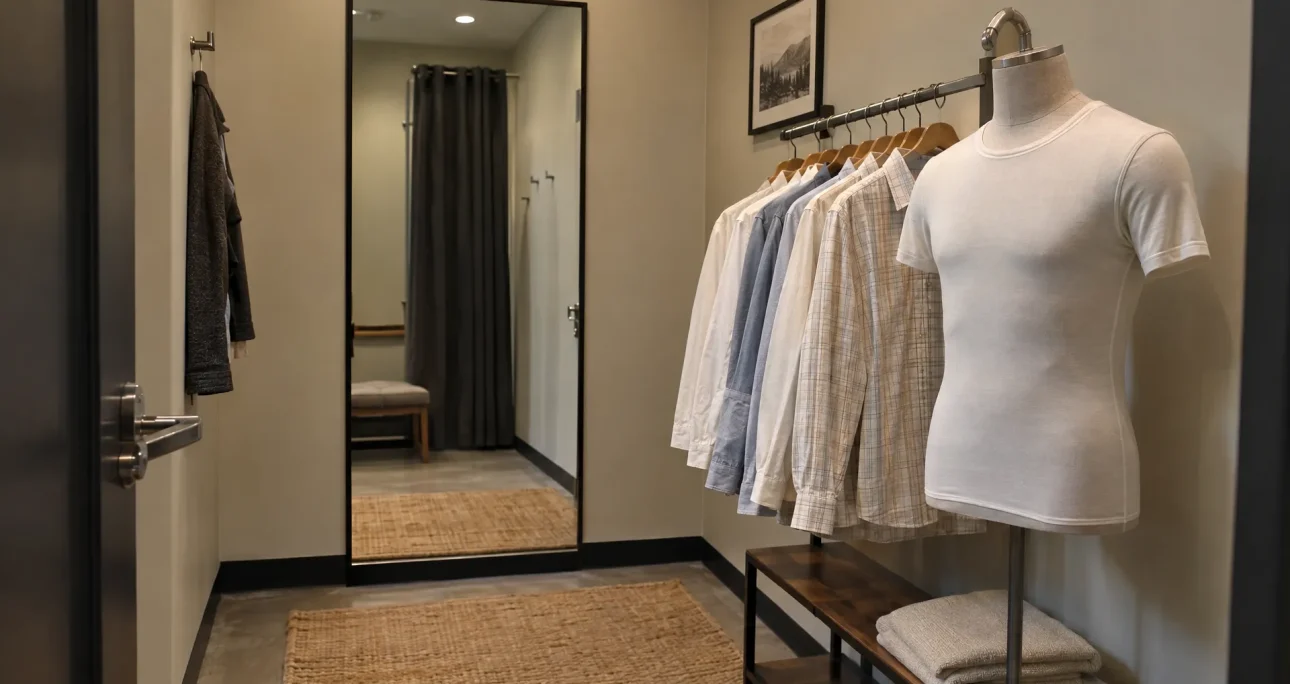
A merino wool undershirt should feel comfortable against the skin, stay covered during movement and disappear beneath the clothing worn over it. Those requirements can conflict: a lighter knit may reduce bulk but become more transparent when stretched, while a deeper neckline may stay hidden but lose shape if its binding is poorly engineered.
For apparel brands, the solution is to specify the finished garment’s behavior, not just its fiber content. This guide focuses on the details that determine everyday comfort and coverage, from neckline visibility and tuck length to practical sample approval tests.
Define the wear conditions first
An undershirt for office wear has a different job from a hiking base layer. Under a fitted dress shirt, discretion and low bulk matter. Beneath workwear, secure coverage through reaching and bending may take priority. A garment intended to be worn on its own needs a separate opacity requirement.
Start with the outer garments customers will actually wear. Record their neckline shapes, sleeve lengths and typical fabric transparency. Then identify whether the undershirt will usually be tucked in or worn untucked.
The next decision is fit. A close-fitting style can reduce bunching, but excessive tension across the chest or abdomen may reveal the knit structure and increase pressure at seams. A relaxed style needs enough room to move without folding beneath the outer layer.
Write a use statement before choosing fabric. For example: “A next-to-skin layer worn beneath light-colored woven shirts, with a concealed neckline and a hem that remains tucked during seated work.” This gives every later decision a purpose.
For a merino wool undershirt, comfort and coverage should be defined together because changing the fit can change both.
Specify opacity as a worn-garment requirement
Opacity is not determined by fabric weight alone. Yarn size, knit construction, color, finishing and the amount of stretch on the body all affect how much the garment reveals.
A swatch viewed flat on a desk cannot show what happens across a wearer’s chest or shoulder blades. Assess the material at the extension expected in the finished garment, then check an actual sample on the intended fit model.
Separate two kinds of visibility
There are two different questions to answer: can someone see through the undershirt, and can someone see the undershirt through the outer shirt? A heavier fabric may improve the first while making the second worse through a more obvious neckline, sleeve edge or surface texture.
Color also matters. White is not automatically the least visible option beneath a white shirt. A shade closer to the wearer’s skin tone can reduce contrast, but one beige shade will not serve every customer equally. Test proposed colors on the wearer profiles your range is intended to serve.
Establish a repeatable review setup
Use the same lighting, outer garment and viewing distance when comparing samples. Check the front, back and side views, including areas stretched by movement. If perspiration is relevant to the intended use, include a controlled damp-fabric comparison.
Photographs can document changes, but camera exposure may hide or exaggerate transparency. Pair photographs with direct visual assessment and retain an approved garment as the reference for later production.
How should a merino wool undershirt fit?
The fit should follow the body closely enough to layer smoothly without creating persistent tension. Negative ease, meaning a garment smaller than the corresponding body measurement, is not a universal recipe. Its suitability depends on fabric stretch, recovery and the intended size range.
Set neckline depth against the outer garment
Measure front neck drop, back neck drop and opening width rather than relying on descriptions such as “deep V” or “low crew.” Check those measurements beneath representative outer shirts, both buttoned and at the intended open-collar position.
A neckline that is concealed while standing may become visible when the wearer leans forward. Binding tension matters too: a tight edge can pull the neckline upward, while a loose edge may gape or ripple after washing.
Verify sleeve coverage and tuck length in motion
Short sleeves should remain concealed beneath the intended outer sleeve without forming a bulky ridge. Check the sleeve opening on the upper arm as well as its length, especially when the fabric stretches across larger sizes.
For tucked styles, assess front and back body length during sitting, bending and overhead reaching. Extra length can help retention, but excessive fabric may bunch at the waistband. Record the amount of untucking you will accept during the movement sequence.
Grade these features deliberately. Neckline depth, sleeve length and body length do not necessarily need to increase at the same rate as chest width. Review more than the base size before approving the pattern.
Choose fabric for skin feel and recovery
Merino’s ability to absorb moisture vapor is useful in next-to-skin clothing, but it does not guarantee that every garment will feel dry during heavy sweating. Drying behavior depends on construction, blend, garment fit and conditions. Woolmark’s overview of wool fiber provides background on the material’s properties; the finished product still needs its own evaluation.
Fiber diameter is a useful sourcing parameter, not a complete softness specification. An average diameter around 17.5 to 19.5 microns can be a starting point for sampling fine next-to-skin merino, but individual sensitivity, the fiber-diameter distribution, yarn quality and finishing also influence perceived prickliness.
Likewise, approximately 120 to 170 GSM can be a starting sampling window for a lightweight merino wool undershirt, not a guaranteed comfort or opacity range. Compare actual materials rather than approving a weight on paper.
A blend may improve durability or recovery, depending on how it is engineered. Elastane content alone does not establish whether the garment will hold its shape. Check recovery after wear and laundering, especially at the neck, sleeve openings and hem.
For a broader review of knit structures, blends and seam options, the guide to merino wool undergarment fabrics and construction provides useful development context. Here, the priority is how those choices perform beneath another garment.
Keep construction discreet and comfortable
Low bulk matters at the shoulder, armhole, neckline and hem. A seam that feels acceptable in an unworn sample may become irritating when an outer shirt presses it against the skin or when a bag strap adds pressure.
Flatlock construction is one option, but it is not automatically the softest or least visible solution. Thread choice, stitch density and seam execution affect the result. A fine overlock seam may also work if its placement and finish suit the intended use.
Check neckline bindings and hems for ridges beneath light-colored clothing. Decorative stitching or a heavy binding can undermine an otherwise discreet design. Evaluate labels as well: a scratchy neck label can become the main comfort complaint even when the fabric performs well.
Printed labels also need testing. Confirm that the print remains legible and does not develop a rough surface after the specified care routine. Approve these details on a complete sample rather than on isolated trim submissions.
Turn comfort and coverage into approval tests
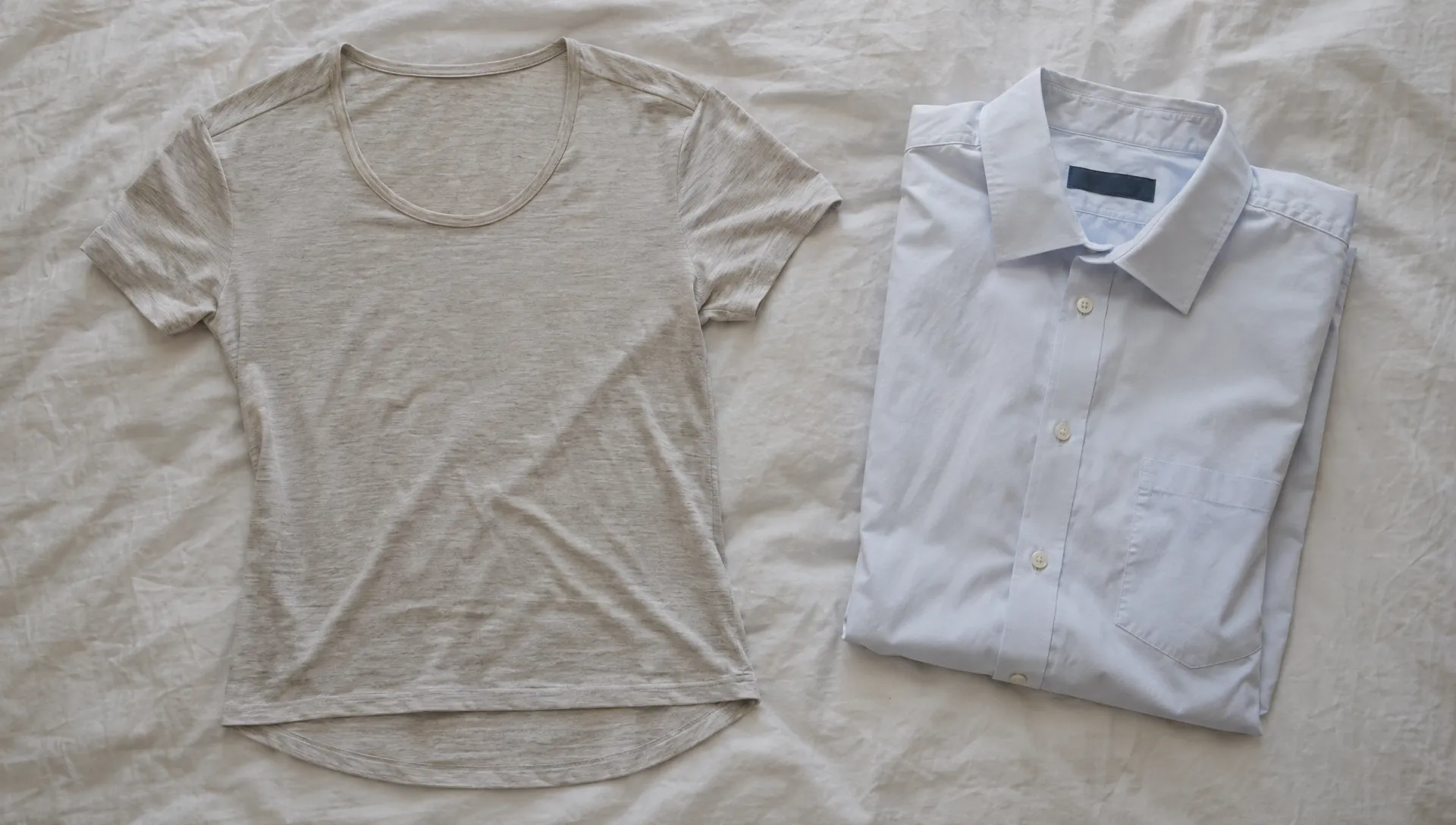
Sample approval should answer specific questions rather than rely on “feels good” or “looks fine.” Use the same test sequence for each revision so that changes can be compared fairly.
The following framework is a starting point for internal development, not a universal industry pass standard. Define acceptance criteria around the intended customer and use case.
| Requirement | Practical evaluation | What to record |
|---|---|---|
| Neckline concealment | Wear beneath the intended outer shirt while standing and leaning | Visible edge, gaping and binding distortion |
| Body coverage | Sit, bend and raise both arms with the garment tucked | Hem movement and areas exposed |
| Layering discretion | Inspect under representative light-colored clothing | Visible seams, sleeve edges and color contrast |
| Skin comfort | Wear through a representative activity period | Prickling, pressure and rubbing locations |
| Shape retention | Compare measurements before and after the agreed care sequence | Length, width and neckline changes |
| Surface durability | Inspect after wear and laundering | Pilling, abrasion and thinning |
Test the merino wool undershirt as a complete garment, because fabric results alone cannot reveal neckline movement, seam pressure or hem retention.
Include laundering before final approval
Follow the proposed care instructions during development. Evaluate dimensional change, twisting, binding recovery and surface appearance after repeated care cycles. The number of cycles should reflect the product’s intended use and the brand’s validation plan, not an arbitrary claim of durability.
For laboratory work, ISO 6330 provides domestic washing and drying procedures, while ISO 5077 addresses determination of dimensional change. Specify the relevant procedure and conditions with the laboratory so results are comparable.
Repeat the layering assessment after laundering. A neckline that stretches or a body that shortens can fail the original coverage requirement even if the fabric still feels soft.
Put the requirements into a production-ready specification
The tech pack should make the approved behavior reproducible. “Soft merino, close fit, good coverage” leaves too much open to interpretation and gives quality teams little basis for rejecting an unsuitable result.
Include the following information alongside the pattern and approved sample:
- Material specification: Fiber composition, agreed fiber-diameter information, fabric weight, construction and finish.
- Points of measure: Chest, body length, front and back neck drop, neckline width, sleeve length and sleeve opening, with tolerances.
- Construction details: Seam type, thread requirements, binding dimensions, hem finish and label placement.
- Coverage criteria: Intended outer garments, lighting conditions, movement sequence and acceptable visibility.
- Care and validation: Washing and drying conditions, review stages and agreed limits for dimensional change or distortion.
Tie comments to measurable issues. Instead of “neck feels wrong,” specify whether the edge is too tight, the opening is too narrow or the binding becomes wavy after washing.
An approved merino wool undershirt should serve as a reference alongside written requirements, not replace them. Confirm that pre-production samples use the intended bulk fabric, trims and processes, then check that production remains consistent with the approval.
If the garment is also intended to function as an exposed top, treat that as an additional use case. The guide to merino wool T-shirt weight, fit and performance covers considerations that extend beyond a concealed undershirt.
Frequently Asked Questions
What fabric weight gives enough coverage? There is no single GSM that guarantees coverage. Knit density, color, stretch and finishing all matter. Approve a worn sample under the intended outer clothing rather than choosing by weight alone.
Is 100% merino better than a blend? Not automatically. Pure merino and blends can both work. The appropriate choice depends on skin feel, durability, recovery and care requirements. Compare finished samples against the same approval criteria.
Should the neckline be a crew neck or a V-neck? Choose it around the outer garment. A crew neck may suit closed collars, while a V-neck can stay concealed beneath an open collar. Specify actual dimensions and assess visibility during movement.
Does a merino wool undershirt need to be fully opaque? Not always if it is designed only as a concealed layer. It still needs adequate coverage for the intended customer, but complete opacity becomes more important if it will also be worn alone.
Can customers skip washing because merino resists odor? No. Odor resistance does not make a garment self-cleaning. Provide clear care instructions and base performance claims on the actual fabric or garment rather than on fiber reputation alone.
Develop an undershirt around clear acceptance criteria
A strong development brief connects the wearer’s needs to fabric, pattern and construction decisions. Bring representative outer garments, a defined coverage target and a practical testing plan to the sampling process.
Arcus Apparel Group offers custom apparel development, material sourcing, pattern development and manufacturing with quality control throughout the process. Discuss your intended wearer, order needs and approval requirements to establish a development approach suited to your brand.



