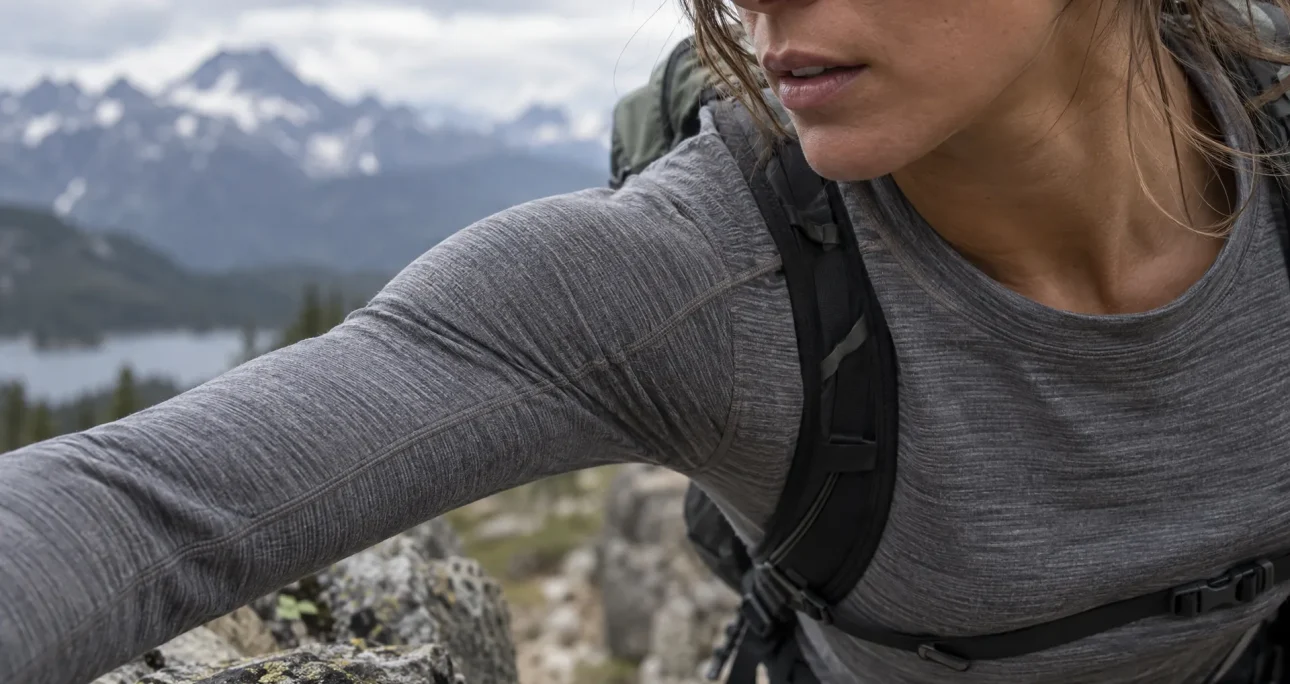
When a shopper searches for “merino base layer women's,” the fit questions go beyond choosing a size. Will the top stay tucked when she reaches overhead? Will the waistband remain comfortable when she sits? Can the fabric follow her movement without pulling across the bust or collecting behind the knees?
For apparel brands, these questions belong in the development brief, not just the final fitting. A base layer should sit close to the body without relying on excessive stretch to compensate for an unsuitable pattern. This guide focuses on the fit details to evaluate, the movement checks to run and the specifications to carry into production.
Merino base layer women's: define the fit target
“Next-to-skin” describes where a garment is worn. It does not automatically mean compression, tightness everywhere or the same amount of ease at every measurement.
Start by defining the intended wearer and activity. A top worn beneath ski clothing needs to work with those layers. A hiking base layer may need enough coverage to stay tucked beneath a pack belt. A garment intended for everyday winter wear must remain comfortable during long periods of sitting.
Write the fit target in observable terms: close through the torso, unrestricted across the upper back, stable at the hem and comfortable beneath the intended outer layers. Avoid relying on “athletic fit” alone, since different teams can interpret that phrase differently.
Fabric selection still matters, but it should support this fit target. Arcus Apparel Group’s broader guide to women’s merino wool base layer fit and fabric covers the material decisions that accompany pattern development.
Bust room and shoulder placement need separate checks
A women's merino base layer can feel tight across the chest even when its total circumference appears adequate. The issue may be how that circumference is distributed between the front and back panels.
Check the sample on a wearer whose measurements match the intended fit model. Look for pulling across the bust, a front hem that lifts relative to the back and shoulder seams that migrate forward. These signs can indicate insufficient front width or length, though fabric behavior and construction also need investigation.
Do not assume that increasing the entire chest circumference will solve the problem. That adjustment may add unwanted fabric at the back or underarm while leaving the front balance unresolved. Reassess front-to-back width distribution and the length needed to pass over the bust.
Assess the sleeve and armhole together
Ask the wearer to reach forward, cross her arms and lift both arms overhead. Notice whether the sleeve restricts movement, the neckline pulls or the whole top rises.
An armhole positioned too low can increase body lift during an overhead reach. A restrictive upper sleeve or incompatible sleeve shape can also create pulling. Diagnose the system rather than automatically enlarging the armhole.
For raglan styles, check the seam path across the shoulder and chest. Raglan construction does not guarantee unrestricted movement; its proportions still need to suit the wearer.
Torso length should be judged in motion
A hem that reaches the right point while standing may still expose the lower back during a forward bend. Conversely, extra length can gather beneath a waistband and create uncomfortable bulk.
For a women's merino base layer, specify front and back body lengths separately when the design requires different coverage. Record the measurement method too, including the starting point and whether the garment is measured relaxed.
Fit the top with its intended bottoms, not only on its own. Check the overlap while the wearer sits, bends and reaches. A dropped back hem can provide coverage, but it cannot fully correct a top that is catching at the hips or riding upward from the armholes.
Inspect the neck opening at the same time. It should allow dressing without excessive force and should not pull backward during movement. Evaluate cuffs both at rest and when pushed up the forearm, if that is part of the intended use.
Bottoms: rise, gusset and leg length work together
Check rise in seated and bent positions
Front rise, back rise and waistband height describe different parts of the fit. Changing one can affect coverage, pressure and crotch position elsewhere.
Have the wearer sit upright, lean forward and perform a controlled squat. Check whether the back waistband drops, the front waistband folds or the crotch seam pulls. Confirm that the sample has been positioned correctly before changing the pattern.
Waistband comfort also depends on its construction. Elastic width, stretch and application tension can affect pressure independently of the garment’s waist measurement. Record those specifications rather than treating elastic as a interchangeable component.
A women's merino base layer bottom should remain secure through movement without requiring the wearer to repeatedly pull it back into place.
Evaluate the gusset and knee area
A gusset adds a shaped panel at the crotch, but its presence alone does not establish a good fit. Its width, length and relationship to the surrounding panels determine how it behaves.
Look for concentrated seam tension, excess folds or a gusset that shifts during walking. Check inner-thigh comfort during a step-up and a squat. Adjustments should preserve both coverage and movement rather than simply adding fabric everywhere.
Leg length deserves an activity-specific check. For skiing, assess the lower leg with the actual sock and boot arrangement so hems and seams do not create unwanted bulk. The guide to choosing a merino wool base layer for skiing provides additional context for that layering system.
Set negative ease from fabric behavior, not habit
Negative ease means a garment measurement is smaller than the corresponding body measurement. It can help produce a close fit, but the appropriate amount depends on the fabric, garment zone and desired wearing experience.
For illustration, a 95 cm finished chest circumference on a 100 cm body represents 5% negative ease. That calculation is an example, not a recommended specification. Two fabrics with similar initial stretch can differ in the force needed to extend them and in how well they recover afterward.
Before setting negative ease for a women's merino base layer, assess stretch and recovery in the relevant fabric directions. Also check whether seams and hems can extend with the fabric. A comfortable panel can still become restrictive where the stitching limits movement.
Use consistent test conditions and record the results. When comparing samples, keep fabric, pattern and construction changes traceable. Otherwise, a better fit may be attributed to a pattern adjustment when a different fabric lot or sewing method caused the improvement.
Use a repeatable movement-based fitting protocol
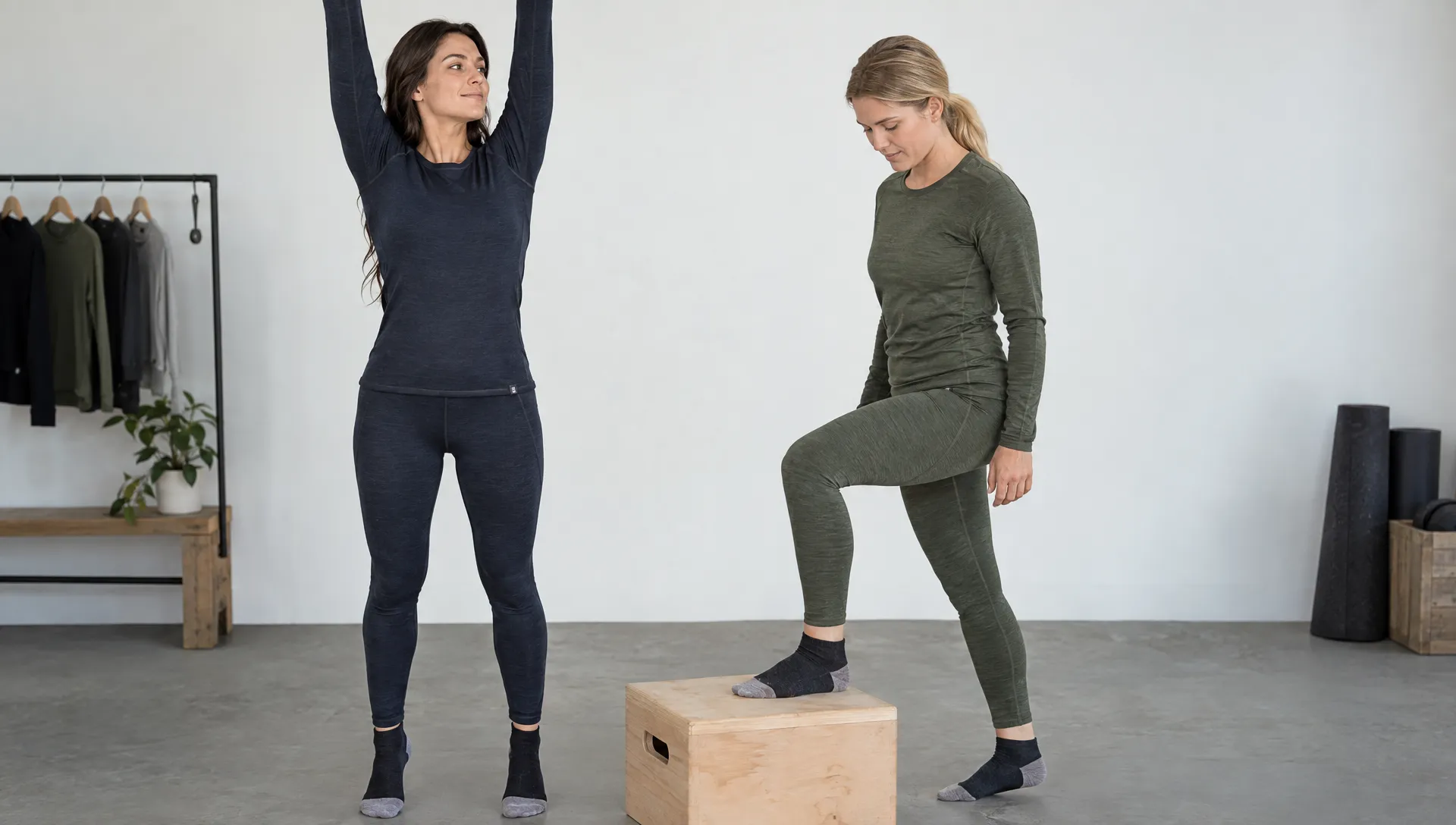
Run the same sequence on every sample
A consistent sequence makes it easier to compare sample rounds. Begin with a standing assessment, then check movements relevant to the intended activity. Keep the undergarments and accompanying layers consistent where possible.
A practical sequence includes:
- Standing check: Observe shoulder placement, front-to-back balance, waistband position and excess folds.
- Forward reach: Check upper-back room, sleeve restriction and neckline displacement.
- Overhead reach: Record hem movement and whether the top returns to position without adjustment.
- Seated bend: Assess lower-back coverage, waistband pressure and crotch tension.
- Squat or step-up: Check thigh movement, gusset behavior and seam comfort.
Ask the wearer to describe pressure and friction before suggesting an explanation. “The waistband presses when I lean forward” is more useful feedback than a general statement that the sample feels wrong.
Turn observations into targeted changes
For a women's merino base layer, fitting notes should connect the symptom to a proposed investigation, not jump straight to a universal correction.
| Fit observation | What to investigate | Follow-up check |
|---|---|---|
| Front hem sits higher than intended | Front body length and bust accommodation | Recheck front-to-back balance on the wearer |
| Entire top lifts during an overhead reach | Armhole position, sleeve shape and upper-sleeve room | Repeat the reach with intended outer layers |
| Back waistband drops when sitting | Back rise, seat shaping and waistband stability | Compare standing and seated coverage |
| Crotch feels restrictive during a step-up | Rise balance, gusset proportions and thigh room | Repeat the movement after a targeted adjustment |
| Knees or elbows remain bagged after wear | Fabric recovery and local garment ease | Compare relaxed measurements before and after wear |
Photograph the same views and record the sample version, fabric reference and wearer measurements. Change as few variables as practical between rounds. This makes the next fitting more informative and reduces the chance of losing a successful adjustment.
Grade for proportion, not just circumference
A good fit in the development size does not prove that the full size range works. Grading must address how chest, waist, hip, rise and length measurements change across the intended customer population.
The phrase “merino base layer women's” covers many body proportions. A single size can include wearers with different bust-to-waist relationships or torso lengths. Define the body measurements your range is intended to serve, then distinguish those from finished garment measurements.
Fit samples beyond the development size, particularly toward the range boundaries. Check whether added circumference has also created an unintended change in armhole depth, neck width or leg length.
Use the findings to refine grade rules. Do not assume that every dimension should increase by the same increment, and do not imply that one fit model represents all customers.
Recheck fit after the specified care process
Measure and fit samples before and after the laundering procedure intended for the care label. Check body length, sleeve length, rise, leg length and overall shape, not just chest or waist width.
The Woolmark wool-care guidance emphasizes following the garment’s care instructions. For development, that means testing the proposed care process rather than assuming all wool garments should receive the same treatment.
Carry approved measurement tolerances, seam details and material references into the production specification. A retained approval sample helps the team compare later garments against the fit that was actually signed off.
Frequently asked questions
How tight should a women’s merino base layer be? It should follow the body without uncomfortable pressure or restricted movement. Assess the intended activity, fabric behavior and layering system rather than using tightness alone as the standard.
Should customers size up for a fuller bust? Sizing up may add chest room, but it can also introduce excess at the shoulders, waist or sleeves. For brands, recurring feedback of this kind is a reason to review front-panel balance and the size chart.
Why does a base layer ride up? Possible causes include insufficient torso length, restriction at the hips or excess body lift from the sleeve and armhole system. Observe when it happens before choosing an adjustment.
Does adding stretch solve fit problems? No. Stretch can support movement, but it does not replace adequate body length, suitable rise or balanced pattern proportions. Recovery also matters if the garment needs to retain its shape after wear.
Turn fit findings into a production-ready brief
Before approving a women's merino base layer, document the body-size reference, finished measurements, movement checks, fabric behavior and post-care results. That gives development and production teams a shared definition of acceptable fit.
If your brand needs support translating those requirements into garments, Arcus Apparel Group offers custom apparel development, material sourcing, pattern development and manufacturing services. Bring your target wearer, use case and fit priorities to the discussion so the project starts with clear requirements.



