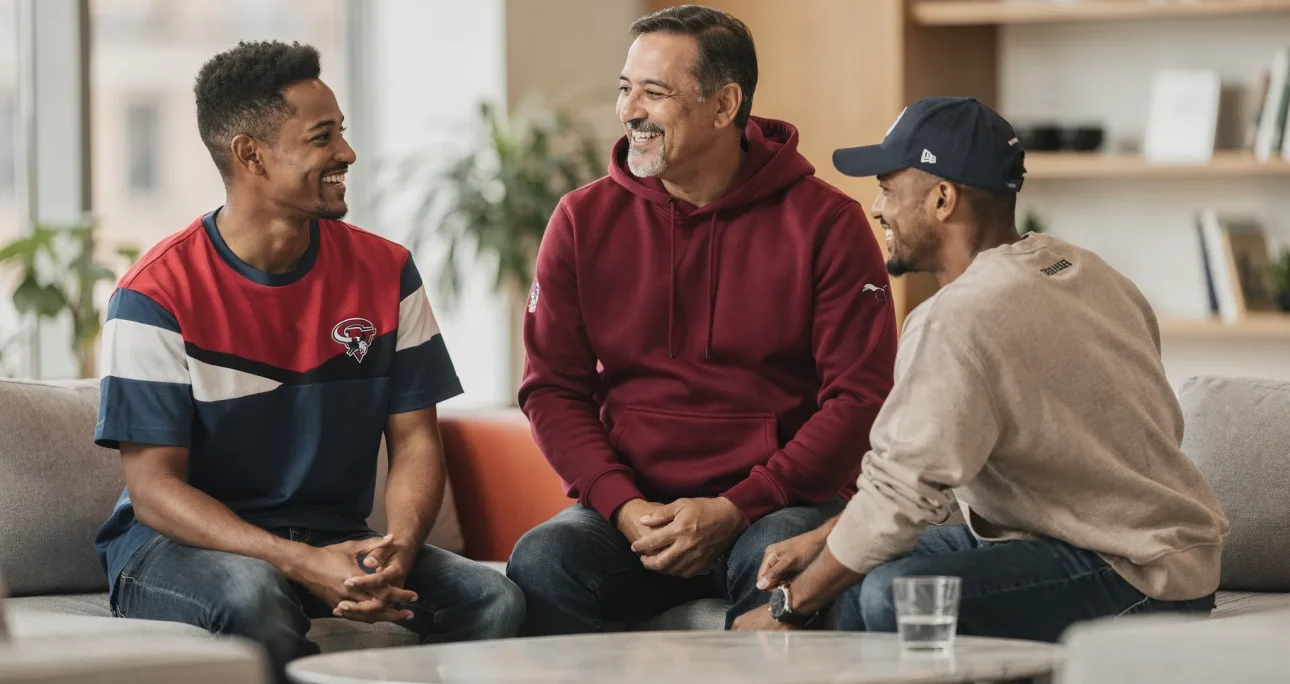
Fans don’t buy “merch,” they buy a piece of identity. The difference between team apparel that gets worn weekly and a shirt that sits in a drawer usually comes down to a few unglamorous decisions: silhouette, fabric hand feel, logo placement, and production details that signal quality.
If you’re designing team apparel for a school, league, club, brand community, or corporate team, this guide walks through how to create pieces fans actually want to live in, not just wear to one game.
Start with the real job your team apparel needs to do
Before you sketch a single graphic, define the primary wear moment. Team apparel is often expected to cover too many use cases at once, and that’s how you end up with designs that feel “official” but not wearable.
Common wear moments include:
- Game day (high energy, photos, bright team colors, big identity signals)
- Everyday casual (subtle branding, premium blanks, neutral options)
- Training and performance (moisture management, stretch, durability)
- Travel and events (layering pieces, consistent set dressing, elevated comfort)
A practical approach is to design a small “capsule” instead of one do-it-all item: a hero graphic piece for game day, and one or two quieter staples for daily wear.
Pick silhouettes that already win in streetwear
Fans wear what feels current. Even with a great logo, an outdated cut or flimsy fabric can make team apparel feel promotional.
In 2026, the safest “high-wear” silhouettes continue to be:
- Midweight to heavyweight tees (structured, not see-through)
- Premium fleece hoodies and crewnecks (the main driver of repeat wear)
- Relaxed-fit hats (low profile options alongside classic caps)
- Layering pieces (overshirts, lightweight coaches jackets, quarter-zips)
A quick spec guide for fan-favorite blanks
Use this table as a starting point when deciding what to make, and how to spec it for comfort and perceived value.
| Item | Best for | Common fabric direction | Design notes that increase wearability |
|---|---|---|---|
| Tee | Daily wear, giveaways, retail | Ring-spun cotton or cotton blends | Offer a standard fit and a relaxed option, keep the front graphic wearable |
| Hoodie | High perceived value, cold weather | Fleece (cotton/poly blends are common) | Avoid scratchy hand feel, use clean placements, consider tonal embroidery |
| Crewneck | Everyday, layering | Fleece | Often looks more “adult” and versatile than a hoodie |
| Performance tee | Training, summer events | Polyester or poly blends | Great for subtle logos and sponsor marks |
| Jersey-style top | Game day | Poly mesh or interlock | Keep it breathable, prioritize number readability |
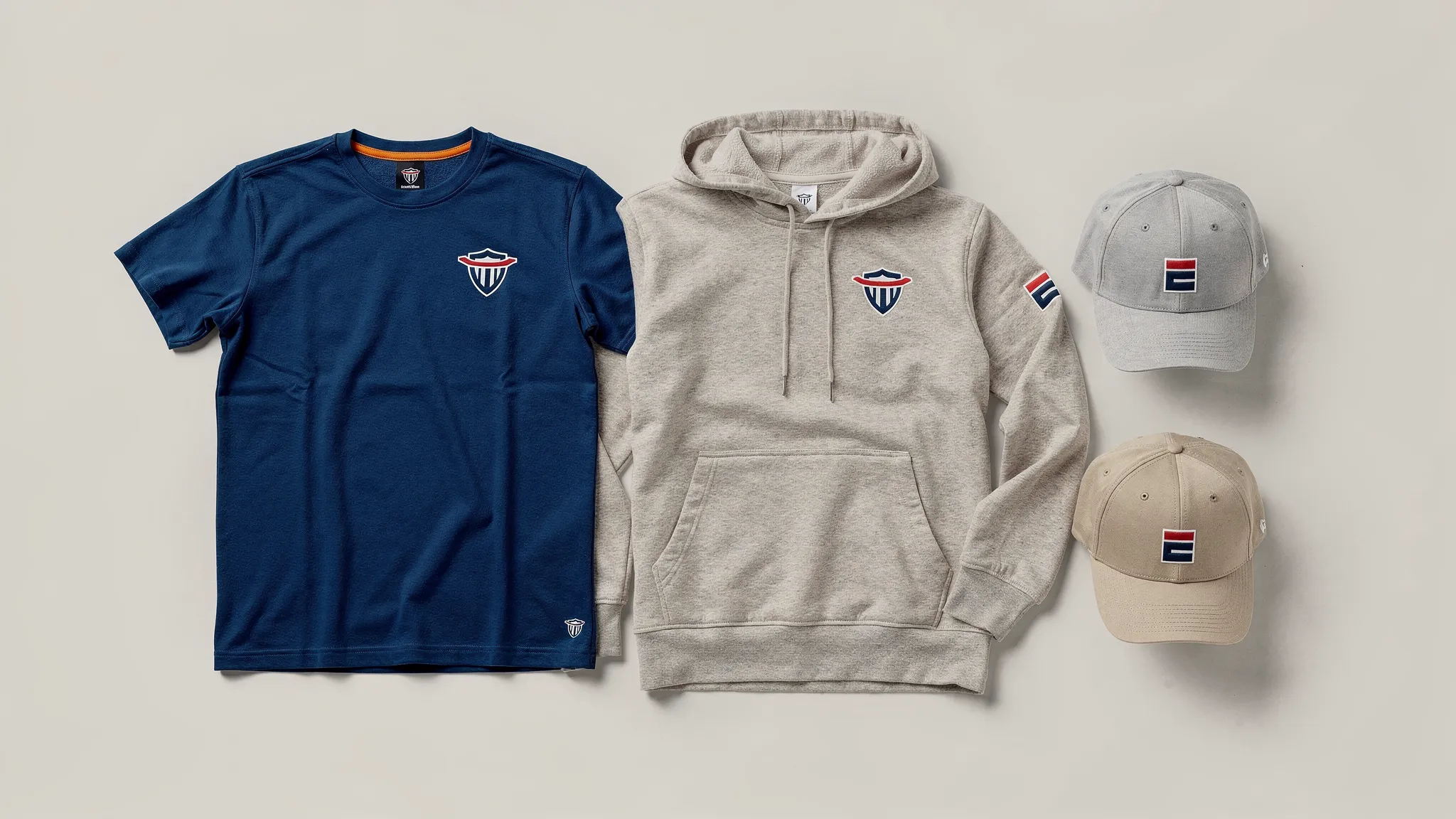
| Hat | Year-round | Cotton twill, performance poly | Don’t oversize the logo, embroidery usually reads premium |
Material decisions also affect decoration options. For example, if you want full-coverage graphics with maximum durability, polyester opens the door to dye sublimation.
Build a design system, not a one-off graphic
Fans re-wear pieces that look intentional and easy to style. That usually means creating a simple design system with consistent rules.
Use a clear logo hierarchy
A common mistake is treating every logo element as equally important. Instead, decide what plays each role:
- Primary mark: the symbol people recognize from across a room
- Secondary mark: a simplified version for small placements
- Wordmark: ideal for chest hits, sleeve prints, or subtle back neck placements
If you’ve also designed uniforms, keep in mind that fanwear and uniforms have different objectives. Uniforms are optimized for function and instant recognition on the field. Fanwear must win in everyday outfits. If you want a framework for the identity side of the equation, Arcus’ article on brand identity and uniform design principles is a useful reference, then adapt those principles toward lifestyle wear.
Make “team colors” wearable
True team colors are powerful, but they can be hard to style head-to-toe. A simple fix is to offer two color strategies:
- Core colors: the official brights for game day
- Lifestyle neutrals: black, heather gray, cream, navy, or washed tones with a smaller logo
This expands your audience from superfans to casual supporters who still want to rep the team.
Match your artwork to the right decoration method
Great design can fail in production if the decoration method is wrong for the fabric or the level of detail.
Here’s a practical comparison for the most common team apparel decoration options.
| Method | Best for | Strengths | Watch-outs |
|---|---|---|---|
| Screen printing | Tees, hoodies, bulk runs | Durable, cost-effective at volume | Too many colors can raise costs, gradients require expertise |
| Embroidery | Hats, polos, fleece | Premium look, great longevity | Fine detail can get lost, heavier hand feel |
| Heat transfer (vinyl or digital) | Names/numbers, short runs | Easy personalization, fast | Some transfers can crack or feel heavy over time |
| DTG (direct-to-garment) | High-color art on cotton | Great for complex art, small quantities | Durability varies by workflow, less ideal on some dark garments |
| Dye sublimation | Polyester-based apparel | Full-coverage prints, no “hand,” very durable | Requires polyester (or coated substrates) |
If your vision includes all-over patterns, photoreal graphics, or prints that can’t crack because the ink becomes part of the fabric, sublimation is worth considering. Arcus has a clear explainer on the benefits of sublimation for apparel and where it fits best.
Get fit and sizing right (this is where repeat wear comes from)
Fans stop wearing apparel that fits poorly, even if they love the team.
Decide on fit strategy upfront
Instead of trying to make one fit work for everyone, consider offering two intentional fits in your core items:
- Standard/unisex: clean, broadly accessible
- Relaxed or oversized: higher trend alignment, often preferred for hoodies and tees
Also decide early if you need youth sizing, women’s cuts, or a unisex range with a more inclusive size run. This impacts patterns, grading, and inventory planning.
Use samples to validate real-world comfort
A fit that looks good on a spec sheet can still fail in the shoulders, sleeve length, or waist rib. Sampling is where you catch these issues, and it’s especially important if you’re moving beyond blanks into cut-and-sew.
If you’re planning your first test run, small-batch production can be the difference between learning quickly and getting stuck with inventory. Arcus breaks down the trade-offs in their beginner’s guide to small batch clothing manufacturers.
Add personalization without making the product look cheap
Personalization can increase demand, but it can also make designs look cluttered fast.
The most wearable personalization tends to be:
- Names and numbers placed with intention (back, sleeve, or subtle front)
- Limited-edition patches (event-specific, season-specific)
- Small custom details like a nickname on the inside neck print
If sponsors are involved, treat sponsor placement like a design constraint, not an afterthought. Create a sponsor lockup that’s consistent across products and doesn’t compete with the main identity.
Sweat the “boring” details that fans instantly notice
Fans may not describe these details in technical terms, but they feel them.
High-impact details for team apparel include:
- Fabric hand feel (softness, drape, and whether it feels substantial)
- Neckline and rib quality (wavy collars kill perceived value)
- Shrink and color consistency (especially across reorders)
- Labeling (tear-away tags, printed labels, or custom woven labels depending on your brand)
- Print placement accuracy (crooked left-chest prints are more common than you think)
Quality control matters most when you’re scaling, because small inconsistencies multiply across sizes and production lots. If you want to reduce surprises, working with a partner who can manage development through production helps keep specs consistent.
Translate your vision into production with a tech pack
Team apparel often starts as a concept, a logo file, or a mockup. Manufacturing requires a precise document that communicates measurements, materials, construction, and decoration placement.
That’s the role of a tech pack. If you’re building custom team apparel (not just decorating blanks), it’s one of the highest leverage steps you can take to reduce miscommunication, sampling loops, and costly errors.
Arcus has a full breakdown of what a tech pack is and what it typically includes. At a minimum, you want clarity on:
- Measurement specs and tolerances
- Bill of materials (fabric, trim, labels)
- Construction details (seams, stitching, rib specs)
- Art files and decoration placements with dimensions
Test demand like a modern fan brand (without over-ordering)
A lot of team programs still order apparel like it’s 2012: big run, generic designs, hope it sells.
More effective approaches in 2026 include:
- Drop-style capsules (small, intentional assortments that create urgency)
- Pre-orders for higher-risk styles (reduces inventory stress)
- Small initial batch plus fast re-order when a hero item hits
This is where low minimums and flexible scaling matter. If your manufacturer can support small runs while keeping quality consistent, you can iterate toward what fans truly wear.
Choose a manufacturing partner who understands fanwear (not just uniforms)
Fanwear sits between retail apparel and team-issued gear. The right partner should be able to hit retail-level quality while still supporting the realities of team timelines, multiple sizes, and occasional personalization.
When evaluating options, prioritize:
- Material sourcing support (so you can hit the right hand feel and performance)
- Decoration expertise (so the method matches the garment and artwork)
- Sampling and development (patterns, fit iterations, lab dips when needed)
- Quality control checkpoints (especially if you’ll reorder)
- MOQ flexibility for testing and drops
If you’re comparing partners, Arcus’ guide on how to find a clothing manufacturer outlines practical questions to ask around capacity, timelines, and fit for your product category.
Don’t skip licensing and brand permissions
If you’re producing apparel for a school, league, or organization, confirm you have clear permission to use names, logos, mascots, and any protected marks. This also applies to player names and numbers in many contexts.
For general trademark guidance in the US, the USPTO trademark basics page is a good starting point. It’s not a substitute for legal advice, but it helps teams understand why “we found it on Google” isn’t a licensing strategy.
Bringing it all together with Arcus Apparel Group
Designing team apparel that fans actually wear is a product problem, not just a graphic design problem. When silhouette, fabric, decoration method, and fit work together, your team apparel becomes part of someone’s weekly rotation.
Arcus Apparel Group supports brands and organizations with end-to-end apparel development and manufacturing, from material sourcing and pattern development to small-batch production, scalable runs, and quality control throughout the process. If you’re planning a new fanwear capsule, testing a drop with low minimums, or exploring options like dye sublimation printing, you can learn more at Arcus Apparel Group and reach out to discuss your project.



